Executive Whitepaper: Technical Specifications & Market Dynamics of Aluminium Glass Kitchen Doors in Vietnam
Vietnam’s rapid urbanization across key metropolitan areas—such as Greater Hanoi, Ho Chi Minh City (HCMC), Da Nang, and Hai Phong—has driven a massive architectural shift toward high-density residential developments, luxury high-rises (such as Vinhomes, Masterise Homes, and Novaland projects), and modern urban townhouses (Nhà Phố). In these modern architectural typologies, kitchen door systems are no longer treated as simple interior dividers. Instead, they operate as critical functional barriers that separate cooking environments from open-plan living rooms, balancing acoustic attenuation, oil-fume isolation, natural light penetration, and structural longevity in tropical environments.
As leading **CE certified aluminium framed glass kitchen doors manufacturers and factory suppliers**, we provide structural-grade aluminum profiles and tempered safety glass assemblies specifically engineered to meet European Norms (EN 14351-1) while tailored to the rigorous climate conditions of Vietnam. This whitepaper analyzes engineering configurations, local building code integrations, climate resilience, and supply chain logistics required for wholesale buyers, real estate developers, and construction procurement teams operating in the Vietnamese market.
Key Procurement Insight: Sourcing CE-certified aluminum glass kitchen doors directly from established Chinese manufacturing hubs (such as Foshan) grants Vietnamese developers a 25% to 35% cost optimization over European imports while guaranteeing strict compliance with international mechanical, safety, and acoustic standards.
20+
Years Manufacturing R&D
154+
Export Destination Markets
30,000m²
Automated Factory Base
EN 14351
CE Compliance Standard
1. CE Certification Standards & Material Engineering Specifications
For international building materials to be accredited under CE marking protocols (specifically under the Construction Products Regulation CPR 305/2011 and EN 14351-1:2006+A2:2016), the complete door assembly must pass rigorous physical tests evaluated by accredited third-party laboratories. When specifying aluminum framed glass kitchen doors for commercial or residential builds in Vietnam, procurement managers must evaluate three core technical parameters: structural profile composition, glass pane engineering, and sealing system integrity.
A. Structural Profile Metallurgy (6063-T5 vs. 6063-T6 Extrusion)
Our aluminum kitchen door systems utilize high-grade 6063-T5 or 6063-T6 architectural extruded aluminum alloys. The T5 temper profile undergoes artificial aging after extrusion, balancing ductility with a tensile strength exceeding 185 MPa. For large-span heavy-duty pocket sliding doors or multi-panel bi-fold kitchen partitions, 6063-T6 temper profiles are specified, providing a yield strength upwards of 210 MPa to prevent frame warping over decades of repetitive use.
B. Surface Treatment & Tropical Anti-Corrosion Finishing
Vietnam’s climate varies from humid subtropical in Northern regions (characterized by the high-moisture Nồm weather phenomenon) to tropical wet-and-dry conditions in Southern provinces, alongside severe coastal salt aerosols in regions like Da Nang and Nha Trang. Standard untreated aluminum quickly succumbs to surface oxidation and pitting. Our factory employs three advanced surface treatment technologies:
- Fluorocarbon (PVDF) Coating: 3-coat/2-bake system offering superior chemical inertness, UV resistance, and salt spray tolerance exceeding 3,000 hours under ASTM B117 testing.
- Anodized Architectural Oxide Film: 15μm to 25μm anodic layer providing exceptional surface hardness (micro-hardness > 300 HV), scratch resistance, and a metallic sheen ideal for modern minimalist ultra-slim frames.
- Electrostatic Powder Coating: Utilizing AkzoNobel or PPG weatherable powders to deliver matte black, champagne gold, or deep grey architectural finishes compliant with AAMA 2604 standards.
C. Glazing Technology & Acoustic Attenuation
Kitchen doors act as vital sound barriers against ambient urban noise—particularly in Vietnamese cities where motorcycle traffic noise routinely reaches 75–85 dB. By configuring double-glazed insulated glass units (IGU) containing 5mm tempered glass + 9A/12A argon gas spacer + 5mm tempered glass, sound transmission loss is improved to STC 38 dB, while PVB laminated glass options provide enhanced shatterproof safety.
| Technical Parameter | Standard Configuration | High-Performance Specification | CE / International Test Standard |
|---|---|---|---|
| Aluminum Profile Alloy | 6063-T5 Architectural Extrusion | 6063-T6 High-Tensile Structural Profile | GB/T 5237 / EN 755 |
| Profile Sightline / Width | 16mm Ultra-Slim Visible Frame | 45mm Heavy-Duty Thermal Break Frame | ISO 9001 / EN 12020 |
| Glazing Specification | 8mm / 10mm Single Tempered Safety Glass | 5mm + 12A + 5mm Double Glazed Low-E / Frosted | EN 12150-1 / CE Certified |
| Sealing Gaskets | Co-extruded EPDM Rubber Strips | Multi-layered Magnetic & EPDM Compound | ISO 3939 / BS EN 12365 |
| Acoustic Insulation | 28 dB (Single Glass) | 38 - 42 dB (Argon-Filled Double Glazing) | EN ISO 140-3 / ISO 717-1 |
| Hardware & Rollers | Stainless Steel 304 Tracks & Silent Rollers | Heavy-Duty German Concealed Soft-Close Dampers | EN 13126 / 100,000 Cycle Testing |
| Surface Corrosion Resistance | Powder Coated (1,000 hr Salt Spray) | PVDF Fluorocarbon (3,000 hr Salt Spray) | ASTM B117 / AAMA 2605 |
2. Localized Application Scenarios Across Vietnam Real Estate Sectors
Designing kitchen partitions for the Vietnamese market requires a deep understanding of local culinary habits, spatial geometry, and urban microclimates. Unlike Western open-plan kitchens focused primarily on cold food preparation, traditional Vietnamese cooking involves high-heat stir-frying, deep frying, and aromatic broth reduction. This produces substantial grease fumes (khói dầu) and moisture that must be hermetically contained to protect living areas, soft furniture, and air conditioning systems.
Urban Townhouses (Nhà Phố)
Typically structured with narrow footprints (4m–6m width) and deep layouts (15m–20m depth), townhouses suffer from poor central lighting. Ultra-slim 16mm aluminum frame sliding doors maximize natural daylight transmission from light wells while effectively sealing off heavy cooking smoke from adjacent living rooms.
High-Rise Condominiums
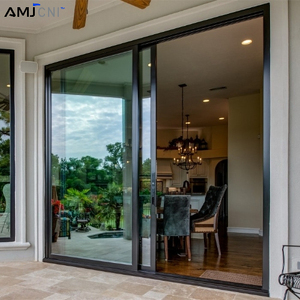
Developments in HCMC (e.g., District 2, District 7) and Hanoi (e.g., Cau Giay, Nam Tu Liem) demand minimalist interior aesthetics. Pocket sliding doors and multi-panel linkage sliding glass systems stack neatly into wall cavities, converting enclosed kitchens into modern open spaces when not cooking.
Luxury Coastal Villas
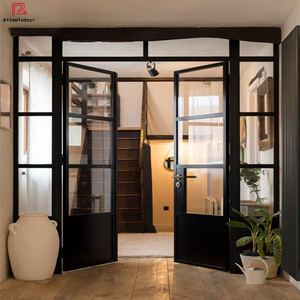
Resort-style villas in Da Nang, Phu Quoc, and Nha Trang require high corrosion resistance and thermal break profiles. Heavy-duty aluminum swing French doors equipped with PVDF coatings prevent salt-air degradation while providing thermal isolation against coastal humidity.
3. Key Architectural Trends Shaping Kitchen Door Sourcing in Vietnam
Through our direct collaboration with Vietnamese engineering firms, interior design studios, and trade importers, we have identified three major architectural movements influencing project specs for 2024–2030:
A. The Rise of "Minimalist Ghost Tracks" & Concealed Hardware
Interior architects in Vietnam are increasingly moving away from bulky floor-mounted tracks that trap dirt, grease, and dust. Top-hung sliding door systems with concealed ceiling tracks and hydraulic soft-closing dampers offer a clean, step-free floor surface (flush transition) that simplifies cleaning and enhances safety for multi-generational families.
B. Frosted, Fluted, and Tinted Architectural Safety Glass
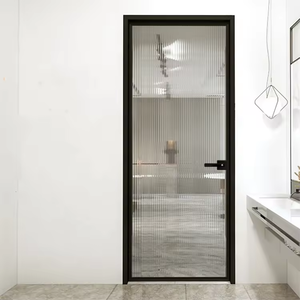
While clear tempered glass remains standard, decorative privacy glass—such as Moru fluted glass, frosted obscurity glass, and bronze or grey tinted glass—has seen a 40% rise in spec demand for high-end apartment interiors. Fluted glass diffuses harsh kitchen lighting while screening unwashed cookware from guests in the dining area.
C. Integrated Thermal Break Profiles for Energy Efficiency
With electricity tariffs rising across Vietnam and heavy reliance on inverter air conditioning in residential units, thermal break aluminum frames featuring polyamide (PA66) insulation strips prevent heat transfer from un-airconditioned kitchen utility balconies into cooled living quarters.
4. Enterprise Factory Advantages: Why Partner with Vexis Windows
As a specialized manufacturer integrating R&D, extrusion precision machining, glass tempering, and global export operations, **Vexis Windows & Doors Co., Ltd.** operates a 30,000 m² automated production complex in Foshan, Guangdong—the world’s epicenter for structural aluminum manufacturing.
Factory-Direct Pricing & No Middlemen
By controlling the entire chain—from profile extrusion to hardware assembly—we eliminate intermediary markups, offering Vietnamese distributors and contractors factory-direct wholesale pricing with flexible MOQ structures.
Full Customization & CAD/BIM Support
Every project order is custom fabricated to opening dimensions. Our engineering division provides detailed 2D shop drawings and 3D BIM models to streamline architectural approval before mass production.
Seamless Logistics to Vietnam Ports
We maintain streamlined export channels to major Vietnamese maritime gateways, including Cat Lai Port (HCMC), Hai Phong Port, and Da Nang Port, offering FCL/LCL ocean shipping with complete C/O Form E preferential trade documentation.
Procurement Guide
Frequently Asked Questions by Vietnam Buyers
How do CE certified aluminum glass kitchen doors perform during Northern Vietnam's Nồm humidity? ▼
During the spring Nồm season in Northern Vietnam, humidity levels routinely reach 95%–100%, causing heavy moisture condensation on standard cold surfaces. Our CE-certified doors feature powder-coated or anodized non-corrosive aluminum frames and high-density EPDM rubber weatherstripping that prevent moisture ingress into profile cavities. For elevated thermal protection, specifying thermal break aluminum profiles paired with double-glazed Low-E glass significantly reduces surface condensation inside living spaces.
What documentation is provided to clear customs at Cat Lai or Hai Phong ports? ▼
We provide full commercial export documentation required by Vietnam Customs Authorities, including Commercial Invoices, Packing Lists, Bills of Lading (B/L), CE Factory Conformity Declarations, EN 14351-1 Laboratory Test Reports, and Certificate of Origin (Form E). Form E allows Vietnamese importers to take advantage of ASEAN-China Free Trade Area tariffs, reducing or eliminating import duties on qualified aluminum building materials.
Can your factory customize ultra-slim frame sliding doors to fit non-standard opening sizes? ▼
Yes. 100% of our production output is custom-engineered to project specifications. Whether your project requires narrow 16mm visible frame pocket doors, 3-panel linkage sliding systems, or oversized multi-panel bi-fold doors for luxury villas, our CNC machining lines fabricate profiles to millimeter-level accuracy based on your structural CAD site measurements.
How do aluminum framed glass doors isolate heavy cooking fumes compared to wooden doors? ▼
Traditional wooden doors absorb airborne oils, moisture, and cooking odors, leading to surface staining, bacterial growth, frame expansion, and warping over time. In contrast, extruded aluminum profiles combined with non-porous tempered glass are completely immune to grease absorption, moisture swelling, and warping. Equipping our sliding systems with magnetic EPDM seal strips ensures a hermetic perimeter seal that blocks oil fumes during intense wok frying.
What is the standard production lead time and shipping duration to Vietnam? ▼
Standard manufacturing lead time for customized aluminum kitchen door orders is approximately 15 to 25 working days following CAD drawing sign-off and deposit receipt. Ocean shipping from Shenzhen or Guangzhou ports to Cat Lai Port (HCMC) or Hai Phong Port typically takes only 4 to 7 days, allowing Vietnamese developers to maintain fast project installation schedules.
What hardware brands and soft-closing mechanisms are integrated into your door systems? ▼
We partner with top-tier international hardware manufacturers—including German brands (HOPO, SIEGENIA, GU) and premium architectural hardware lines (Kinzong, CMECH)—to supply heavy-duty stainless steel 304 tracks, silent nylon rollers, and hydraulic bidirectional soft-close dampers rated for 100,000 operational cycles.
Accelerate Your Project with Certified Aluminum Door Systems
Request factory-direct pricing, physical sample kits, or technical CAD consulting for your residential or commercial developments in Vietnam.
Inquire Now