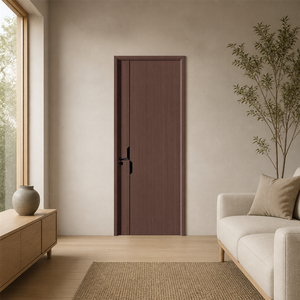
Export-Grade Architectural Window & Door Systems
Explore our factory-direct aluminum sliding, casement, and bifold systems custom manufactured to international quality standards for project deployments across South America.
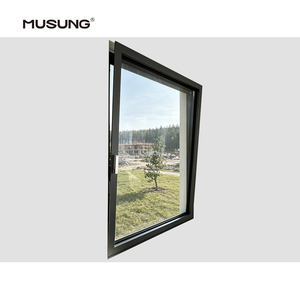
Custom Villa House Project Window and Door Thermal Break Insulated Window Soundproof Double Glazed Aluminum Casement Windows
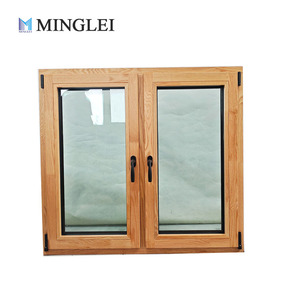
High Performance Energy-Efficient Windows Luxury Villa Triple Glazed Windows Aluminum Clad Wood Window
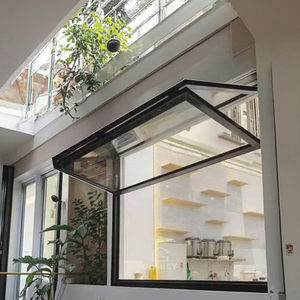
Aluminum Folding Windows with Double Glazing Vertical Opening for Villas Hotels Houses Balconies Patio
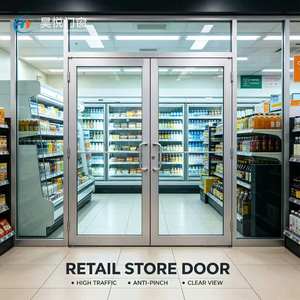
High Traffic Modern Aluminum Glass Swing Door with Sound Insulation for Retail Store Supermarket Convenience Shop Commercial Use
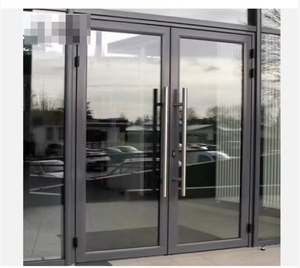
Custom Made Modern French Waterproof Glass Partition Doors Finished Aluminum Outdoor Hinged Entry Doors for Commercial Use
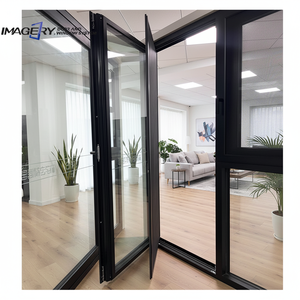
Wholesale Modern Aluminium Glass Double Swing Doors Design Tempered Glass Soundproof Door for Home Houses Business
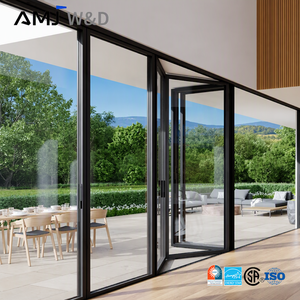
Large Modern Lockable Waterproof Accordion Sliding Aluminum Frame Bifold Folding Double Glass Patio Doors
20+
Years Manufacturing Mastery
154+
Global Export Markets
30,000m²
Foshan Production Hub
Rw 42dB
Max Sound Attenuation
Architectural Analysis: Internal Aluminium Sliding Doors in the Argentine Urban Landscape
The contemporary architectural dynamics in major Argentine metropolitan centers—most notably Buenos Aires (Autonomous City of Buenos Aires - CABA), Córdoba, and Rosario—have undergone a significant paradigm shift toward spatial fluidity, daylight maximization, and acoustic isolation. As high-density apartment residential layouts, repurposed historical PH (propiedad horizontal) dwellings, and modern corporate office developments expand, interior space planning requires highly adaptable architectural partitions.
Engineered aluminium internal sliding doors have emerged as the primary material choice for Argentine architects, interior designers, and commercial contractors. Unlike traditional solid wood or heavy masonry interior walls, extruded aluminum frame sliding systems deliver minimal sightlines, high structural rigidity, and zero rot or moisture warp under varying climatic conditions—such as the high year-round relative humidity of the Río de la Plata basin.
Information Gain: Why Aluminium Prevails Over Wood & PVC in Argentina's Interior Market
In humid coastal and river-adjacent regions like Buenos Aires and Rosario, interior wooden doors frequently suffer from linear dimensional expansion, leading to frame binding and lock misalignment. High-grade extruded 6063-T5 aluminum profiles maintain precise structural dimensional tolerance (±0.5mm) indefinitely, while offering seamless integration with acoustic laminated glass panes.
Localized Application Scenarios in the Argentine Construction Sector
Micro-Apartments & PH Renovations (CABA)
In micro-apartments across Palermo, Recoleta, and Belgrano, pocket sliding doors and multi-track glass dividers serve as flexible room separators, converting studio spaces into private bedrooms without sacrificing natural daylight propagation.
Corporate Office Dividers (Catalinas Norte & Puerto Madero)
Ultra-slim profile glass partitions equipped with top-hung silent sliding tracks provide high STC (Sound Transmission Class) acoustic privacy for executive boardrooms while adhering to sleek modern aesthetic standards.
Gated Country Club Villas (Nordelta & Pilar)
Suburban luxury homes utilize heavy-duty flush-track interior sliding doors to segment open-concept living rooms from winter gardens, wine cellars, and indoor BBQ (*quincho*) entertaining areas.
Engineering Whitepaper: Profile Alloys, Glazing & Track Mechanisms
As a specialized factory-direct manufacturer and international exporter, Vexis Windows & Doors Co., Ltd. builds internal sliding systems tailored specifically to architectural drawings and structural engineering demands. Below is the technical breakdown of our export-spec sliding door profile matrix:
1. Metallurgy & Structural Extrusion
Our internal sliding frames are extruded from architectural-grade 6063-T5 / 6063-T6 aluminum alloy, delivering high tensile strength (≥ 185 MPa) and yield strength (≥ 145 MPa). Profile wall thicknesses range from 1.2mm for minimalist interior partitions up to 3.0mm for heavy-duty commercial sliding doors, guaranteeing zero deflection under heavy glass loads.
2. Acoustic Glazing Engineering
To eliminate urban noise pollution in high-density Argentine corridors, our doors accept diverse insulated glass unit (IGU) configurations:
- Single Toughened Glass: 8mm / 10mm / 12mm Monolithic Tempered Glass (BS EN 12150 certified).
- Acoustic Laminated Glass: 5mm + 0.76PVB + 5mm Acoustic Interlayer Glass, offering sound transmission loss up to Rw 38dB.
- Double-Glazed Units (DGU): 5mm Tempered + 9A/12A Argon Air Gap + 5mm Low-E Glass for internal climate zones requiring thermal barrier division.
3. Surface Treatment Technologies for Humid Environments
To resist oxidative degradation in humid riverfront environments, all aluminium profiles undergo advanced surface processing:
| Surface Treatment | Coating Thickness | Corrosion Resistance (Salt Spray Test) | Best Application Scenario |
|---|---|---|---|
| Fluorocarbon PVDF Spraying | ≥ 40 μm | > 3,000 Hours (ASTM B117) | High-end luxury residential & coastal developments |
| Qualicoat Architectural Powder Coating | 60 - 80 μm | > 1,000 Hours | Standard interior space partitions (Matte Black, Anodized Bronze) |
| Anodized Hard Oxidation | 15 - 25 μm | > 2,000 Hours | High-traffic commercial interiors & corporate offices |
| 3D Wood-Grain Transfer Coating | 60 - 75 μm | > 1,200 Hours | Classic interior doors with natural timber aesthetic |
4. Hardware & Dampening Glide Mechanics
Internal sliding door functionality relies heavily on roller friction and track mechanics. We integrate heavy-duty nylon-encapsulated stainless steel ball-bearing rollers rated for 100,000 continuous opening/closing operational cycles. Double-sided soft-close hydraulic dampers prevent slamming, protecting glass integrity and ensuring whisper-quiet sliding motion under 25 decibels.
Architectural Trends & Import Market Dynamics in Argentina
The Argentine construction market is observing a rising demand for factory-direct architectural building materials sourced from verified OEM manufacturers in China. Key factors driving this trend include:
Minimalist Frame Aesthetics (Lineas Mínimas)
Architects in Buenos Aires are moving away from traditional bulky frame sections (such as legacy local profile series) toward ultra-slim sightline doors (16mm to 21mm vertical stiles). This maximizes daylight penetration through internal light wells and expansive living rooms.
Top-Hung Barrier-Free Threshold Systems
To maintain unbroken flooring across interior spaces, non-threshold top-hung sliding systems are overwhelmingly preferred. Overhead structural guide tracks carry the door weight while hidden floor guides preserve tile and hardwood floor continuity.
Regulatory Standards & Import Facilitation
Importers, wholesalers, and general contractors in Argentina must ensure imported door and window systems meet local quality compliance norms. Our production lines conform to ISO 9001:2015 Quality Management Systems and international structural safety standards compatible with Argentine IRAM (Instituto Argentino de Normalización y Certificación) guidelines for building safety and glass impact resilience.
Furthermore, Vexis provides complete export packaging documentation (including Certificate of Origin, detailed commercial invoices, custom HS code categorization under HS 7610.10, and seaworthy fumigated wooden crate packing) to facilitate smooth customs clearance through Puerto de Buenos Aires or Zárate Port.
Why Partner with Vexis Windows & Doors Co., Ltd.?
Based in Foshan, Guangdong—the global manufacturing hub for architectural aluminum—Vexis Windows & Doors Co., Ltd. brings over 20 years of dedicated engineering and export experience to international construction projects.
30,000m² Production Base
Equipped with high-precision CNC cutting centers, automatic corner-crimping machines, and double-glazing production lines to execute multi-container project shipments efficiently.
Full OEM & ODM Customization
Every sliding door panel is custom-fabricated according to architectural elevation plans, with custom frame colors, specialized glass tinting, smart lock integration, and bespoke rail layouts.
Dedicated South American Logistics
Experienced export team knowledgeable in FOB, CIF, and DDP shipping logistics to South American sea ports, ensuring damage-free transit via heavy reinforced plywood crating.
Frequently Asked Questions for Buyers in Argentina
Essential insights for importers, developers, and architectural procurement managers sourcing aluminium sliding doors from China.
What are the lead times for shipping custom aluminium sliding doors to Buenos Aires?
Manufacturing lead time for standard project orders is typically 20 to 25 calendar days after shop drawing approval and deposit confirmation. Ocean freight transit time from Shenzhen/Guangzhou ports to Puerto de Buenos Aires usually takes approximately 35 to 42 days depending on shipping line routing.
Can Vexis sliding door systems comply with local Argentine IRAM building safety standards?
Yes. All our glass choices utilize certified safety toughened glass (EN 12150 / ANSI Z97.1 equivalent) that complies with Argentine structural safety guidelines (IRAM 12559 / 12595 for safety glazing in architectural applications). Test reports and physical data sheets are provided for project submission.
How do top-hung sliding doors handle soundproofing between interior rooms?
Our top-hung internal sliding doors feature perimeter brush seals, high-density EPDM rubber weatherstripping, and bottom drop-down acoustic seals. Combined with 10mm acoustic laminated glass (5+0.76+5), the system achieves sound reduction up to 35-38 dB, ideal for separating home offices from living areas.
What frame finishes are recommended for high humidity areas near the Río de la Plata?
For regions with high humidity such as CABA, Tigre, or Rosario, we strongly recommend our Qualicoat-certified architectural powder coating or PVDF fluorocarbon coatings. These treatments provide exceptional salt-spray and oxidation resistance, preventing micro-pitting or color fading over decades of use.
Do you offer low-profile or flush floor tracks suitable for modern interior design?
Yes. We offer fully concealed flush tracks (recessed into the floor sub-base) with a lip height of only 3mm to 5mm, complying with barrier-free accessibility guidelines. Alternatively, our top-hung track systems eliminate floor tracks completely, using only a tiny concealed floor guide pin hidden under the door stile.
What documentation do you provide for customs clearance and import declaration in Argentina?
We supply a complete export documentation package including Bill of Lading (B/L), Commercial Invoice, Detailed Packing List with net/gross weights and CBM volumes, Certificate of Origin (Form F / CO), and factory quality test certificates required for SEDI/customs processing in Argentina.
Ready to Upgrade Your Next Project in Argentina?
Contact our senior engineering team today to receive CAD shop drawings, factory-direct price estimates, and custom sample kits for your residential or commercial development.