Architectural Whitepaper: Structural Selection & Engineering Standards for Aluminum Entry Doors
Selecting the optimal entry door system for large-scale commercial or high-end residential projects requires a deep understanding of metallurgy, structural loading, thermal barrier design, and fenestration hardware integration. As a leading manufacturer based in Lishui Town, Foshan, Vexis Windows & Doors Co., Ltd. provides global developers, contractors, and architectural importers with factory-direct engineering support to navigate complex local building regulations.
1. Aluminum Profile Metallurgy: 6063-T5 vs. Standard Alloy Frames
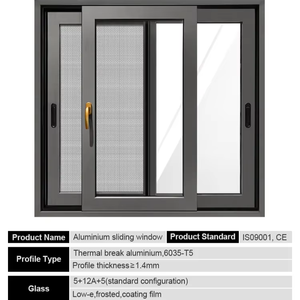
The structural integrity of an exterior entry door depends fundamentally on its extrusion alloy and heat treatment state. Standard architectural specifications demand 6063-T5 aluminum alloy due to its superior tensile strength (minimum 185 MPa), yield strength (minimum 145 MPa), and exceptional corrosion resistance when exposed to harsh marine or industrial atmospheres.
- Profile Wall Thickness: Heavy-duty entry pivot doors and commercial swing doors utilize profiles ranging from 2.0mm to 3.0mm in structural wall thickness to prevent deflection under high wind loads or heavy usage cycles.
- Polyamide PA66 Thermal Strips: Unlike low-cost PVC thermal insulators that degrade under UV radiation, high-performance aluminum doors incorporate 24mm to 34.8mm glass-fiber reinforced Polyamide (PA66GF25) strips, maintaining thermal bridge continuity while matching the expansion coefficient of aluminum.
- Anodizing & PVDF Finishes: Exterior surfaces receive either a 25-micron anodized oxide film or a 3-coat Fluorocarbon (PVDF) spray finish, ensuring a 20+ year lifespan without chalking, fading, or filiform corrosion in coastal salt-spray environments.
2. Glazing Configurations and Acoustic Insulation Metrics
Glass accounts for up to 80% of an entry door system's total surface area. Engineering the glass package directly dictates both energy efficiency and acoustic performance:
| Glazing Specification | Thermal Transmittance (U-Factor) | Acoustic Rating (STC) | Recommended Region / Application |
|---|---|---|---|
| Double Tempered Insulated (6mm + 12Ar + 6mm Low-E) | 1.6 – 1.8 W/m²K | STC 35 – 38 dB | Standard Residential / Moderate Climates |
| Triple Pane Thermal Barrier (5mm + 9Ar + 5mm + 9Ar + 5mm Low-E) | 1.1 – 1.3 W/m²K | STC 40 – 42 dB | Cold Northern Climates / Energy Efficient Builds |
| Laminated Acoustic Glazing (6mm + 1.52PVB + 6mm + 12Ar + 6mm) | 1.4 – 1.6 W/m²K | STC 45+ dB | Urban Commercial Buildings / High-Noise Corridors |
| Hurricane Impact Glass (6mm Temp + 2.28SGP + 6mm Temp) | 2.0 – 2.2 W/m²K | STC 38 – 40 dB | Tropical Coastal Regions / Florida High-Velocity Hurricane Zones (HVHZ) |
3. Global Architectural Sourcing Trends (2025–2030)
As international energy conservation codes (such as IECC in the United States and Part L in the UK) become increasingly strict, architectural door procurement is undergoing four major structural shifts:
A. Grand-Scale Pivot Systems with Integrated Smart Security
Modern luxury architectural design favors large-format entrance openings exceeding 1.5 meters in width and 3.0 meters in height. Traditional butt hinges fail under these panel weights (often exceeding 250 kg). The market is rapidly shifting toward heavy-duty floor pivot hardware paired with multi-point electromechanical locks compatible with biometrics, RFID, and smart building automation systems.
B. Ultra-Slim Sightline Minimalist Profiles
Architects are demanding maximum daylight harvesting. High-end modern patio and front entry doors now incorporate ultra-thin interlock stiles (as slim as 20mm to 25mm visible profile depth) without compromising structural wind-load resistance, achieved by integrating structural steel reinforcers inside the hollow aluminum chambers.
C. Circular Carbon Sourcing & Environmental Product Declarations (EPD)
Green building accreditation programs like LEED and BREEAM now incentivize developers to procure architectural window and door systems produced with recycled low-carbon aluminum. Manufacturers in Foshan are adopting primary aluminum billets smelted using renewable hydropower, providing verified EPD data sheets for global project submittals.
D. Complete Prefabricated System Delivery
To mitigate high job-site labor costs in North America, Europe, and Australia, procurement directors prefer purchasing fully assembled "knock-down" or pre-hung entry door kits. These units come factory-fitted with sub-frames, pre-drilled hardware lock cases, EPDM perimeter weatherstripping gaskets, and corner joint crimping alignments to reduce installation labor times by up to 60%.