Featured Commercial & Residential Aluminum Door Systems
Explore our export-ready fenestration solutions. Engineered with precision thermal breaks, structural extruded aluminum alloys, and high-performance safety glazing.
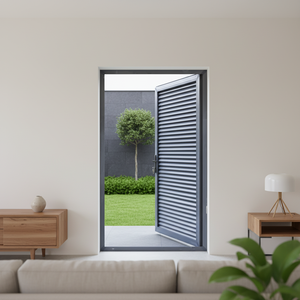
RG60C Modern Thermal Break Aluminum Louver Casement Door for Residential Farmhouse & Warehouse Use
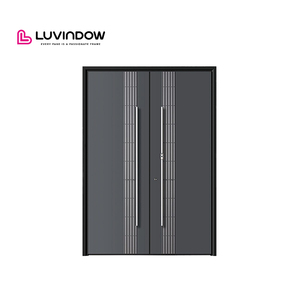
Premium Aluminum Large Main Entrance Doors Fire Prevent Security Entry Doors for Houses Modern
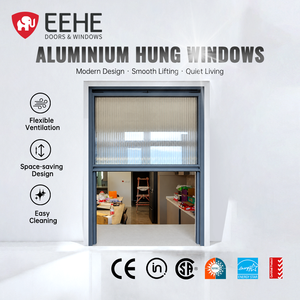
EEHE Vertical Aluminum Sliding Window CE Certified Thermal Break Windproof Anti-Fall Single Hung Soundproof
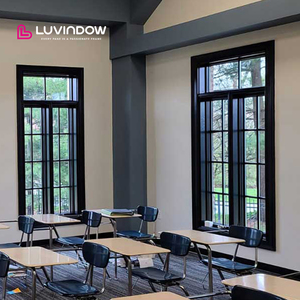
American Style Double Safety Glass Residential Window Aluminum Clad Wood Crank Open Windows
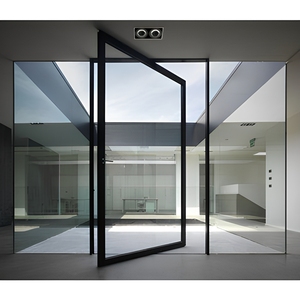
Modern Heavy-Duty Aluminum Pivot Doors with Double Glass Soundproof Finished Surface for Villa & Hotel Entrance
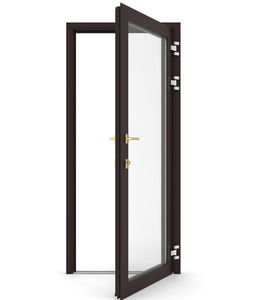
AAMA/NFRC Certified Entrance Aluminium Hinged Doors for Double Glazed Doors
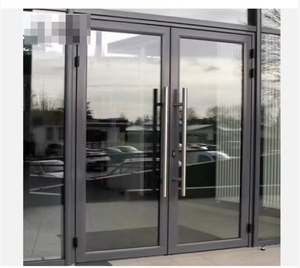
Custom Made Modern French Waterproof Glass Partition Doors Finished Aluminum Outdoor Hinged Entry Doors for Commercial Use
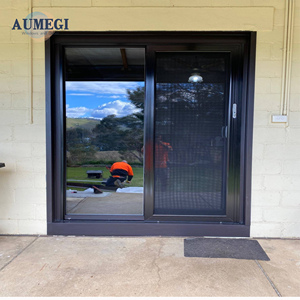
AUMEGI Sliding Glass Door Models And Prices Balcony Replacement Sliding Glass Door
State of the Art in Architectural Aluminum Back Door Manufacturing
In modern residential and commercial architecture, back doors have evolved from utilitarian secondary access points into critical building-envelope components. Today’s architectural specifications mandate that exterior aluminum back doors achieve stringent performance metrics: thermal insulation (U-factors ≤ 0.24 BTU/h·ft²·°F), air infiltration prevention (ASTM E283 compliance), structural wind-load resistance (up to DP-65 rating), and heightened physical security.
Selecting the top trusted aluminum back door manufacturers & exporters requires an in-depth understanding of material science, extrusion design, thermal break technology, and local building code compliance across North America, Europe, Australia, and the Asia-Pacific region.
Structural Integrity & Alloys
Utilizing high-tensile 6063-T5 and 6063-T6 architectural grade aluminum extrusions with a minimum profile wall thickness of 2.0mm to 3.0mm, ensuring zero frame deflection even under extreme negative wind loads.
Polyamide Thermal Barriers
Engineered with PA66-GF25 (25% glass-fiber reinforced) polyamide thermal break strips. This mechanical barrier isolates indoor and outdoor profile chambers, eliminating thermal bridging and condensation risks.
Advanced Glazing Matrices
Double and triple-glazed tempered glass units with Low-E coatings, warm-edge spacers, and Argon gas fill. Achieves optimal Solar Heat Gain Coefficients (SHGC) and STC sound insulation ratings up to 42 dB.
Technical Specification Benchmarks for Export-Grade Back Doors
When evaluating factory-direct back door solutions, engineering procurement managers must benchmark profile performance against international testing regimes (AAMA, NFRC, CE, AS2047). Below is a standardized specification breakdown offered by lead-tier manufacturer Vexis Windows & Doors Co., Ltd.:
| Performance Parameter | Standard Configuration | High-Performance Option | Testing Standard |
|---|---|---|---|
| Extrusion Alloy | 6063-T5 Architectural Aluminum | 6063-T6 Heavy-Duty Industrial | GB 5237 / ASTM B221 |
| Thermal Insulation (U-Value) | 1.8 - 2.2 W/m²·K (0.32 BTU) | 1.1 - 1.4 W/m²·K (0.20 BTU) | NFRC 100 / EN ISO 10077 |
| Air Infiltration Resistance | Level 8 (<0.5 m³/m·h) | A3 Standard (<0.1 m³/m·h) | ASTM E283 / EN 12207 |
| Water Penetration Pressure | 450 Pa (DP-50) | 700 Pa (DP-70 Impact Rating) | ASTM E331 / EN 12208 |
| Acoustic Rating (STC / Soundproof) | STC 32 (Double Glazed) | STC 42+ (Laminated Triple) | ASTM E90 / ISO 140 |
| Surface Finish & Coating | AkzoNobel Powder Coat (60µm) | PVDF Fluoropolymer / Anodized 25µm | AAMA 2604 / AAMA 2605 |
Future Sourcing & Technological Trends in Aluminum Back Door Manufacturing
As global decarbonization mandates take effect and architectural designs pivot toward modern minimalism, the global supply chain for architectural doors is undergoing rapid innovation. Importers and commercial developers must align with suppliers pushing the boundaries of five key industry trends:
1. Ultra-Low Thermal Transmittance & Aerogel Insulation
Regulatory frameworks such as the EU's EPBD (Energy Performance of Buildings Directive) and North American Energy Star v7.0 require back doors to achieve unprecedented thermal efficiency. Next-generation thermal breaks integrate expanded polyurethane (PUR) foam infills and Aerogel insulation cores within the profile chambers, dropping frame U-values below 0.9 W/m²·K.
2. Ultra-Slim Sightlines with Structural Glass Bonding
Architectural demand is heavily shifting away from bulky frame profiles toward ultra-slim stile designs (interlock sightlines as narrow as 20mm). To maintain structural stiffness, manufacturers are utilizing high-modulus structural silicone bonding (IGU-to-frame), allowing the insulated glass unit to share structural loads.
3. Smart Access & Mechatronic Multi-Point Locking
Security expectations for secondary access doors have heightened. The industry is transitioning from manual locksets to fully integrated mechatronic multi-point locking mechanisms. European-standard motorized locks allow back doors to synchronize with smart home automation, biometric readers, and keyless access systems without compromising air-tight EPDM seal compression.
4. Coastal Resilience & Anti-Corrosion Surface Coatings
With climate change intensifying coastal storms, back doors installed in marine environments face severe salt spray deterioration and wind-borne debris impact. Sourcing managers are demanding marine-grade 5-step pretreatment combined with AAMA 2605 fluoropolymer PVDF liquid coatings or hard-coat anodizing tested up to 3,000 hours of continuous salt spray (ASTM B117).
5. Environmental Product Declarations (EPD) & Circularity
Leading general contractors now favor suppliers providing EPD documentation for green building certifications like LEED v4 and BREEAM. Top exporters are using post-consumer recycled aluminum billets (hydro-powered aluminum) to significantly lower the embodied carbon footprint of finished fenestration assemblies.
Why Vexis Windows & Doors Co., Ltd. Stands Out as a Global Partner
Headquartered in Lishui Town, Foshan—China’s premier aluminum manufacturing hub—Vexis Windows & Doors Co., Ltd. operates a 30,000 m² automated production facility equipped with high-precision CNC cutting centers, automatic corner-crimping machines, and double-component sealing robots. Having exported custom door and window systems to over 154 countries, Vexis offers unmatched technical depth and commercial security for international procurement teams.
CAD & BIM Engineering
In-house technical review of architectural drawings, shop drawings, structural wind load calculations, and threshold detail customization.
Precision Fabrication
CNC machining with ±0.1mm tolerances. Thermal break insertion, corner sealant injection, and triple EPDM gasket fitting.
Quality Assurance
Pre-shipment testing for water tightness, smooth roller action, lock alignment, and glass seal integrity inside our testing rig.
Export Packaging
Multi-layer protection: protective film, foam corner guards, waterproof wrapping, and fumigated solid wooden crates.
On-Site Installation Support
Detailed installation guides, sub-frame layout diagrams, and remote technical support for on-site construction crews.
Frequently Asked Questions (FAQ) for Sourcing Aluminum Back Doors
Clarifying technical and commercial parameters before issuing a Request for Quotation (RFQ).
What makes aluminum back doors superior to vinyl (uPVC) or timber alternatives?
How do you ensure proper waterproofing and drainage for exterior back doors?
Can custom opening configurations and glass options be produced per drawing?
What international certifications do Vexis products carry for project submittals?
What is the standard lead time and MOQs for OEM / export projects?
How do I request a formal technical quotation and profile samples?
Partner with a World-Class Aluminum Door Manufacturer
Elevate your project's performance with factory-direct thermal break doors, custom structural engineering, and guaranteed export quality.