Featured Aluminium Lounge Doors & Architectural Window Systems
Precision-engineered 6063-T5 aluminium profiles, thermal break technology, Low-E double glazing, and heavy-duty structural hardware tailored for global residential and commercial procurement.
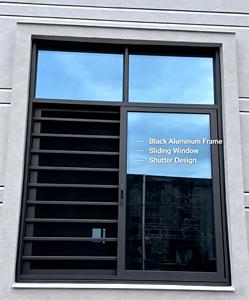
Aluminium Sliding Window 6063-T5 Profile PVDF Coating Low-E Tempered Glass Condensation Resistant Modern Garden Residential
Get Catalog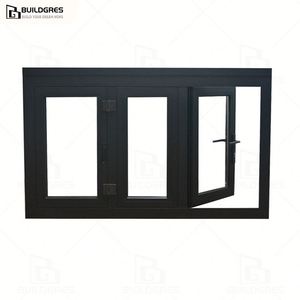
Buildgres Modern Design Aluminium Stacking Folding Windows Thermal Insulation Soundproof Features Large Opening Bifold Glass Door
Get Catalog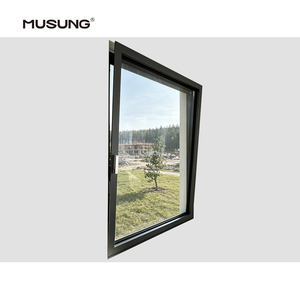
Custom Villa House Project Window and Door Thermal Break Insulated Window Soundproof Double Glazed Aluminum Casement Windows
Get Catalog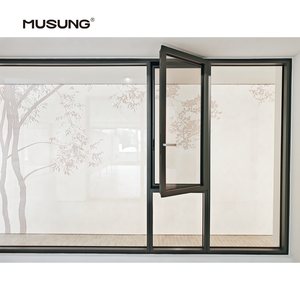
New Arrival Casement Windows House Casement Windows Hurricane Impact Casement Windows Aluminum Casement Windows
Get Catalog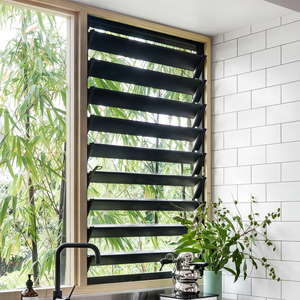
Customized Modern Aluminum Louver Windows Adjustable Aluminum Slat Jalousie Shutter Window Ventilation System Villa Project
Get Catalog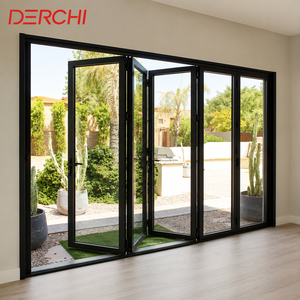
Modern High Aluminum Double Glass Accordion Large Big Bifold Long Bi Fold Sliding Exterior Main Entrance Patio Folding Door
Get Catalog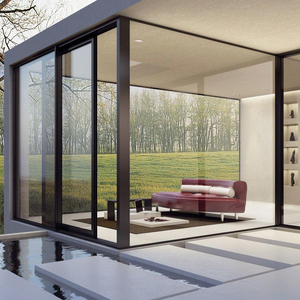
Big Balcony Heavy Duty Villa Double Glazed Sliding Door System Aluminium Sliding Glass Doors
Get Catalog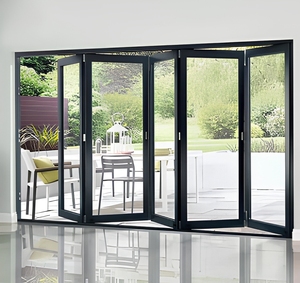
Bi Fold Aluminum Modern Double Tempered Glass Exterior Patio Veranda Folding Doors with Germany Brand Hardware
Get CatalogIndustrial Production Scale & Global Sourcing Capacity
Backed by over 20 years of architectural glazing expertise, state-of-the-art aluminum extrusion lines, and international compliance testing.
Comprehensive Technical Guide to Aluminium Lounge Doors Sourcing
An authoritative engineering whitepaper for architectural specifiers, commercial contractors, real estate developers, and international facade importers.
1. Executive Summary & Market Mechanics for B2B Importers
In modern high-end architectural design, **aluminium lounge doors** (encompassing heavy-duty sliding patio systems, multi-panel bifold accordion glass doors, and ultra-slim stacking doors) represent the definitive link between luxury interior space and outdoor living environments. As structural demands, energy passivhaus mandates, and aesthetic minimalism converge, selecting the right manufacturing supplier is no longer just about profile aesthetics—it requires a complete evaluation of alloy chemistry, thermal break thermodynamics, acoustic dampening indices, and structural load endurance under severe weathering conditions.
Global trade statistics show an accelerated shift toward high-performance system doors. Overseas project buyers in coastal, tropical, and cold-climate zones require specialized extrusion profiles that comply with stringent local engineering standards (such as North American AAMA/WDMA, Australian AS2047, and European CE/EN 14351-1 benchmarks). Partnering directly with tier-1 Chinese manufacturers based in key industrial hubs like Foshan, Guangdong provides international buyers with an optimal balance of custom engineering flexibilities, rapid prototyping, scale pricing, and rigorous quality control.
2. Metallurgy & Material Science: 6063-T5/T6 Aluminium Profile Engineering
The foundation of structural longevity in lounge and patio door systems lies in profile metallurgy. High-grade architectural systems utilize **6063-T5 or 6063-T6 primary billet aluminium alloy**. Unlike recycled scrap aluminum which suffers from inclusions and structural brittleness, primary 6063 alloy offers superior tensile strength, excellent extrusion characteristics, and an flawless surface finish ideal for high-spec powder coating and PVDF (polyvinylidene fluoride) fluorocarbon spray treatments.
- Chemical Composition: Balanced magnesium (Mg: 0.45-0.9%) and silicon (Si: 0.2-0.6%) content ensures optimal precipitation hardening during heat treatment, yielding tensile strengths exceeding 200 MPa.
- Wall Thickness Rigidity: Structural lounge door outer frames and sash interlocks are extruded to structural wall thicknesses ranging from 2.0mm to 3.0mm, ensuring minimal frame deflection across expansive 3-meter to 6-meter span openings.
- Surface Finishes & Corrosion Resistance: Premium suppliers offer AkzoNobel or PPG powder coatings (60-80 microns thick) and PVDF coatings (3-coat system, >40 microns) certified under 2,000-hour neutral salt spray tests (ASTM B117), guaranteeing resistance to chalking, pitting, and UV degradation in high-salinity coastal areas.
Comparative Performance Matrix: Profile Engineering & Finishes
| Specification Feature | Standard Economy Doors | Architectural Lounge Doors (Vexis System) | B2B Procurement Advantage |
|---|---|---|---|
| Alloy & Temper | 6063-T5 (Recycled Billet) | 6063-T5 / T6 Primary Billet | Higher tensile yield strength, zero structural structural defects. |
| Frame Wall Thickness | 1.2mm – 1.4mm | 2.0mm – 3.0mm Heavy-Duty | Supports oversized heavy glass panels without frame bowing. |
| Thermal Insulation | Non-Thermal Break / PVC Strip | PA66-GF25 Polyamide Struts | Prevents thermal bridging; dramatically reduces HVAC loads. |
| Glass Configuration | 5mm Single / Basic 5+6A+5 Double | 5+12A/16A+5 Low-E Toughened Triple/Double | U-Values down to 1.2 W/m²K; high soundproof acoustic dampening. |
| Hardware Systems | Generic Local Hardware | Germany Siegenia / CMECH / Hoppe | Tested over 100,000 operational cycles with smooth rolling. |
3. Thermal Break Mechanics & Acoustic Isolation (STC Performance)
Energy conservation standards across Europe, North America, and Australia demand strict U-factor performance for exterior fenestration. Uninsulated aluminum profiles exhibit high thermal conductivity ($k \approx 200 \text{ W/m}\cdot\text{K}$), leading to high energy loss and interior moisture condensation. Modern aluminium lounge doors incorporate **Polyamide PA66 reinforced with 25% glass fiber (PA66-GF25)** thermal break struts.
The insertion of PA66-GF25 creates a continuous thermal barrier between the exterior and interior aluminum extrusions. Because PA66-GF25 shares a nearly identical coefficient of thermal expansion ($\approx 2.3 \times 10^{-5}/\text{K}$) with aluminum, the composite profile maintains structural integrity and seal pressure under extreme seasonal temperature fluctuations (from -30°C winters to +50°C summer sun exposure).
Acoustic Dampening & Soundproof Engineering
Lounge areas demand acoustic tranquility. Double- and triple-glazed insulated glass units (IGUs) incorporating argon gas fill, warm-edge composite spacers, and laminated acoustic PVB (polyvinyl butyral) interlayers allow lounge door systems to achieve **Sound Transmission Class (STC) ratings between 38 dB and 45 dB**. This effectively blocks outdoor traffic noise, airport frequencies, and urban ambient disturbance, creating an ultra-quiet indoor environment.
Why B2B Importers Trust Vexis Engineering Manufacturing
Standardized manufacturing processes, custom CAD support, and strict quality assurance protocols make Vexis the preferred Chinese supply chain partner.
End-to-End OEM/ODM Customization
Every commercial architectural project presents unique structural requirements. Vexis engineers produce custom shop drawings, tailor sash depths, adapt threshold drainage profiles, and implement custom RAL powder finishes tailored precisely to client specification drawings.
Advanced CNC Machining & Tolerance Control
Utilizing high-precision 4-axis and 5-axis CNC machining centers, profile corner jointing, lock mortising, and hinge drilling operate within sub-millimeter tolerances ($\pm 0.1\text{mm}$). Multi-point locking mechanisms mesh flawlessly every time.
Multi-Layer EPDM Weather Sealing
Automotive-grade EPDM (Ethylene Propylene Diene Monomer) continuous co-extruded rubber gaskets ensure permanent elasticity, preventing air leakage and water ingress under severe storm conditions up to 600 Pa rating (ASTM E331).
Heavy Export Packing & Sea Logistics
Export orders feature surface protective film, heavy plastic corner guards, moisture-barrier wrapping, and custom steel-reinforced ISPM-15 compliant fumigated plywood crates to ensure damage-free arrival across long ocean journeys.
Future Procurement Trends: Global Outlook for Aluminium Lounge Doors (2026–2030)
As international energy codes tighten and architectural design trends evolve, the manufacturing landscape for aluminum doors is undergoing significant technology shifts. Importers and procurement directors should align their product strategies with the following major trends:
A. Ultra-Slim Interlock Sightlines & Panoramic Glazing
Modern luxury residential architecture prioritizes unimpeded landscape views. The market demand is rapidly shifting toward **ultra-slim frame sliding doors** featuring central interlock widths of just 20mm to 25mm. Engineered with hidden outer frame jambs embedded directly into surrounding masonry, these systems deliver seamless floor-to-ceiling glass expanses while preserving high structural load capacity via concealed heavy-duty steel bogie rollers.
B. Smart Home & Automated Drive Integration
Automation is no longer restricted to commercial entryways. High-end lounge doors now increasingly specify embedded low-noise linear electric motors, motorized multi-point lock actuators, and biometric or smart app integration. Advanced systems interface directly with home automation protocols (Zigbee, KNX, Z-Wave), offering pinch-protection sensors and automatic atmospheric ventilation routines.
C. Decarbonized Low-Carbon Aluminium & Sustainability Mandates
Environmental, Social, and Governance (ESG) guidelines in Western markets are placing carbon footprint reporting at the forefront of vendor qualification. Future-ready manufacturers are integrating **hydro-powered low-carbon aluminum billets** ($< 4.0 \text{ kg CO}_2/\text{kg Al}$) and fully recyclable PA66 thermal strips to assist project developers in acquiring LEED and BREEAM green building accreditations.
D. Flush Hidden Drainage & Zero-Barrier Thresholds
Accessibility standards (such as ADA in the USA and AS1428 in Australia) require step-free indoor-outdoor transitions. Advanced lounge door systems feature **concealed sub-floor stainless steel drainage channels** with linear slot grates. This allows flush threshold installations without compromising water head performance under driving wind and rain.
Frequently Asked Questions for Project Procurement
Key technical, logistical, and commercial answers for developers, importers, and glazing contractors.
Q: What structural guarantees and warranties apply to Vexis doors?
We supply a 10-year warranty on aluminum extrusion profile structures and surface finishes (powder coat/PVDF), a 5-year warranty on insulated glass unit seal integrity, and up to 5 years on heavy-duty German operating hardware.
Q: Can Vexis engineer custom wind load resistance for hurricane zones?
Yes. For coastal or typhoon-prone regions (such as Florida or the Philippines), we manufacture heavy-wall profiles fitted with steel structural mullion reinforcements and SentryGlas (SGP) impact-laminated safety glass certified to withstand high wind pressure forces.
Q: How are glass specifications customized for solar control?
We offer double- and triple-glazed units with double or triple silver Low-E soft coatings, solar-tinted glass (grey, bronze, green), reflective glass, or smart electrochromic glass to optimize Solar Heat Gain Coefficient (SHGC) for tropical climates.
Q: What is the typical lead time from shop drawing approval to shipping?
Standard project production requires approximately 25 to 35 calendar days following final shop drawing confirmation and color sample sign-off. Expedited scheduling is available for critical commercial building timelines.
Q: How do you ensure product compliance with local building standards?
Our engineering department pre-checks profile selections against regional building codes (AS2047 for Australia, NFRC/AAMA for North America, CE for Europe) and provides official test reports and structural calculation sheets prior to mass production.
Q: Can we arrange a virtual factory audit or on-site inspection?
Absolutely. Buyers and third-party inspection agencies (SGS, TÜV, Intertek) are invited to visit our 30,000m² Foshan manufacturing facility in person or participate in live HD video factory audits.
Accelerate Your Project Procurement With Direct Factory Engineering
Connect with our senior engineering team to receive custom shop drawings, technical specifications, and factory-direct wholesale pricing for your upcoming architectural development.