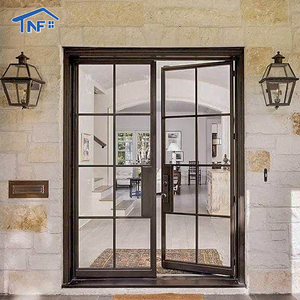
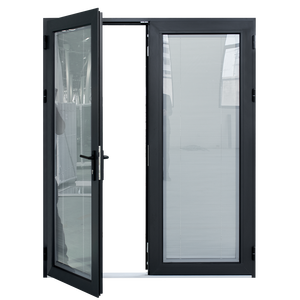
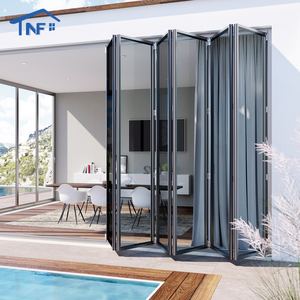
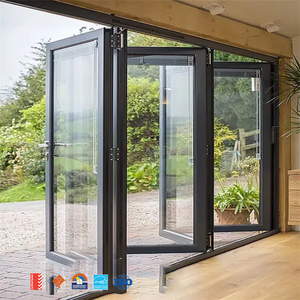
Featured Architectural Aluminium Doors & Frames
Precision-engineered fenestration systems manufactured under stringent ISO 9001 and CE certifications, tested for air infiltration, water resistance, and structural integrity.
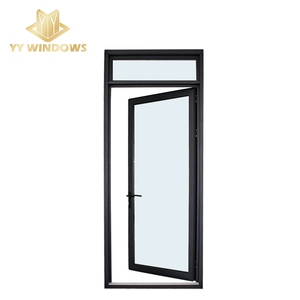
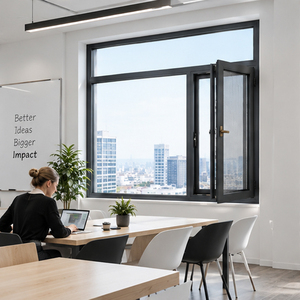
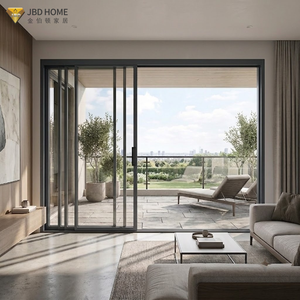
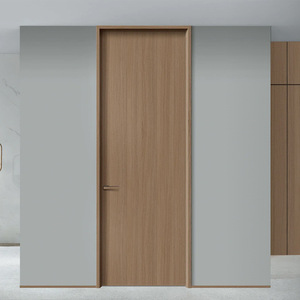
Executive Whitepaper: Modern Architectural Aluminium Extrusion & Fenestration Standards
In high-density urban developments and luxury residential estates, aluminium door and frame assemblies serve as critical building envelope components. Modern architectural specifications mandate that these structural systems deliver far more than visual minimalism—they must provide structural resistance against high wind pressures, complete moisture mitigation, and exceptional U-factor thermal performance.
As a factory-direct OEM/ODM manufacturer headquartered in the industrial hub of Foshan, China, our 30,000 m² manufacturing plant integrates precision extrusion profiling, thermal barrier insertion, CNC machining, automated corner crimping, and double-glazed insulated glass unit (IGU) assembly under strict quality management systems.
High-Strength 6063-T5 / T6 Extrusions
Our profiles are constructed from primary billet aluminium alloy 6063-T5 or T6, offering superior tensile strength, excellent surface finish for powder coating or anodizing, and optimal corrosion resistance. Wall thicknesses strictly meet or exceed 1.4mm for windows and 2.0mm to 3.0mm for heavy-duty commercial sliding and bifold doors.
Polyamide PA66GF25 Thermal Break
To resolve the inherent thermal conductivity of raw aluminium metal (approx. 200 W/m·K), our energy-efficient frames utilize imported Technoform PA66GF25 (25% glass-fiber reinforced polyamide) thermal barrier strips. This structural break reduces overall profile thermal transmittance (Uf) to as low as 1.3 W/m²K, drastically reducing HVAC thermal loads.
Engineering Performance & Material Testing Benchmarks
Every door and frame system produced within our facility undergoes rigorous batch testing. Below is an overview of standardized engineering parameters achieved across our architectural product lines:
| Performance Criterion | Test Standard / Regulatory Code | Achieved Engineering Values | Architectural Application |
|---|---|---|---|
| Structural Wind Load | ASTM E330 / AS2047 / EN 12210 | Serviceability: Up to 4500 Pa (Design Pressure > 60 PSF) | High-rise coastal towers, cyclone zones |
| Water Penetration Resistance | ASTM E547 / ASTM E331 / EN 12208 | 750 Pa Static & Dynamic Water Head (Zero Leakage) | Exposed balcony openings, coastal villas |
| Air Infiltration Rating | ASTM E283 / EN 12207 | Class A4 (< 0.1 m³/h·m at 100 Pa) | Passive House & Net-Zero energy projects |
| Thermal Transmittance (U-Value) | NFRC 100 / ISO 10077-2 | Uw: 1.2 – 1.8 W/m²K (Depending on Low-E IGU combination) | Cold climate & extreme heat insulation |
| Acoustic Insulation (STC / Rw) | ASTM E90 / ISO 140-3 | STC 38 – 45 dB (Double glazed with acoustic PVB) | Urban hotels, airport proximity zones |
Future Procurement Trends: Aluminium Frames & Doors (2025–2030)
Global architectural trends and building codes are undergoing rapid transformation. Commercial developers, structural engineers, and facade consultants must adapt to changing energy mandates, sustainable sourcing guidelines, and evolving occupant preferences. The key vector shifts dominating the fenestration industry include:
1. Low-Carbon Sourcing
International project tenders increasingly require Environmental Product Declarations (EPD). Modern procurement prioritizes aluminium extruded from hydro-powered smelters and recycled post-consumer scrap, cutting embodied carbon emissions by over 65%.
2. Ultra-Slim Sightlines
Architects demand maximum natural daylight and seamless transition between indoor and outdoor living. Ultra-slim interlock sightlines (down to 18mm – 25mm visible profile) with concealed outer frame tracking are replacing conventional thick profiles.
3. Smart & Automated Systems
Motorized lift-and-slide door mechanisms integrated with Building Management Systems (BMS) are becoming baseline specifications in commercial towers and luxury estates. Electric actuators and smart glass (PDLC switchable glass) integration lead high-end inquiries.
Technology Development Trends in Frame Manufacturing
The technological evolution of modern aluminium doors focuses on profile geometry optimization, seal durability, and coating longevity. Factories operating at the forefront of the industry are shifting from basic assembly shops to fully automated engineering centers.
Surface Coating Advancement: PVDF vs Powder Coating
While standard electrostatic powder coating remains popular for interior and mild exterior environments, coastal and high-UV environments mandate Fluoropolymer (PVDF / Kynar 500) 3-coat finishes compliant with AAMA 2605. PVDF finishes retain color fidelity and chalking resistance for over 20–25 years, eliminating maintenance cycles in harsh marine climates.
In addition, heat-transfer Italian wood-grain technologies allow developers to capture the aesthetic warmth of timber doors while maintaining the zero-warp, fire-rated, and waterproof structural benefits of extruded alloy frames.
Corner Joint Construction & Sealing Integrity
Inferior frames fail at the mitred corners under thermal stress and heavy wind forces. Modern manufacturing replaces mechanical screw fixing with hydraulic dual-corner crimping combined with two-component corner sealant injection (such as Weiss Cosmofen adhesive).
This technique ensures absolute structural rigidity at the 45-degree mitre joint, preventing microscopic movement that breaches air and water seals over decades of operation.
Seeking custom extrusion profiles, specialized anodizing, or custom hardware integration for your project drawings?
Enterprise Strengths: Why Global Contractors Partner With Us
Navigating cross-border building material procurement requires absolute confidence in supplier capacity, technical compliance, and export logistics. As an established direct manufacturer in Foshan, China, our enterprise infrastructure guarantees complete end-to-end reliability for international project delivery.
- Complete Factory Direct Pricing: Eliminate intermediary markups by dealing directly with our 30,000 m² extrusion, fabrication, and glazing plant.
- Bespoke Architectural Engineering: Our in-house technical engineering team translates your CAD/BIM architectural drawings into precise shop drawings with structural calculation reports.
- Integrated 1,500 m² Showroom: Immersion product testing and live sample inspection available for visiting procurement delegations and overseas buyers.
- Stringent Quality Control (QC): Every opening sash undergoes 100% dry-run operational testing, glass seal verification, and anodizing/powder film thickness measurement prior to crating.
- Export Heavy-Duty Packaging: Multi-layer protection using protective film, foam edge corner guards, and fully enclosed IPPC-stamped wooden crates to resist ocean freight moisture and transit shock.
- Global Compliance & Certifications: Fully certified systems compatible with North American NFRC/AAMA, Australian AS2047, European CE, and ISO 9001 quality standards.
B2B Procurement FAQ: Aluminium Doors & Frames Sourcing
Essential questions and engineering answers for general contractors, architectural specifiers, and building material importers prior to placing production orders.
Partner With A Trusted Aluminium Fenestration Manufacturer
From residential luxury villas to large-scale commercial developments, our engineering team is ready to analyze your architectural requirements and provide factory-direct pricing.