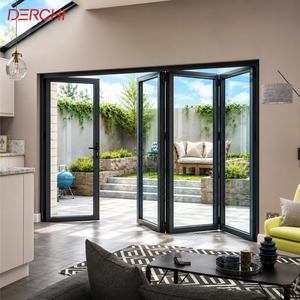
Factory-Direct Catalog
High-Performance Architectural Folding & Sliding Systems
Engineered for extreme structural wind loads, superior thermal break insulation, and seamless indoor-outdoor transitioning.
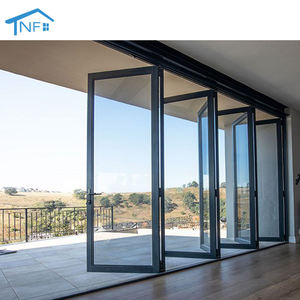
NF Patio Double Glass Exterior Accordion Folding Door Wholesale Front Residential Entry Doors Aluminium Bifold Doors
Get a Quote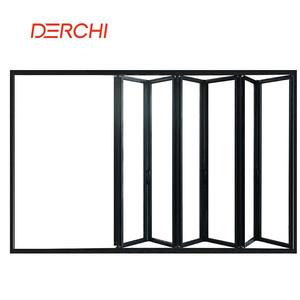
Exterior Waterproof Thermal Break Aluminum Glass Balcony Folding Sliding Door System
Get a Quote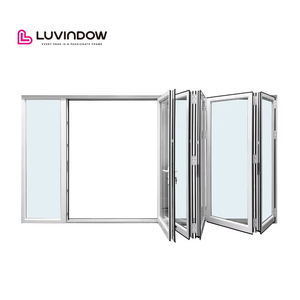
Eco Thermal Invisible Slide Perfect Fit Aluminum Folding Doors for North American Wood Frame Villas
Get a Quote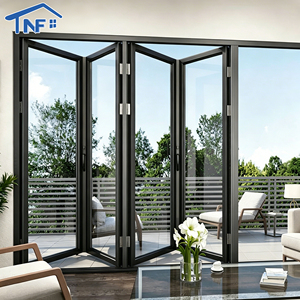
Waterproof Aluminum Tempered Glass Patio Sliding Accordion Folding Doors
Get a Quote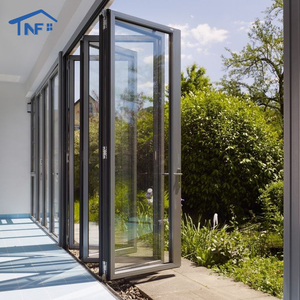
OEM NFRC Waterproof Thermal Break Aluminum Outdoor Exterior Stacking Bi-fold Accordion Folding Sliding Patio Door
Get a Quote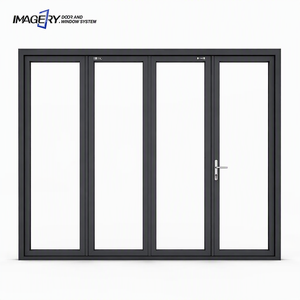
Modern Aluminum Alloy Tempered Glass Waterproof Sliding Bifold Accordion Folding Door for Courtyard & Villa
Get a Quote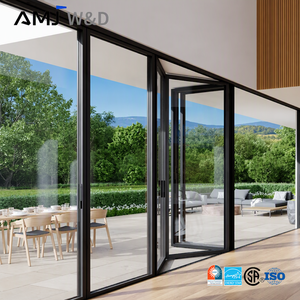
Large Modern Lockable Waterproof Accordion Sliding Aluminum Frame Bifold Folding Double Glass Patio Doors
Get a Quote1. Technical Architecture of China Aluminum Sliding Folding Door Systems
Modern architectural design increasingly demands non-disrupted transitions between indoor living space and outdoor environments. In luxury residential villas, resort hospitality, and commercial perimeter glazing, heavy-duty aluminum sliding folding doors (frequently designated as bifold or accordion stacking door systems) have become the premier fenestration solution. However, navigating the global manufacturing ecosystem—specifically sourcing from top-tier Chinese aluminum fabrication hubs like Foshan, Guangdong—requires a technical understanding of alloy composition, structural deflection limits, and thermal barrier engineering.
When selecting a top China aluminum sliding folding door supplier, structural engineers and procurement officers must look beyond surface aesthetics. The structural integrity of multi-panel folding openings up to 12 meters wide hinges on profile wall thickness, alloy temper, roller carriage bearing capacity, and wind load resistance compliant with international standards such as ASTM E330, AS2047, and EN 12210.
6063-T5 vs. 6063-T6 Structural Profile Metallurgy
Leading Chinese exporters utilize high-precision 6063 architectural aluminum extrusions. While standard commercial grade profile wall thickness varies between 1.4mm and 1.6mm, heavy-duty exterior folding systems subjected to high wind pressures require a minimum profile main frame wall thickness of 2.0mm to 3.0mm.
| Performance Vector | Standard Commercial Bifold | Heavy-Duty Thermal Break Bifold | Hurricane-Rated Stacking Bifold |
|---|---|---|---|
| Aluminum Alloy & Temper | 6063-T5 Profile | 6063-T5 / 6063-T6 High-Tensile | 6063-T6 Primary Extrusion |
| Frame Wall Thickness | 1.4mm – 1.6mm | 2.0mm – 2.5mm | 3.0mm Reinforced Load Profile |
| Thermal Insulation Strip | PVC / Low-Grade Nylon | PA66GF25 (Polyamide + 25% Glass) | PA66GF25 Wide Multi-Cavity Strip |
| Glass Configuration | 5mm + 9A + 5mm Tempered | 6mm Low-E + 12Argon + 6mm Toughened | 6mm + 1.52PVB + 6mm Laminated Double Unit |
| Air Infiltration (ASTM E283) | < 0.30 cfm/ft² | < 0.10 cfm/ft² | < 0.05 cfm/ft² (High Tightness) |
| Acoustic Attenuation (STC) | STC 28 - 32 dB | STC 38 - 42 dB | STC 45+ dB Double Laminated |
Thermal Barrier Engineering: Polyamide PA66GF25 Integration
Aluminum possesses high natural thermal conductivity (approx. 200 W/m·K). To prevent energy loss, condensation buildup, and thermal bridging in cold or hot climates (e.g., North America, Northern Europe, Middle East), professional China suppliers engineer thermal break structural profiles. The critical component here is the insulation strip material. Sub-standard suppliers may use PVC strips which deteriorate under UV radiation and expand/contract at drastically different rates than aluminum profile walls.
Premium suppliers integrate Polyamide 66 reinforced with 25% fiberglass (PA66GF25). This material matches aluminum's coefficient of thermal expansion (2.3 × 10⁻⁵ /K), guaranteeing that under severe temperature differentials between interior and exterior (+40°C inside, -20°C outside), the thermal structural bond remains intact without delamination or seal rupture.
2. Key Hardware & Operational Mechanics: The Heart of Folding Systems
A sliding folding door system is only as durable as its hardware carriage and track mechanism. Unlike standard sliding patio doors where panel weight is distributed continuously across a flat floor track, folding doors operate via suspended top-hung or bottom-load rollers that endure complex torsional shear stresses during panel rotation and stacking.
Stainless Steel 304 Tandem Rollers
Quad-wheel or oct-wheel roller assemblies constructed from high-grade SUS304 stainless steel with sealed precision ball bearings, capable of supporting up to 300kg (660 lbs) per panel without rail deformation.
Multi-Point Gearbox Locking
Multi-point shoot-bolt locking hardware (utilizing German Hoppe or Siegenia gearboxes) locks panels securely into top frame and bottom threshold track at multiple points with a single turn of the internal handle.
EPDM Triple Weatherstrip Seals
Continuous co-extruded EPDM (Ethylene Propylene Diene Monomer) gasket seals positioned between panel joints and tracks resist UV cracking, maintaining airtightness under structural deflections.
Drainage Engineering: Flush vs. Weathered Sub-Sill Thresholds
Water penetration along bottom tracks remains a primary failure point in non-engineered bifold systems. Experienced China suppliers provide customized threshold profiles matching specific project requirements:
- Flush / Recessed Sill: Embedded level with interior finish flooring. Excellent for barrier-free access and modern seamless architectural flows, recommended primarily for sheltered covered patios or interior partitions.
- High-Riser Weathered Threshold: Features an elevated internal leg with integrated weep holes, check-valves, and hidden cascade drainage channels. Designed to withstand wind-driven rain speeds exceeding 120 km/h (compliant with EN 12208 Class 9A).
3. Global Sourcing Trends & Future Product Trajectory (2025–2030)
As global energy efficiency directives become mandatory (e.g., ENERGY STAR® 7.0 in North America, Title 24 in California, and the EU's Nearly Zero-Energy Buildings directive), the global market for aluminum sliding folding doors is undergoing major technological shifts. Sourcing managers must align with China suppliers actively investing in the following operational vectors:
A. Ultra-Slim Sightline Minimalist Architecture
Traditional bifold stiles measured between 110mm and 130mm, creating thick visual vertical bars when panels were closed. The latest market trend demands ultra-slim vertical stiles ranging from 30mm to 55mm. Achieving structural stiffness with such narrow profiles requires structural glass bonding (silicone structural glazing - SSG) where the double-glazed IGU acts as a rigid structural diaphragm for the narrow aluminum frame.
B. Motorized Smart Automation & Building System Integration
Large-span folding door assemblies reaching panel weights of 250kg+ are transitioning toward concealed smart linear actuators and low-voltage electric motor drives. Modern systems feature obstacle detection sensor strips, smart lock integration (Biometric/Tuya/Zigbee protocol), and automated wall-stacking functionality controlled via smartphone apps or centralized BMS (Building Management Systems).
C. Sustainable Low-Carbon Recycled Aluminum Sourcing
International developers seeking LEED v4.1 or BREEAM certification now require Environmental Product Declarations (EPD) from their door manufacturers. Leading Chinese suppliers are transitioning to Green Aluminum profiles smelted using hydro-electric power or incorporating post-consumer recycled aluminum billets (reducing carbon footprint from ~18kg CO2/kg Al to under 4kg CO2/kg Al).
4. Enterprise Strengths & China Supply Chain Advantages
Partnering directly with a premier manufacturer like Vexis Windows & Doors Co., Ltd. (headquartered in Foshan, Guangdong, China) bridges the gap between raw manufacturing power and rigorous international project delivery standards.
01
30,000 m² Advanced Production Base
Equipped with modern CNC double-head cutting saws, automated corner-crimping machines, and precision milling centers to ensure frame tolerances within ±0.5mm across high-volume production runs.
02
20+ Years Global Export Expertise
With completed commercial and residential engineering projects spanning across 154+ countries (including Canada, USA, Australia, Philippines, UK, and Germany), our team understands regional building code mandates.
03
International Certifications & Testing
Full product lines tested and certified for NFRC thermal performance (U-factor & SHGC), AS2047 Australian structural standards, CE marking, and ISO9001 quality management compliance.
04
1,500 m² Immersive Showroom & Customization
Every single unit is custom fabricated to size, offering powder coating (AkzoNobel / PPG finishes), anodizing, fluorocarbon (PVDF), or wood-grain transfers alongside custom glass specifications.
5. Frequently Asked Questions (FAQ) for Project Buyers & Importers
Practical technical guidance compiled by Vexis export engineering leads to streamline international procurement.
What structural and thermal certifications do your aluminum folding doors hold? ↓
Our thermal break aluminum sliding folding doors can be customized to comply with NFRC (National Fenestration Rating Council) standards for North America, CE marking for Europe, and AS2047 / AS1288 for Australia. We provide complete test laboratory documentation covering Air Infiltration (ASTM E283), Water Resistance (ASTM E547/E331), Structural Wind Load (ASTM E330), and Acoustical Performance (STC/OITC ratings) upon contract inquiry.
How are large folding door systems packed to prevent sea-freight transit damage? ↓
All items undergo a strict 5-layer protective packaging protocol: (1) Surface protective film over aluminum profiles, (2) Corner foam guards, (3) Bubble-wrap wrapping, (4) Waterproof PE stretch film wrapping, and (5) Heavy-duty fully enclosed fumigated plywood crates with internal timber bracing and shock-absorption foam bases. This guarantees zero frame abrasion or glass breakage during FCL/LCL ocean freight.
What is the difference between top-hung and bottom-rolling bifold doors? ↓
Top-hung systems carry the complete weight of the door panels along the upper header track. They offer exceptionally smooth sliding motion and allow for a completely flush bottom sill, but require a heavy structural overhead beam (such as a steel lintel) capable of taking the total static load. Bottom-rolling systems place the door weight on the bottom threshold track, making them ideal for retrofit projects where overhead load-bearing capacity is limited.
Can Vexis fabricate custom door sizes based on architectural CAD/REVIT drawings? ↓
Yes, 100% of our production is made-to-measure. Our in-house engineering team reviews your architectural elevation plans, structural rough opening dimensions, wind load specifications, and wall thickness to generate detailed 2D/3D shop drawings for client sign-off prior to extrusion cutting and machining.
What hardware brands are available for handles, hinges, and locks? ↓
We offer both top-tier international hardware options—including German Siegenia, Hoppe, GU, and Sobinco—and high-precision custom OEM hardware manufactured in-house. All stainless steel hardware undergoes 500-hour salt spray corrosion testing (AAMA 611 / ISO 9227) to guarantee long-term durability in harsh coastal or tropical environments.
What is the standard lead time for factory production and shipping? ↓
Standard production lead time is 25 to 35 business days following shop drawing confirmation and deposit receipt (depending on color finish selection—custom RAL colors or anodic treatments may add 5–7 days). Transit shipping times vary by destination port (e.g., West Coast USA: ~14–18 days, Australia: ~12–16 days, Europe: ~28–35 days).
Ready to Source High-Performance Bifold Systems?
Send us your project drawings, opening dimensions, or structural specifications. Our senior export engineers respond within 24 hours with shop drawings and competitive factory pricing.
Get a Quote