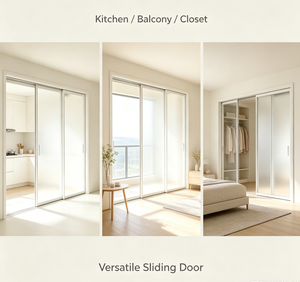
Factory-Direct Catalog
Featured Architectural Aluminum Door & Window Systems
Precision-engineered impact doors, thermal break sliding systems, and high-performance architectural fenestration manufactured in Foshan, China.
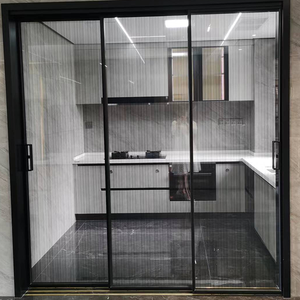
3 Panel Portable Linkage Aluminium Glass Kitchen Slide Door Frame Sliding Swing System Doors for House
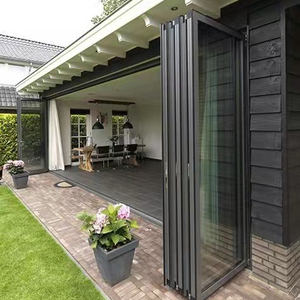
Deda Aluminum Door Frame Commercial Entry Doors Exterior Accordion Folding Bifold Doors
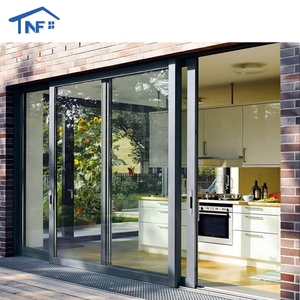
Customized Double Tempered Glass Sliding Door Aluminum Profile Frame Noiseless Heavy Duty Slider
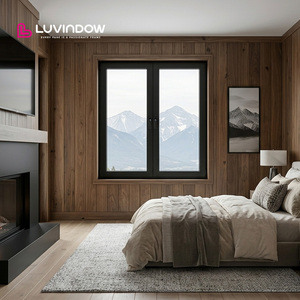
German Engineered Aluminum Windows Passive House Thermal Break Tilt Turn Window for Extreme Climate
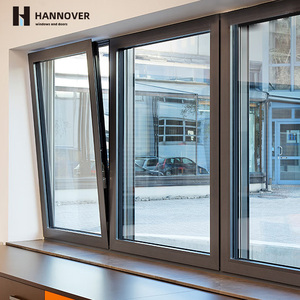
Passive House Standard Double Glazed Casement Window Thermal Break Aluminum Window with Uw<0.8 Glass
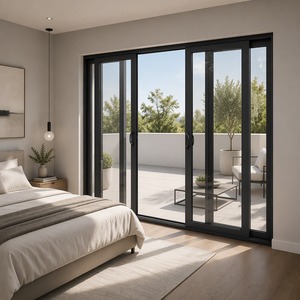
SIUPA Aluminum Door Patio Australian Double Glazed Sliding Door Villa Exterior/Interior Stacker Door
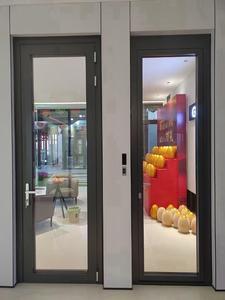
Exterior Thermal Break Aluminum Double Panel French Door Hinged Front Entry High Impact Double Door
Technical Whitepaper
Engineering Principles of Heavy-Duty Aluminum Impact Front Doors
An architectural breakdown of structural metallurgy, laminated safety glass dynamics, and thermal break engineering for extreme climate performance.
In contemporary architectural design, the exterior entrance system serves as both the primary visual statement of a property and its first line of physical defense against environmental forces. As extreme weather events increase in frequency and intensity worldwide, commercial developers, custom home builders, and architectural importers are rapidly shifting specs toward high-velocity hurricane zone (HVHZ) aluminum impact front doors. China—specifically the industrial manufacturing hub of Foshan in Guangdong Province—has established itself as the global epicenter for precision aluminum fenestration manufacturing, combining advanced extrusion metallurgy with automated glass lamination to deliver certified systems at scale.
Structural Alloy Engineering
Premium impact front doors utilize high-tensile 6063-T5 and 6063-T6 aluminum alloys with profile wall thicknesses ranging from 2.0mm to 3.0mm. T6 heat treatment significantly elevates yield strength and tensile rigidity, preventing frame deflection under extreme positive and negative design pressure loads exceeding ±70 PSF (Pounds per Square Foot).
Laminated Impact Glazing
Impact resistance relies on multi-layer glass configurations. Sourcing high-specification glazing involves bonding dual tempered glass panes via an ultra-tough SentryGlas® (SGP) or Polyvinyl Butyral (PVB) interlayer. This structure complies with ASTM E1886/E1996 Large Missile Impact (Level D/E) standards, resisting 9-lb 2x4 timber projectiles fired at 50 ft/s.
PA66 Thermal Break Insulation
Aluminum possesses high thermal conductivity. To prevent thermal bridging in extreme hot or freezing regions, profiles incorporate Polyamide PA66 GF25 thermal barrier strips. This mechanical separation dramatically reduces heat transfer, maintaining low U-Factor coefficients (<0.28 BTU/h·ft²·°F) and preventing interior condensation.
Hardware Integration & Multi-Point Security Architecture
The structural integrity of an impact-rated front entrance door is only as strong as its anchoring hardware and locking points. Leading Chinese manufacturers incorporate multi-point gear locking systems engineered from 304 or 316 marine-grade stainless steel. Unlike conventional single-latch deadbolts, multi-point locksets drive solid steel bolts into top, bottom, and side frame keeps simultaneously upon key engagement. This distributes localized hurricane wind pressures and forced-entry impact forces across the entire structural perimeter of the door sash.
Furthermore, heavy-duty 3D adjustable 3-leaf friction hinges or concealed heavy-pivot hardware allow smooth operational force for door sashes weighing up to 400 kg (880 lbs). Dual and triple EPDM (Ethylene Propylene Diene Monomer) weatherstripping gaskets are pressure-fitted along the profile perimeter, creating a hermetic compression seal that eliminates air infiltration (<0.1 cfm/ft²) and water penetration under driving rain conditions exceeding 750 Pa pressure differentials.
Surface Finishing & Atmospheric Corrosion Resistance
For coastal villa installations, resort developments, and high-salinity marine environments, surface treatment longevity is paramount. Top-tier China manufacturers utilize automated vertical powder coating lines certified to AAMA 2604 and AAMA 2605 specifications. Formulated with 70% PVDF (Fluoropolymer Fluorocarbon) resins (such as Kynar 500®), these coatings resist chalking, color fading, blistering, and severe salt spray corrosion for over 20 to 30 years. Alternative finishes include heavy-anodized coatings (Class I, >25 microns depth) and hyper-realistic wood-grain heat transfer sublimation, combining the organic aesthetic of timber with the structural maintenance-free durability of high-grade aluminum.
Performance Metrics
Technical Specification Comparison Matrix
Comparing Standard Commercial Entry Doors vs. High-Velocity Hurricane Zone (HVHZ) Aluminum Impact Front Doors
| Engineering Parameter | Standard Exterior Aluminum Door | High-Impact Thermal Break Entrance Door | Compliance Test Standard |
|---|---|---|---|
| Profile Alloy & Wall Thickness | 6063-T5 (1.4mm – 1.8mm) | 6063-T6 Structural Grade (2.0mm – 3.0mm+) | GB/T 5237, ASTM B221 |
| Impact Resistance Class | Non-Impact / Standard Tempered | Large Missile Impact (Level D/E SGP Interlayer) | ASTM E1886 / ASTM E1996 |
| Design Pressure (DP Rating) | DP 25 - DP 35 PSF | DP 60 - DP 90+ PSF (HVHZ Compliant) | TAS 201, 202, 203 / AAMA 101 |
| Thermal Conductivity (U-Factor) | 0.45 – 0.65 BTU/h·ft²·°F | 0.18 – 0.28 BTU/h·ft²·°F (PA66 GF25 Fitted) | NFRC 100 / ISO 10077 |
| Acoustic Sound Insulation | STC 28 – 32 dB | STC 42 – 48+ dB (Dual Acoustic Glazing) | ASTM E90 / ISO 140 |
| Locking Security Points | 1 to 2 Locking Latches | 5-Point to 9-Point Gear Driven Multi-Locks | EN 12209 Class 7 / PAS 24 |
| Surface Finish Spec | Standard Electrostatic Powder Coating | 70% PVDF / AAMA 2605 Marine Corrosion Class | AAMA 2605 / ISO 9227 Salt Spray |
Future Outlook
Global Procurement & Product Future Development Trends
Key technological shifts and supply chain dynamics influencing architectural door purchasing over the next decade.
1. Ultra-Slim Interlocks & Oversized Panoramic Pivot Systems
Architectural demand is moving rapidly away from heavy, bulky visible frames toward minimal frame sightlines. The trend in premium impact entryways combines ultra-slim profile sightlines (<25mm visible vertical stiles) with monumental sash dimensions up to 3.5 meters in height. Engineered with offset concealed pivot hinges and internal structural steel stiffeners, these doors offer grand entrance aesthetics without sacrificing structural load capability.
2. Decarbonization, Low-Carbon Billet Sourcing & Passive House Mandates
Environmental building codes across Western Europe, North America, and Australia are imposing stringent embodied carbon caps and operational efficiency rules. Aluminum manufacturers are adopting hydro-powered, low-carbon aluminum billets (producing <4.0 kg CO2 per kg aluminum) and integrating wider 34mm polyamide thermal breaks with aerogel insulation strips, enabling entrance doors to easily achieve Passive House certification standards (Uw ≤ 0.8 W/m²K).
3. Smart Access Integration & Biometric Security Hardware
The modern impact entrance door is increasingly expected to serve as a smart access hub. Procurement specs frequently mandate fully integrated, concealed biometric fingerprint scanners, face recognition modules, RFID keycards, and motorized multi-point locks that communicate via smart home protocols (Zigbee, Matter, Z-Wave). China manufacturers lead in embedding these electronic systems into thermal break frames cleanly without compromising weather seals.
4. Direct Manufacturer Procurement & BIM/CAD Custom Co-Engineering
Overseas real estate developers and general contractors are bypassing traditional multi-tier import distributors to collaborate directly with factory engineering teams in China. Through 3D BIM (Building Information Modeling) object integration and digital shop drawing sign-offs, buyers ensure exact tolerance matching for custom structural openings, mitigating risk and cutting material procurement costs by 30% to 45%.
Procurement Guide
Frequently Asked Questions for Global Importers
Essential technical and logistical insights for architects, builders, and wholesalers sourcing aluminum impact front doors from China.
What certifications should I look for when importing impact doors from China? ▼
For hurricane-prone regions such as Florida, the Caribbean, and coastal Australia, verify that the manufacturer supplies laboratory test reports according to ASTM E1886 / E1996 (Large Missile Impact & Cyclic Pressure), TAS 201/202/203, or Australian AS2047 / AS1170 standards. Thermal testing should be validated via NFRC 100/200/500 or ISO 10077 documentation. Factory management should hold ISO 9001 quality system accreditation.
How are fragile glass impact doors packaged to prevent damage during ocean freight? ▼
Export-grade fenestration packaging uses a multi-tier protective wrapping protocol: First, protective PE anti-scratch film is applied to all aluminum powder-coated surfaces. Corners are enclosed in heavy EVA foam guards. The entire door unit is wrapped in water-resistant bubble film, and then fully sealed inside a custom-built, ISPM 15 compliant fumigation-free solid plywood crate with internal shock-absorbing foam blocks and steel strapping.
Can Foshan door manufacturers customize architectural sizes, colors, and hardware? ▼
Yes, custom engineering is standard. Every single door unit is fabricated to custom millimetric dimensions based on approved structural shop drawings. Buyers can specify frame profile colors via RAL powder coating color codes, PVDF fluorocarbon shades, anodized finishes, or wood-grain sublimations. Hardware can also be customized to German brands (such as Hoppe, Siegenia, GU, Roto) or top-grade factory OEM hardware systems.
What is the typical production lead time and minimum order quantity (MOQ)? ▼
Standard production lead time ranges from 25 to 35 working days following final shop drawing approval and deposit receipt. For complex custom extruded profiles or specialized laminated glass, lead time may extend to 40 days. Minimum order quantities are flexible: while bulk container orders (20GP / 40HQ) maximize sea freight efficiency, established manufacturers support sample or single-villa project orders (MOQ starting at 1 unit).
What is the difference between SGP interlayer glass and standard PVB impact glass? ▼
SentryGlas® (SGP) ionoplast interlayers are 5 times tougher and up to 100 times stiffer than standard PVB interlayers. If the glass fractures under extreme wind-borne debris impact, SGP maintains structural rigidity and remains standing vertically in the frame under heavy cyclic storm pressures. Standard PVB is more pliable and may sag or collapse when broken under severe high-velocity hurricane pressure loads.
How do thermal break aluminum entry doors compare to fiberglass or solid timber doors? ▼
Thermal break aluminum doors provide vastly superior structural stability and dimensional accuracy compared to timber (which swells, warps, or rots when exposed to moisture) and fiberglass (which can crack under intense UV thermal radiation and physical stress). Aluminum retains structural shape indefinitely, requires zero refinishing maintenance, and supports significantly larger impact-resistant glass sashes with ultra-narrow sightlines.
Factory Advantage
Vexis Windows & Doors: Your Direct Manufacturing Partner
Vexis Windows & Doors Co., Ltd. is a premier high-end fenestration manufacturer headquartered in Lishui Town, Foshan, Guangdong Province—the heart of China's aluminum industry. Integrating R&D, structural design, automated production, and international logistics, Vexis delivers tailor-made aluminum windows, heavy-duty sliding doors, ultra-slim pivot doors, and certified impact front entry systems directly from our factory floor to global project sites.
-
✓30,000 m² Modernized Manufacturing Base Equipped with CNC multi-axis machining centers, digital profile cutting saws, double-corner crimping machines, and automated glass assembly lines.
-
✓1,500 m² Immersive Architectural Exhibition Hall Displaying full-scale operating specimens of thermal break casement windows, heavy-duty stacker sliding doors, tilt-turn systems, and impact entryways.
-
✓Global Reach Across 154+ Countries Proven project supply track record across North America, Australia, Western Europe, Southeast Asia, the Middle East, and the Caribbean.
-
✓Strict In-House QC & Pre-Shipment Mock-Up Assembly Every custom door set undergoes rigorous fit testing, hardware check, and water spray testing prior to crate packing.

Request a Custom Engineering Quote & Specification Review
Partner directly with Foshan's leading manufacturer of high-performance impact front doors, thermal break windows, and architectural sliding systems. Our engineering team reviews drawings within 24 hours.