Engineering Systems & Product Portfolio
Export-Grade Architectural Window and Door Solutions for Global Residential and Commercial Projects
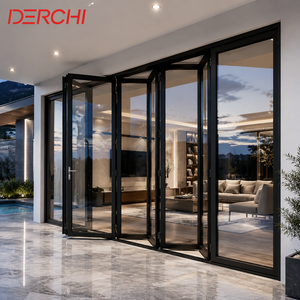
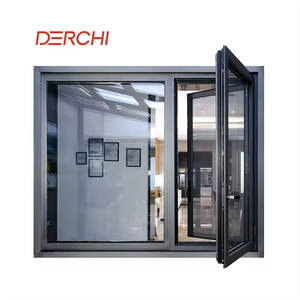
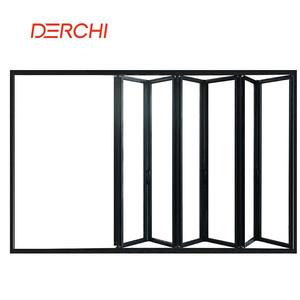
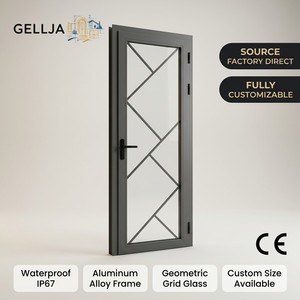
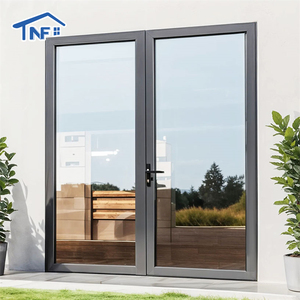
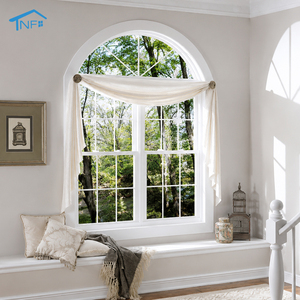
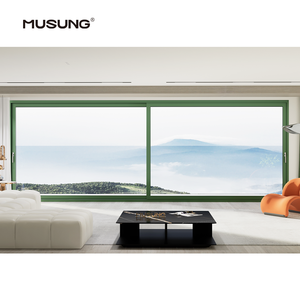
Architectural Whitepaper: Structural & Thermal Physics of China Aluminum Awning Windows
In modern high-performance building envelopes, aluminum awning windows serve a pivotal role in balancing natural ventilation, structural wind resistance, and energy conservation. Hinged at the top and opening outward from the bottom, awning window systems create a natural protective canopy, enabling continuous micro-ventilation even during heavy tropical rainfall. However, specified product quality across global commercial and luxury residential projects varies dramatically depending on the manufacturer's metallurgy control, extrusion engineering, thermal break technology, and hardware integration.
China has established itself as the global epicenter for precision aluminum window fabrication, specifically in manufacturing hubs such as Foshan, Guangdong. Premier manufacturers leverage advanced 6063-T5/T6 architectural aluminum profiles, engineered multi-chambered thermal barrier strips, and multi-point perimeter locking hardware to achieve structural ratings exceeding ASTM, AS2047, and European CE specifications.
When specified by global architectural firms, real estate developers, and facade engineering contractors, China-manufactured awning windows offer unparalleled design flexibility. Key structural parameters that distinguish export-grade fabricators include:
- Structural Alloy Standard: High-density 6063-T5 or T6 grade extruded aluminum profiles engineered with minimum wall thicknesses ranging from 1.4mm for residential applications to 2.0mm–3.0mm for high-rise curtain wall integrations.
- Dual & Triple EPDM Sealing Gaskets: Continuous ethylene propylene diene monomer (EPDM) weather-stripping engineered with vulcanized corner joints, providing absolute water tightness up to 700 Pa and air infiltration resistance down to 0.06 cfm/ft².
- Friction Stay & Operator Hardware Integration: Heavy-duty stainless steel 304/316 friction stays capable of supporting oversized heavy glass panels up to 120 kg per sash, paired with dual-arm rotary truth window operators or concealed electric motorized actuators.
Strategic Future Procurement Trends for Global Window Importers (2026–2035)
The international fenestration procurement landscape is undergoing a massive shift driven by net-zero carbon building regulations, stringent energy codes (such as ASHRAE 90.1, NFRC standards, and the EU Energy Performance of Buildings Directive), and rising climate volatility. Importers, wholesalers, and general contractors sourcing from China must align their supply chains with four decisive future procurement trends:
| Procurement Trend Axis | Technical & Engineering Requirement | Impact on Importer Competitiveness |
|---|---|---|
| 1. Ultra-Low U-Value & Passive House Compliance | Transition from standard double-glazing to triple-pane, double-chamber Low-E units filled with 90%+ Argon gas, featuring warm-edge composite spacers and PA66 GF25 thermal breaks. overall Uw ≤ 0.8–1.2 W/m²K. | Unlocks access to high-margin municipal green projects, LEED Gold/Platinum commercial developments, and premium cold-climate residential markets in North America and Northern Europe. |
| 2. Ultra-Slim Sightline Minimalist Architecture | Structural silicone structural glazing (SSG) with narrow visible frame widths (< 40mm). Concealed hinges, hidden drainage pathways, and flush frame-to-sash interfaces. | Meets high-end architectural intent for panoramic views, daylight optimization, and high-value modern luxury villa projects. |
| 3. Smart Actuation & Automated Building Integration (BMS) | Embedded 24V DC chain actuators connected to smart home automation platforms (Zigbee/KNX/Wi-Fi) with rain/wind sensors and auto-closing triggers during severe weather events. | Appeals to high-tech commercial facades, institutional facilities, skylight venting systems, and inaccessible high-transom applications. |
| 4. Extreme Weather & Hurricane Impact Resistance | Laminated storm glass (PVB or SGP interlayers up to 1.52mm/2.28mm) paired with heavy-duty structural corner keys and stainless steel multi-point lock points rated for ASTM E1886/E1996 Large Missile Impact. | Essential for coastal developments in storm zones such as Florida/Gulf Coast (USA), the Caribbean, the Philippines, Australia (Cyclonic Regions), and East Asia. |
Importers who audit their supply chain manufacturers based on testing certifications (NFRC, CE, AS2047, CSA) rather than upfront unit cost alone will capture dominant market share, minimizing post-installation liability and structural failure rates.
Product Development & Manufacturing Innovation Trends
As Chinese aluminum manufacturers invest heavily in Industry 4.0 automation, CNC machining centers, and automated glass processing lines, awning window technology has progressed far beyond basic residential fenestration. Premier factories now implement state-of-the-art structural modifications:
- Seamless Laser Corner Welding Technology: Traditional mechanical corner key crimping is increasingly supplemented by seamless profile welding or precision glue-injection corner assembly. This prevents hairline water leakage at sash joint angles over time while providing superior structural torsion strength under heavy wind loads.
- Surface Coating Longevity (AAMA 2604 / AAMA 2605): Advanced electrostatic powder coating, PVDF (Fluorocarbon) liquid spraying, and anodizing finishes ensure profiles resist UV degradation, chalking, and salt-spray corrosion for over 25 years. This makes them ideal for marine-front luxury developments.
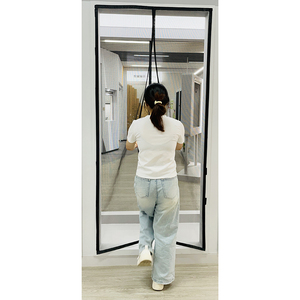
- Integrated Mosquito & Security Screen Systems: Modern awning windows seamlessly incorporate high-strength 304/316 stainless steel mesh screens (0.7mm–0.9mm wire diameter) or magnetic fly screens that double as anti-theft barriers without obstructing clear light transmission or emergency egress operation.
Why Partner with Vexis Windows & Doors Co., Ltd.
Factory-Direct Excellence, Proven Technical Heritage, and Comprehensive Global Supply Chain Capabilities
30,000 m² Production Powerhouse
Operating a massive industrial manufacturing base in Lishui Town, Foshan, Guangdong, equipped with automated German CNC cutting, corner crimping, and insulated glass assembly lines.
Global Presence in 154+ Countries
With over two decades of international trade and contract supply experience, our systems are successfully installed across North America, Europe, Australia, the Middle East, and Southeast Asia.
NFRC, CE & AS2047 Verification
Products undergo rigorous independent testing for thermal conductivity, water tightness, air permeability, and wind pressure, ensuring fast, frictionless project approvals and customs clearance.
1,500 m² Immersive Showroom
Importers and architects can visit our expansive Foshan exhibition center to test full-scale operable mockups, slim-frame doors, tilt & turn systems, and curtain wall connections.
End-to-End Architectural Bespoke Customization
Complete customization capabilities spanning shop drawing engineering, extrusions, anodizing/RAL powder coating colors, custom glass specs, sub-frame systems, and hardware sourcing.
Factory-Direct Export Logistics & Packing
Heavy-duty export packing featuring protective film wrapping, corner guards, fumigated wooden crates, and steel-frame containers engineered to eliminate transit damage.
Global Procurement FAQ: Sourcing Aluminum Awning Windows from China
Detailed technical and logistics answers curated by our senior export engineering team to support international buyers, wholesalers, and general contractors.