Featured Engineering Hurricane Impact Systems

Executive Summary & Structural Engineering Fundamentals
In coastal regions across North America, Australia, the Caribbean, and Southeast Asia, the escalating frequency of extreme storm events has elevated aluminum hurricane impact windows from optional architectural upgrades to non-negotiable life-safety systems. Modern fenestration engineering demands that exterior window frames not only withstand sustained wind loads exceeding 160 mph (71 m/s) but also survive severe airborne debris impacts without breach of the interior envelope envelope pressure.
Architectural aluminum systems represent the gold standard for hurricane-resistant envelope construction due to their superior tensile strength-to-weight ratio, structural rigidity, and resistance to salt-spray corrosion when enhanced with High-Performance Fluorocarbon (PVDF) or Advanced Anodized finishes. This whitepaper systematically evaluates the world's leading suppliers and manufacturers of aluminum hurricane impact windows, analyzing profile metallurgy, thermal barrier integration, glass lamination chemistry, and structural certification standards (such as Miami-Dade NOA, AAMA/WDMA/CSA 101/I.S.2/A440, AS2047, and NFRC).
Material Science: Aluminum Alloys & Impact Glass Laminates
The performance of an aluminum hurricane window relies on a dual-engine architecture: the structural extrusion profile and the multi-layered laminated safety glass.
1. Extrusion Metallurgy & Profile Geometry
Premium manufacturers utilize 6063-T6 aluminum extrusion alloys, engineered with structural wall thicknesses ranging from 1.8 mm to 3.0 mm depending on opening span requirements. To counteract the inherent thermal conductivity of aluminum, high-end hurricane windows integrate PA66 nylon thermal break strips reinforced with 25% fiberglass. This prevents thermal bridging while maintaining structural shear strength during dynamic hurricane pressure oscillations.
2. Laminated Impact Glass Technology (SGP vs. PVB)
Impact glazing consists of two or more glass lites permanently bonded by an architectural interlayer. When struck by flying debris (such as a 9-lb 2x4 wooden stud travelling at 50 ft/sec under ASTM E1996 Large Missile Impact testing), the outer glass pane may fracture, but the interlayer holds the fragment assembly intact, preventing pressure breach.
- Polyvinyl Butyral (PVB): The standard flexible interlayer offering reliable impact resistance and noise reduction. Ideal for standard residential applications.
- SentryGlas® Ionoplast (SGP): Five times stronger and up to 100 times stiffer than standard PVB interlayers. SGP prevents glass collapse even under intense hurricane winds, making it mandatory for High-Velocity Hurricane Zones (HVHZ), high-rise coastal towers, and broad panoramic openings.
Future Sourcing & Procurement Trends (2026–2030)
As building energy codes tighten globally alongside climate adaptation mandates, the strategic procurement of aluminum hurricane windows is evolving rapidly. Commercial developers, facade engineers, and residential builders are prioritizing four major technological shifts:
Ultra-Slim Sightlines with Extreme Load Ratings
Advances in finite element structural modeling (FEA) allow suppliers to reduce sightline profiles while maintaining high Design Pressure (DP) ratings (+/- 70 to +/- 110 PSF).
Triple-Glazed Solar Control Low-E IGUs
Integrating double-chamber argon-filled Low-E insulating glass units (IGUs) into impact assemblies achieves U-factors below 0.22 BTU/h·ft²·°F and SHGC below 0.20.
Multi-Point European Hardware Integration
Transitioning from traditional single-latch handles to concealed multi-point locking systems (e.g., German Siegenia, Hoppe, or Sobinco) ensures uniform peripheral compression and air tightness.
Bespoke OEM Sourcing from Certified Ecosystems
Global sourcing managers are increasingly leaning on direct factory manufacturing hubs in Foshan, China to obtain high-performance custom-engineered systems at competitive factory wholesale rates.
Structural & Performance Benchmark Matrix
The matrix below details key engineering benchmarks across major global manufacturers of hurricane-resistant window systems:
| Manufacturer / Brand | Primary Material | Impact Standard / Certification | Max Design Pressure (DP) | Thermal Break Tech | Primary Market Focus |
|---|---|---|---|---|---|
| Vexis Windows | 6063-T6 Aluminum | AS2047, NFRC, CE, ISO9001 | Up to +/- 90 PSF | PA66 Nylon Insulated Strip | Global Export (154+ Countries) |
| PGT Custom Windows | Heavy-Duty Aluminum | Miami-Dade NOA, Florida Product Approval | Up to +/- 100 PSF | Poured & Debridged / Strip | North America (Coastal USA) |
| Schüco International | High-Grade Aluminum | EN 12600, CE, Hurricane Custom Specs | Up to +/- 110 PSF | Polyamide High-Insulation | Europe, Global Commercial |
| CGI Windows | Extruded Aluminum | Miami-Dade NOA, HVHZ Approved | Up to +/- 90 PSF | Standard & Thermal Options | USA (Florida Coastal) |
| YKK AP America | Architectural Aluminum | ASTM E1886 / E1996, AAMA | Up to +/- 80 PSF | ThermaCore® Barrier | Commercial USA / Asia |
| Andersen (Stormwatch®) | Aluminum-Clad / Vinyl | Florida Product Approval, ASTM | Up to +/- 70 PSF | Composite Fiber Thermal | Residential North America |
Top 10 Aluminum Hurricane Windows Manufacturers & Suppliers Review
Headquartered in Lishui Town, Foshan, Guangdong—the world's premier aluminum production capital—Vexis Windows is a vertically integrated manufacturer specializing in high-performance aluminum hurricane windows, thermal break systems, multi-track stacker sliding doors, and architectural curtain walls. Operating from a massive 30,000 m² state-of-the-art manufacturing base alongside a 1,500 m² immersive technical exhibition center, Vexis has supplied commercial developments, luxury villa projects, and window distributors across more than 154 countries.
Key Technical Strengths: Vexis engineers custom extrusion profiles utilizing 6063-T6 aluminum alloys fitted with high-density PA66 polyamide thermal barriers. Their hurricane impact series features laminated tempered glass combinations with SentryGlas® (SGP) or high-grade PVB interlayers tested against severe wind loads and water penetration. With strict adherence to international building standards including Australian AS2047, American NFRC, and European CE standards, Vexis offers architectural project customization (CAD/BIM shop drawings, custom anodizing, PVDF spraying) with full factory-direct pricing advantages.
PGT is widely recognized as a pioneer in the North American impact window market, particularly within Florida's High-Velocity Hurricane Zone (HVHZ). Their WinGuard® aluminum line combines heavy-duty aluminum frames with impact-resistant laminated glass, engineered specifically to resist wind-borne debris and air infiltration during major hurricane force winds.
Schüco sets global standards for premium aluminum envelope systems. Renowned for ultra-precise engineering, Schüco offers hurricane-rated window profiles that achieve exceptional U-factors, advanced thermal insulation, and seamless integration with smart building automation systems. Their systems are widely specified in high-rise commercial structures and luxury modern estates.
A subsidiary of PGT Innovations, CGI specializes in premium heavy-gauge aluminum impact windows and doors. CGI products feature commercial-grade structural aluminum extrusions, stainless steel assembly fasteners, and multi-point locking hardware engineered specifically to withstand corrosive coastal marine environments.
Reynaers is a European leader in the development of sustainable aluminum window and door solutions. Their high-wind and storm-resistant window lines incorporate advanced thermal isolation technologies, slim framing sightlines, and wide-span curtain wall adaptability for extreme weather conditions.
YKK AP delivers comprehensive commercial architectural aluminum products, including hurricane-resistant storefronts, curtain walls, and heavy-duty casement windows. Their proprietary ThermaCore® thermal barrier technology delivers superior energy conservation alongside high Design Pressure performance.
Andersen's Stormwatch® protection package offers severe weather performance across their architectural aluminum-clad series. Designed to meet stringent coastal building codes, Andersen combines aesthetic interior wood finishes with durable exterior aluminum shielding.
Marvin Coastline® aluminum impact windows are crafted with thick extrusions and high-density laminated glass designed for extreme coastal exposure. Marvin focuses heavily on bespoke architectural detail, allowing historical and modern homes alike to maintain aesthetic elegance without sacrificing storm safety.
Lawson Windows produces extruded aluminum impact windows and doors primarily serving multi-family residential and commercial projects in tropical coastal zones. Their windows focus on high air and water infiltration resistance with straightforward installation mechanics.
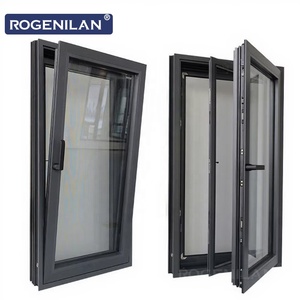
Rogenilan and EEHE manufacture NFRC-certified, soundproof, and waterproof hurricane impact casement, sliding, and tilt-and-turn window systems. Utilizing double and triple-glazed configurations, these manufacturers provide reliable architectural products tailored for international import channels.
Enterprise Manufacturing Capabilities & Quality Assurance
As demonstrated by industry leaders like Vexis Windows, securing high-performance hurricane window systems requires rigorous control over the entire supply chain—from raw aluminum billet extrusion to final export packaging.
1. Precision Automated Extrusion & CNC Machining
30,000 m² production facilities leverage multi-axis CNC machining centers to execute millimeter-accurate corner key joins, water drainage channels, and hardware notch cutouts.
2. Multi-Layer Environmental Sealing
To resist torrential rain pressure up to 700 Pa, high-grade windows combine triple EPDM weatherstripping gaskets with vulcanized continuous corner seals.
3. Export Freight-Safe Packaging Systems
International glass shipments utilize heavy-duty fumigated wooden crates, iron pallet supports, protective surface films, and corner guards to eliminate ocean freight transit damage.
Procurement & Technical FAQ
What is the difference between SGP (SentryGlas®) and PVB interlayers in impact glass?
How do aluminum hurricane windows achieve high energy efficiency despite aluminum's thermal conductivity?
What mandatory certifications should importers verify when sourcing hurricane windows internationally?
How do developers calculate the required Design Pressure (DP) rating for custom window sizes?
Why is factory-direct sourcing from Foshan, China advantageous for multi-family residential developments?
What is the typical lead time and quality inspection workflow for direct factory orders?
Engineered Hurricane Protection for Your Next Project
Need technical shop drawings, structural wind load calculations, or factory-direct wholesale pricing for aluminum hurricane impact windows? Contact our engineering export team today.
Get a Quote