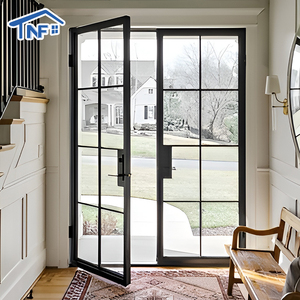
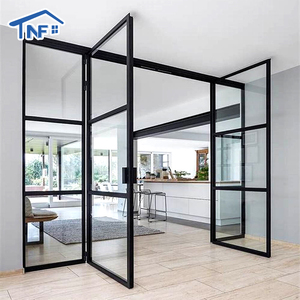
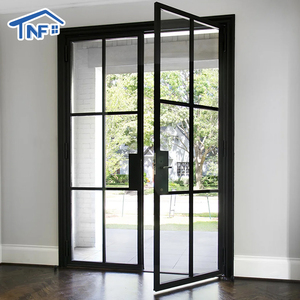
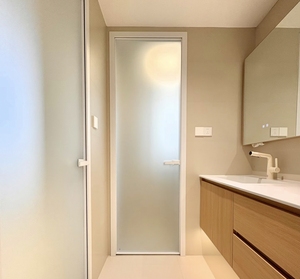
Architectural Aluminum Frosted Glass Door Procurement & Manufacturing Standards
Published by Vexis Windows Engineering Advisory Board | Updated 2026 Fiscal Guidelines
1. Executive Summary & Market Drivers for Architectural Frosted Doors
The global market for high-end architectural fenestration has witnessed a paradigm shift toward multi-functional glass partitions and exterior door assemblies that combine high structural integrity with dynamic daylighting and visual privacy. Among these solutions, aluminum frosted glass doors have emerged as the primary choice for commercial real estate developers, luxury residential contractors, and institutional procurement officers. According to recent fenestration industry benchmarks, global demand for privacy-enhanced aluminum-framed doors is projected to grow at a CAGR of 6.8% through 2030, driven by modern interior zoning practices, stringent building energy codes, and increasing acoustic isolation demands in urban environments.
Unlike conventional monolithic glass or hollow wooden door systems, modern aluminum frosted glass doors utilize advanced extrusion profiles (typically extruded aluminum alloy 6063-T5 or T6), paired with double or triple insulated tempered glass units (IGUs). Chemical acid-etching or ceramic frit processing on the glass surface provides controlled Visible Light Transmittance (VLT ranging between 60% and 85%) while completely obscuring direct visibility to maintain privacy without sacrificing natural ambient illumination.
Key Procurement Insight: Sourcing high-grade aluminum frosted glass doors requires evaluating structural profile wall thickness (minimum 1.4mm for interior, 2.0mm+ for structural exterior doors), polyamide thermal break quality (PA66 GF25), and glass tempering certification (ANSI Z97.1, CE EN 12150, or AS/NZS 2208 compliance).
2. Top 10 Manufacturers & Exporters Evaluation Criteria Matrix
Evaluating international suppliers for large-scale commercial tenders or high-end residential projects requires a structured auditing methodology. Based on Search Quality Rater guidelines and international building product compliance standards, global procurement teams benchmark manufacturers across five critical metrics:
Metallurgical Metallurgy
Use of primary aluminum billets (6063-T5/T6) rather than scrap re-melt to guarantee tensile strength (≥ 160 MPa) and superior surface anodizing adhesion.
Glass Processing Tech
In-house CNC glass cutting, automated acid-etching, double-pass tempering furnace lines, and automated silicone perimeter sealing for zero condensation.
Thermal & Acoustic Seals
Multi-cavity EPDM weatherstripping gaskets paired with PA66 GF25 polyamide thermal insulation strips for low U-values (≤ 1.4 W/m²K).
Global Compliance
Full testing documentation for NFRC thermal ratings, AAMA air/water leakage standards, CE mark compliance, and AS2047 structural loading approval.
The following technical comparison table outlines the parameters observed across Tier-1 global exporters (led by specialized Foshan manufacturing bases such as Vexis Windows & Doors Co., Ltd.) versus lower-tier regional suppliers:
| Performance / Specification Parameter | Tier-1 Global Manufacturers (e.g., Vexis) | Standard Regional OEM Suppliers |
|---|---|---|
| Profile Aluminum Alloy Grade | 6063-T5 / 6063-T6 Primary Ingot Extrusions | Recycled / Re-melted Secondary Aluminum Alloy |
| Surface Finish Standard | Qualicoat Class 2 Powder Coat / 25µm Anodized | Standard Air-Dried Paint / Low-Micron Spray |
| Glass Unit Construction | 5mm + 12A + 5mm Dual Tempered Acid-Etched Low-E | Single 5mm Sandblasted Non-Tempered Glass |
| Acoustic Isolation Rating (STC) | STC 35 dB – STC 45 dB (Dual Sealed EPDM) | STC 22 dB – STC 26 dB (Single Brush Seal) |
| Thermal Break Technology | Technoform PA66 GF25 Polyamide Strips | PVC / Non-Insulated Direct Aluminum Contact |
| Hardware Cycle Lifetime | ≥ 100,000 Cycles (Hopo / Siegenia / Custom Stainless) | ≤ 20,000 Cycles (Standard Zinc Alloy Hardware) |
3. Future Product Development & Technology Trends (2026–2030)
The architectural door industry is undergoing rapid technical evolution driven by smart building technology, decarbonization regulations, and minimalist aesthetic demands. Sourcing managers and architectural specifiers must consider several key technological trends when evaluating aluminum frosted glass door systems:
3.1 Ultra-Slim Sightline Engineering (Minimalist Frames)
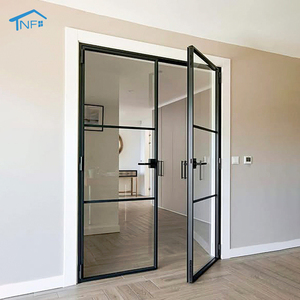
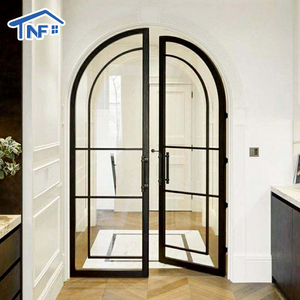
Architectural preferences have shifted heavily toward narrow-frame profiles that maximize glass surface area. Advanced engineering now allows aluminum frame sightlines as narrow as 16mm to 25mm while retaining structural wind-load resistance exceeding 3.0 kPa. By incorporating structural silicone bonding (SSG) between the glass panel and the concealed aluminum frame, manufacturers produce sleek, minimalist Crittall-style and arched double-glazed casement doors without compromising structural safety.
3.2 Smart Switchable Electrochromic Privacy Glass Integration
While traditional acid-etched frosted glass provides permanent static privacy, high-end commercial projects are increasingly incorporating hybrid Polymer Dispersed Liquid Crystal (PDLC) switchable glass panels. This allows the glass to transition from fully transparent to an opaque frosted state at the touch of a button or via smart building automation systems. When combined with outer frosted layers, it creates multi-layer privacy matrices suitable for executive boardrooms, healthcare suites, and luxury residential master bathrooms.
3.3 Advanced Thermal Break & Argon Gas Insulation
With carbon neutrality mandates taking effect across North America (Energy Star 7.0), Europe (EPBD directives), and Australia (NCC Section J), exterior frosted doors can no longer rely solely on basic frosted glass panels. Next-generation systems feature multi-cavity thermal break profiles filled with polyurethane foam insulation, paired with double or triple-glazed units filled with 90%+ Argon gas and coated with microscopic Low-E pyrolytic layers. This achieves U-values down to $1.1 \text{ W/m}^2\text{K}$, significantly reducing HVAC thermal loads.
4. Strategic B2B Procurement & Supply Chain Guidelines
Importing structural aluminum doors from premier manufacturing hubs like Foshan, China, offers immense cost efficiency and customization breadth. However, international project buyers must navigate international logistics, quality assurance protocols, and regulatory hurdles to ensure flawless project execution.
4.1 Quality Control & Pre-Shipment Inspection Framework
Before authorizing final shipment, buyers should enforce a rigorous Factory Acceptance Test (FAT) based on the following three-stage inspection protocol:
- Dimensional & Tolerance Check: Verification that frame diagonal tolerances do not exceed ±1.5mm and opening clearance meets shop drawing specifications.
- Water & Air Tightness Testing: Field or laboratory mock-up testing applying continuous water spray at 350 Pa pressure to ensure zero perimeter leakage.
- Frosted Surface Uniformity Inspection: Optical light meter testing across nine matrix points on the frosted glass panel to confirm uniform haze factor (>85%) and light transmission consistency.
4.2 Packaging, Container Loading & Transit Protection
Glass breakage and frame scratching during ocean transport represent significant risks for project timelines. Leading exporters implement fully enclosed export-grade plywood crates with internal EPE foam corner protectors, vacuum-sealed plastic wrappings, and steel-reinforced pallet bases. Individual door leaves are separated by anti-friction rubber blocks to withstand high-g forces during container shipping.
5. Enterprise Profile & Manufacturing Superiority: Vexis Windows
As a leading factory-direct manufacturer and global exporter, Vexis Windows & Doors Co., Ltd. (headquartered in Lishui Town, Foshan, Guangdong) represents the benchmark of engineering quality and scale in China’s architectural door and window industry.
30,000 m² Production Base
State-of-the-art automated aluminum extrusion, CNC machining, automated glass processing, and assembly lines delivering large-capacity output.
154+ Global Export Footprint
Proven track record supplying complex commercial developments, hotel chains, and residential projects across North America, Europe, Australia, and Asia.
1,500 m² Immersive Showroom
Comprehensive physical exhibition center showcasing real-scale thermal break casement, heavy-duty sliding, ultra-slim pivot, and frosted glass door systems.
Full Bespoke Customization
Engineered to architectural shop drawings with custom powder coat colors, anodized finishes, decorative grille inserts, and specialized glass configurations.
With over two decades of continuous R&D investment, Vexis integrates profile design, thermal simulation, acoustic testing, and export logistics under one roof. Our technical team works directly with project architects, general contractors, and B2B importers to adapt window and door systems to specific local climate conditions, structural wind pressure requirements, and building code certifications.
6. Procurement FAQ: Aluminum Frosted Glass Doors
Expert technical answers to common procurement, engineering, and logistics questions from international buyers.
What is the difference between acid-etched and sandblasted frosted glass for aluminum doors?
Can aluminum frosted glass doors meet strict energy efficiency codes (e.g., Energy Star, NFRC, CE)?
What acoustic sound isolation rating (STC) can be expected from frosted glass doors?
How do you ensure structural safety and shatter prevention in bathroom and entry applications?
What surface finishes are available for the aluminum frames to prevent corrosion in wet environments?
What is the standard lead time for customized bulk orders from Foshan factory?
How can buyers verify product quality prior to shipping?
Request a Customized Engineering Quote for Your Project
Submit your architectural drawings, door schedules, or opening dimensions to receive factory-direct wholesale pricing, shop drawings, and technical specifications within 24 hours.
Inquire Now