Featured Export-Grade Window & Door Systems
Global Sourcing Whitepaper: Selecting Premier Aluminium Folding Glass Door Exporters
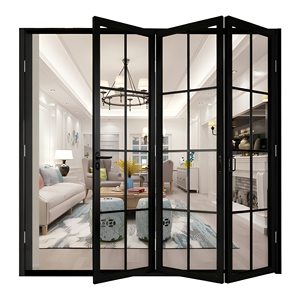
In modern architectural design, the boundary between interior living spaces and external environments has blurred significantly. Commercial real estate developers, luxury residential builders, and architectural procurement specialists increasingly specify high-performance aluminium folding glass doors (bifold door systems) to create expansive, unobstructed openings. However, sourcing structural architectural glazing across international borders demands deep evaluation of material science, structural load capacity, thermal efficiency metrics, and factory engineering standards.
This technical whitepaper serves as an authoritative procurement benchmark for global buyers seeking the top 10 aluminium folding glass door exporters. It delves into the precise mechanical properties, custom profile extrusions, glass unit configurations, and global building code compliance required to execute flawless international facade projects.
Enterprise Manufacturing Strength & Engineering Standards
Operating from a state-of-the-art 30,000 m² production hub in Foshan, Guangdong—the world’s premier architectural aluminum processing capital—Vexis Windows & Doors Co., Ltd. integrates specialized R&D, precision CAD/BIM engineering, custom profile extrusion, and rigorous international quality control under one roof. With over two decades of dedicated export experience servicing clients across 154+ countries, our technical team continuously refines system performance to match stringent regional building codes, including North American AAMA/WDMA, European CE standards, and Australian AS2047 requirements.
Structural & Weatherproof Engineering
Engineered with multi-chamber thermal break extrusions, continuous EPDM triple-gasket seals, and concealed drainage channels. Built to withstand high wind pressures, severe rain storms, and extreme solar exposure.
Direct Factory Sourcing & OEM/ODM
Full vertical integration eliminates intermediary markups. Importers gain factory-direct wholesale pricing, guaranteed production scheduling, fast container turnaround, and complete customization to project shop drawings.
Global Logistics & Compliance
Exporting to 154+ nations requires robust seaworthy ISPM-15 wooden crate packaging, protective scratch-resistant film coating, export customs documentation, and structural test reports ready for building inspectors.
Technical Evaluation Matrix: Benchmarking Top Aluminium Folding Door Manufacturers
When evaluating manufacturers within the top 10 export tier, architectural buyers must scrutinize technical parameters rather than relying purely on aesthetic marketing. Below are the key engineering markers that distinguish premium industrial folding door systems from residential-grade products:
| Performance Standard | Commercial Grade (Top Exporter Benchmark) | Standard Residential Grade | Architectural Impact / Value |
|---|---|---|---|
| Alloy & Temper | Primary 6063-T5 / T6 Architectural Aluminum | Secondary / Recycled Scrapped Alloy | Ensures high tensile strength, precise tolerances, and superior surface finishing longevity. |
| Wall Thickness | 2.0mm to 3.0mm Structural Profile | 1.2mm to 1.4mm Thin Wall | Prevents frame sagging on large spans up to 12 meters; resists high wind pressure load. |
| Thermal Insulation | PA66-GF25 Polyamide Strips (24mm - 34mm) | PVC / Non-thermal break profile | Lowers U-Factor to 1.2 W/m²K, preventing condensation and reducing HVAC power consumption. |
| Glass Configuration | Double/Triple Tempered Low-E + Argon Gas | Single Monolithic / Clear Glass | Enhances acoustic rating (STC 42 dB) and controls Solar Heat Gain Coefficient (SHGC < 0.25). |
| Hardware & Rollers | Heavy-Duty Top/Bottom Stainless Steel Rollers (300kg) | Nylon / Zinc Alloy Single Carriage | Guarantees effortless finger-push sliding operation over 100,000+ opening cycles. |
| Water Tightness | Concealed Step-Drainage + EPDM Triple Gasket | Surface Flush Track / Standard Brushes | Prevents water ingress during extreme storm typhoons (Tested up to 700 Pa water pressure). |
Future Sourcing & Technology Trends in Folding Glass Doors (2025–2030)
The global facade industry is undergoing rapid technological evolution. B2B procurement managers and architectural specifiers must align their sourcing strategies with upcoming regulatory, environmental, and design shifts:
1. Ultra-Slim Sightlines & Panoramic Glazing
Minimalist architecture demands slimmer mullions. Exporters are engineering ultra-narrow interlocking vertical stiles (less than 30mm visible width) that maximize natural daylight while maintaining high wind-load structural integrity.
2. Universal Zero-Barrier Flush Thresholds
Accessibility laws (such as ADA standards) are accelerating adoption of recessed, low-profile sill systems. Modern folding doors integrate thermal-break flush tracks with concealed subsurface drainage networks to eliminate trip hazards without sacrificing water resistance.
3. Automated Smart Motorization & Building Controls
Commercial venues and high-end smart homes require motorized folding door systems linked to central Building Management Systems (BMS). Embedded sensor-driven drives allow smooth touch-button or mobile app opening of multi-panel door stacks.
B2B Sourcing Protocol: How to Verify an Export Factory
To avoid costly project delays, structural failures, or non-compliant shipments, commercial buyers should implement a strict 4-step supplier verification workflow before placing bulk purchase orders:
- Shop Drawing & Structural Calculation Approval: Request project-specific CAD profile cross-sections, wind-load calculation modeling, and glass deflection simulations before mold extrusion or assembly.
- Profile Finish Certification: Specify Qualicoat-certified fluorocarbon (PVDF) 3-coat spraying for coastal installations (protecting against salt spray corrosion for 20+ years) or high-micron anodic oxidation for modern metallic aesthetics.
- Pre-Shipment Factory Assembly Testing: Ensure 100% full-frame mock-up assembly in the factory. Verify smooth rolling action, multi-point lock alignment, glass seal compression, and corner crimping squareness.
- Export Packaging & Freight Optimization: Require reinforced, fully enclosed plywood crates with desiccant packs, corner edge protectors, and foam interleaving to withstand ocean vibration and humidity changes.
Frequently Asked Questions (FAQ) for Global Importers
What parameters define a top-tier exporter of aluminium folding glass doors?
How do thermal break folding doors compare to non-thermal break profiles?
Can aluminum folding glass doors meet strict hurricane impact codes?
What is the maximum width and height allowed per folding door panel?
What custom surface finishes and color choices are available for B2B orders?
How is ocean shipping arranged to avoid damage to large glass units?
Partner with a Trusted Global Aluminum Exporter
Whether you are sourcing custom thermal break folding doors for luxury villa developments or heavy-duty commercial window systems, our export engineering team provides turnkey CAD designs, competitive factory pricing, and full project support.
Send an Inquiry