Engineered OEM/ODM Security Doors & Fenestration Portfolio
Factory-direct thermal break systems, hurricane-impact rated sliding doors, and bulletproof security fenestration built to precise global architectural specifications.
Enterprise Strengths & Global Manufacturing Capabilities
Headquartered in Foshan, China—the global capital of aluminium extrusion—our enterprise combines advanced metallurgy, precision CNC fabrication, and international testing compliance.
Structural & Burglary Security
Engineered with multi-point locking gear, high-tensile anti-pry pins, and reinforced wall thicknesses (up to 3.0mm), our safety doors provide uncompromising protection against forced entry (RC2 to RC4 standards).
Thermal Break Physics
Utilizing imported PA66-GF25 glass-fiber reinforced polyamide thermal barrier strips and triple-sealed EPDM gaskets, our systems drastically eliminate thermal bridging, achieving U-factors below 1.1 W/m²K.
Global Compliance & Certification
Products are rigorously tested to meet stringent international standards including Australian AS2047 / AS1288, European CE, American NFRC, and Florida Building Code (FBC) hurricane impact requirements.
Bespoke OEM/ODM Customization
From custom extrusion die development to specialized surface treatments (Qualicoat powder coating, anodizing, PVDF, fluorocarbon), we transform architectural CAD/BIM drawings into precision reality.
Export Logistics & Protective Packaging
We utilize multi-layer protective packaging—including shrink film, EPE foam padding, corner guards, and heat-treated solid wooden crates—ensuring zero transit damage across long-distance container freight.
Dedicated Engineering Support
Our in-house structural engineers offer full structural calculation reports, thermal modeling simulation (THERM), and step-by-step installation guides tailored for commercial contractors and residential developers.
Engineering Whitepaper: Technical Dynamics of High-Security Aluminium Doors
In modern architectural fenestration, the specification of safety doors extends far beyond superficial aesthetic appeal. Architectural buyers, facade engineers, and real estate developers require rigorous structural mechanics, precise thermodynamic efficiency, and certified resistance against forced entry and extreme weather events. As an established OEM/ODM manufacturer headquartered in Foshan, China, we engineer high-performance aluminium safety door systems designed to meet international structural and energy benchmarks.
1. Metallurgy & Extrusion Geometry (Alloy 6063-T5 vs. 6063-T6)
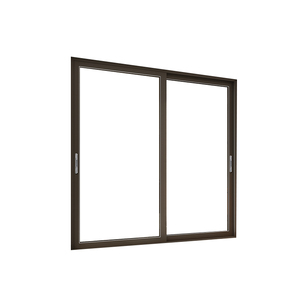
The foundation of any high-security aluminium door lies in its chemical composition and temper condition. We utilize primary, non-recycled aluminium billets conforming to Alloy 6063-T5 and T6 standards. The structural profiles feature engineered cross-sections with wall thicknesses ranging from 2.0mm to 3.0mm for heavy-duty entry and sliding configurations.
- Tensile Strength: 6063-T6 profiles deliver a minimum tensile strength of 205 MPa, providing exceptional torsional rigidity under heavy wind loads and structural impacts.
- Corner Crimping Mechanics: Corner joints are secured using heavy-duty cast aluminium corner keys combined with automated dual-component polyurethane structural adhesive injection. This guarantees hermetic sealing and prevents corner racking or frame sag over decades of heavy usage.
2. Thermal Barrier Technology & Decarbonization Performance
Eliminating thermal bridge effects is mandatory under contemporary green building mandates (such as LEED v4, Passive House standard, and Title 24). Our safety doors feature continuous PA66-GF25 Polyamide Thermal Break Strips (25% glass-fiber reinforced) that separate the interior and exterior aluminium extrusions.
| Performance Metric | Standard Non-Thermal Break | Vexis PA66-GF25 Thermal Break System | Test Standard / Benchmark |
|---|---|---|---|
| U-Factor (Thermal Transmittance) | ~ 4.8 to 5.5 W/m²K | 1.0 to 1.4 W/m²K | EN ISO 10077-2 / NFRC 100 |
| Air Infiltration Tightness | Class 3 (300 Pa) | Class 4 / Grade 8 (600 Pa) | ASTM E283 / EN 12207 |
| Water Penetration Resistance | 350 Pa | 700 Pa to 1050 Pa (E1050) | ASTM E331 / EN 12208 |
| Acoustic Sound Insulation | STC 28 dB | STC 42 dB – 48 dB | ASTM E90 / ISO 140-3 |
3. Multi-Point Burglary Resistance & Glazing Physics
Security doors must effectively deter forced intrusion. Our OEM/ODM safety doors integrate multi-point drive-gear locks supplied by premier European hardware partners (such as HOPO, Siegenia, GU, and CMECH). The locking mechanism engages hardened steel mushroom heads and top/bottom shoot-bolts into stainless steel strike plates along multiple frame points simultaneously.
Glazing configurations include SGP (SentryGlas®) laminated safety glass and triple-pane insulated units. In hurricane-prone zones, SGP interlayers retain structural panel integrity even under severe impact from airborne debris, preventing pressure envelope collapse.
Future Sourcing & Procurement Trends in Architectural Door Systems
As global construction demands evolve towards net-zero carbon buildings and resilient coastal infrastructure, B2B procurement professionals must align with several macro industry shifts over the coming decade:
Trend 1: Ultra-Slim Sightlines Paired with Extreme Structural Integrity
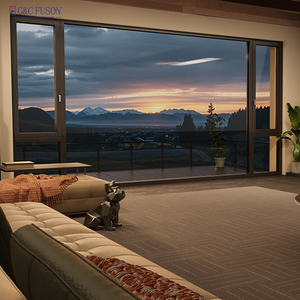
Architectural design heavily favors minimalist aesthetics, expansive glass areas, and floor-to-ceiling glass paneling. Sourcing is moving rapidly towards ultra-narrow interlock profiles (18mm to 21mm sightlines) capable of supporting glass pane weights exceeding 450 kg via precision stainless steel tandem rollers and heavy-duty concealed track systems.
Trend 2: Low-Carbon Recycled Aluminium Sourcing
With environmental, social, and governance (ESG) reporting becoming mandatory across Europe, North America, and Australasia, developers are actively requesting low-carbon primary aluminium extrusions produced via hydro-electric smelting (carbon footprint < 4.0 kg CO2/kg Al). OEM manufacturers with verifiable environmental product declarations (EPD) will hold a distinct competitive edge.
Trend 3: Smart Access Control & Motorized System Integration
Safety doors are transitioning into automated building management ecosystem nodes. Future procurement specs increasingly include concealed motorized drive actuators, biometric fingerprint/facial recognition locks, electromagnetic multi-point latching, and concealed wire conduit integration built directly into the aluminium frame profiles during OEM fabrication.
Frequently Asked Questions for Global Procurement & Projects
Essential technical and commercial clarifications for foreign trade importers, contractors, and project developers.
What is the engineering workflow for custom OEM/ODM profile development?
Our engineering workflow begins with reviewing your architectural CAD drawings or BIM models. Once structural calculations and thermal requirements are validated, we create custom extrusion die tooling (12 to 15 days). Prototype samples are extruded, surface-treated, and subjected to air/water/wind pressure testing before full-scale mass production commences.
How do you ensure structural compliance with localized building codes (e.g., AS2047, NFRC, Florida Building Code)?
We design door systems specifically around destination country specifications. For the Australian market, profiles meet AS2047 deflection and water penetration tests. For North American hurricane regions, our impact-resistant doors feature laminated PVB/SGP glass units compliant with ASTM E1886/E1996 large missile impact criteria. Official test reports and calculation sheets are provided for project submission.
What surface finishes and corrosion-resistant coatings are available for coastal projects?
For severe marine environments, we offer Qualicoat Class 2 / Class 3 fluorocarbon (PVDF) spray coatings (capable of exceeding 3,000 hours in neutral salt spray ASTM B117 testing) and anodized finishes up to 25 microns thickness. This prevents filiform corrosion and surface degradation caused by salt spray and intense UV radiation.
What is your typical lead time and Minimum Order Quantity (MOQ) for B2B export projects?
For standard thermal break systems with stock profile colors (Black, Dark Gray, White, Anodized Silver), MOQ starts as low as 50 square meters, with delivery in 20 to 25 days. For custom OEM extrusion colors, specialized finishes, or custom die development, lead time is typically 30 to 35 days.
How are large-scale glass safety doors packaged to guarantee zero damage during ocean transport?
Each door frame and glass panel is wrapped in protective scratch-resistant film, padded with thick EPE corner guards, and fully enclosed inside heavy-duty, fumigation-free plywood crates. Crates are engineered with bottom forklift runners and internal steel bracing to withstand ocean container movement and multi-stage freight handling.
Can you provide full hardware customized options according to specification schedules?
Yes. We accommodate fully specified hardware schedules including German HOPO, Siegenia, Roto, GU, or domestic high-precision brands like CMECH and Kinlong. We can also pre-machine frames for client-supplied electronic smart locks and access control systems.
Ready to Partner with a Leading OEM/ODM Aluminium Safety Door Manufacturer?
Submit your architectural drawings, elevation plans, or project specifications today. Our senior facade engineering team will provide detailed shop drawings and competitive factory-direct quotations within 24 hours.
Send an Inquiry