Engineered Aluminum Profile Systems & Finished Assemblies
Precision extruded 6063-T5 aluminum profiles, thermal break window/door systems, and commercial entrance assemblies manufactured to ASTM & EN standards.
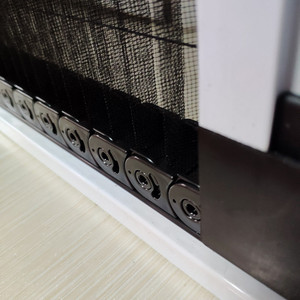
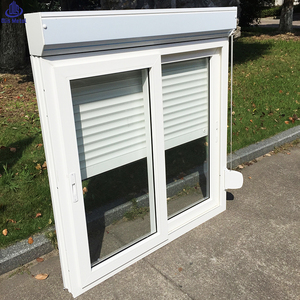
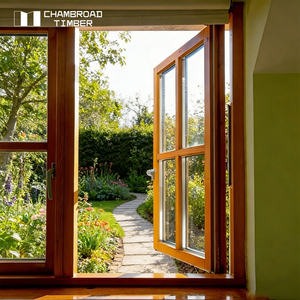
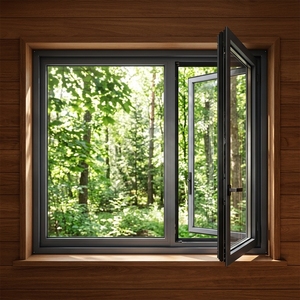
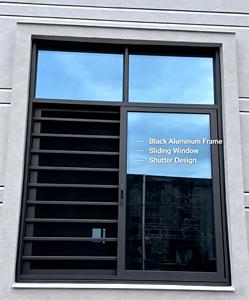
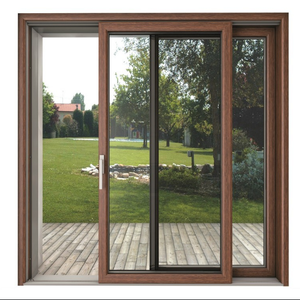
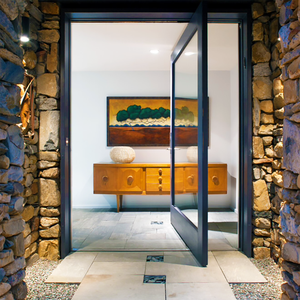
Metallurgical Excellence & Structural Engineering in Aluminum Profiles
For door and window factories, system integrators, and real estate developers, selecting the optimal aluminum profile supplier directly determines structural integrity, thermal efficiency, and fenestration durability. Modern fenestration demands precise mechanical properties, high corrosion resistance, and exact wall thickness tolerances to withstand wind load pressure and extreme thermal expansion cycles.
Technical Insight: Architectural aluminum profiles for high-span sliding and pivot doors utilize primary 6063-T5 or 6061-T6 aluminum ingots. Standardizing extrusion wall thickness to ≥2.0mm for doors and ≥1.4mm for windows ensures compliance with international building codes (AAMA/WDMA/CSA 101/I.S.2/A440 and EN 12020).
Technical Comparison: Architectural Alloy Selection Matrix
| Alloy & Temper | Tensile Strength (MPa) | Yield Strength (MPa) | Surface Finish Suitability | Primary Application Field |
|---|---|---|---|---|
| 6063-T5 | ≥ 185 | ≥ 145 | Exceptional (Anodizing / PVDF) | Residential Casement, Sliding & Fold Doors |
| 6063-T6 | ≥ 225 | ≥ 190 | High Polish & Powder Coat | Heavy-Duty Commercial Entrances & Skylights |
| 6061-T6 | ≥ 290 | ≥ 240 | Structural Industrial Finish | High-Load Structural Curtain Walls & Pivot Frames |
| 6060-T66 | ≥ 215 | ≥ 160 | Ultra-Smooth Architectural | Minimalist Ultra-Slim Profile Door Systems |
Our OEM/ODM manufacturing capability encompasses every stage of production—from custom die design and extrusion billet pre-heating to automated multi-chamber thermal break insertion using high-strength PA66-GF25 (Polyamide 66 reinforced with 25% glass fiber) thermal insulation strips.
Future Sourcing & Procurement Trends for Door Factories (2025–2030)
As global energy efficiency directives tighten (e.g., EU Energy Performance of Buildings Directive, US Energy Star 7.0), B2B buyers must adapt to dynamic architectural and regulatory demands.
1. High Thermal Isolation & Low-Uw Mandates
Future door sourcing is centered on multi-cavity thermal break extrusions paired with warm-edge spacer technology. Door systems are expected to reach total thermal transmittance values of Uw ≤ 0.8 W/m²K for passive house certifications globally.
2. Ultra-Slim Sightline Engineering
Architectural preference has overwhelmingly shifted toward concealed frames and ultra-slim interlocks (16mm to 21mm sightlines). OEM suppliers must integrate hidden drainage channels, heavy-duty stainless steel rollers, and structurally bonded glass slots.
3. Decarbonized & Recycled Aluminum (ASI Certified)
Leading door brands now mandate environmental product declarations (EPDs) and low-carbon primary aluminum (processed via renewable hydropower), lowering embodied carbon emissions by over 65% across supply chains.
4. Hurricane & Extreme Weather Resilience
Export markets in North America (Florida Miami-Dade HVHZ), Australia (AS2047 cyclonic testing), and coastal Asia require impact-resistant laminated glazing profiles engineered with interlocks tested up to 5000 Pa wind pressures.
Evolution in Contract Manufacturing & Fenestration Technology
Modern OEM/ODM aluminum manufacturing has transformed from basic extrusion pressing to advanced digital fabrication. The integration of 5-axis CNC machining, automated corner-crimping, and robotically applied PVDF/powder surface treatments allows factories to achieve micron-level accuracy.
Precision Tooling & Custom Extrusion Dies
For custom door projects, off-the-shelf profiles often fail to satisfy bespoke architectural drawings. Our tooling department manufactures custom steel extrusion dies within 10 to 14 days, providing door fabricators with proprietary profile designs.
- Custom Die Fabrication with 0.05mm dimensional tolerance
- Automated PA66 Thermal Barrier Strip insertion lines
- Qualicoat Class 2 & AAMA 2605 certified surface finishes
- Structural FEA (Finite Element Analysis) stress testing
- Knock-Down (KD) hardware pre-drilling for rapid jobsite assembly
Extrusion & Finishing Standards
Strict compliance across global architectural building standards:
Why Global Door Brands Partner with Vexis Windows & Doors
Operating from our 30,000 m² state-of-the-art production base in Lishui Town, Foshan, Guangdong, China, Vexis Windows & Doors Co., Ltd. integrates engineering research, die development, profile extrusion, surface treatment, and window/door assembly under one roof.
Fully Integrated Supply Chain
By controlling everything from raw billet alloying to finished glass unit installation, we eliminate intermediary markups and guarantee seamless lead times for large-scale commercial contracts.
Complete Regulatory Compliance
Our profile systems hold NFRC ratings, Florida Miami-Dade HVHZ approvals, European CE marks, and Australian AS2047 structural certifications, accelerating local project approvals.
Comprehensive CAD/BIM Support
Our dedicated engineering desk provides door manufacturers and architectural firms with 2D AutoCAD section drawings, 3D Revit BIM models, and custom hardware integration consultation.
Frequently Asked Questions for B2B Importers & Door Factories
Essential answers regarding minimum order quantities, custom tooling, export packaging, and technical specifications.
What aluminum alloys are used for door frame profile extrusion?
We primarily utilize primary 6063-T5 aluminum alloy for standard door frames due to its optimal balance of surface finish quality and mechanical strength. For heavy-duty commercial doors and extreme wind-load applications, high-strength 6063-T6 or 6061-T6 alloys are supplied.
Can Vexis manufacture custom profile shapes according to architectural CAD drawings?
Yes. As an OEM/ODM specialist, we produce custom extrusion dies based on your exact CAD section drawings. Custom matrix development typically takes 10 to 14 days, including sample extrusion, surface treatment, and dimensional verification.
What surface treatment options are available for long-term outdoor weatherability?
We offer AAMA 2605 / 2604 PVDF fluorocarbon coatings, Qualicoat Class 2 powder coating, anodizing (10 to 25 microns), electro-phoresis, and realistic wood-grain heat transfer finishes guaranteed against peeling or fading for up to 25 years.
How are thermal break aluminum profiles engineered for energy efficiency?
Our thermal break profiles feature inserted PA66-GF25 (25% glass fiber reinforced polyamide) insulation strips that physically isolate the exterior and interior aluminum chambers, drastically reducing thermal conduction and preventing condensation.
What is the minimum order quantity (MOQ) for OEM extrusion orders?
For standard stocked aluminum profile dies, our MOQ starts at 1 metric ton per section. For custom profile development, the initial die fee is waived once cumulative order volume reaches an agreed tonnage (e.g., 5 to 10 tons).
How does your factory package finished doors and extrusions for ocean freight shipping?
Profiles are individually wrapped with protective film, bundled with moisture-proof paper, and secured in heat-treated export plywood crates or steel A-frame racks to guarantee zero scratch or deformation during transit.