Engineered Product Showcase
Factory-direct OEM/ODM aluminum doors and windows tailored for commercial, residential, and high-end architectural developments worldwide.
Technical Whitepaper: Engineering Criteria for OEM/ODM Aluminium Composite Doors
In modern architecture, the door is no longer a simple static barrier; it is a multi-functional dynamic building envelope interface. Selecting an experienced OEM/ODM aluminium composite doors manufacturer is crucial for project developers, façade contractors, and commercial importers. The integration of high-grade extrusions, thermal barrier insulation, structural composite panels, and high-load hardware systems dictates long-term structural integrity, energy compliance, and aesthetic value.
This technical whitepaper outlines the structural parameters, thermal dynamics, testing standards, and global procurement trends governing high-performance aluminum composite entrance, patio, and interior door assemblies manufactured out of Foshan, China—the world’s premier fenestration manufacturing hub.
1. Material Science & Structural Architecture of Composite Doors
Aluminum composite doors combine the mechanical strength and corrosion resistance of extruded aluminum alloys with insulating core materials such as polyurethane (PU), mineral cores, or honeycombed aluminum structures. This hybrid engineering resolves key physical weaknesses inherent in single-material doors (such as timber warping, steel corrosion, or solid aluminum thermal bridging).
Extruded Alloy Profile Precision (6063-T5 / T6)
Premium OEM manufacturing mandates the exclusive use of primary billet aluminum extruded under strict T5 or T6 heat treatment tempers. Alloy 6063 provides optimal tensile strength (minimum 185 MPa), yield strength (minimum 145 MPa), and superior surface smoothness essential for high-grade PVDF fluorocarbon coatings or anodizing treatments.
Thermal Break Technology & Polyamide PA66 GF25
To eliminate direct heat transfer across metal profiles, advanced OEM/ODM door systems incorporate a PA66 GF25 (25% Glass Fiber Reinforced Polyamide) thermal barrier strip. Unlike cheaper PVC thermal breaks, PA66 GF25 matches the linear coefficient of thermal expansion of aluminum extrusions (2.3 × 10⁻⁵ /K), preventing structural debonding or shear failure during severe seasonal temperature swings.
Multi-Layer Composite Panel Core Engineering
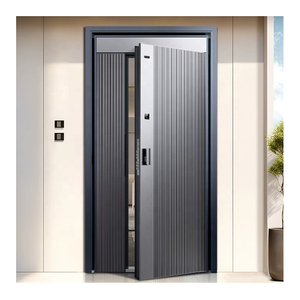
Exterior entrance doors utilize sandwich composite panel technology: dual aluminum skin plates (1.5mm to 3.0mm thickness) bonded around a high-density, fire-retardant polyurethane foam core (45kg/m³ density) or an aluminum honeycomb core. This architecture delivers an extraordinary strength-to-weight ratio, superior impact resistance, and acoustic dampening (STC up to 42 dB).
2. Technical Evaluation & Specification Comparison Matrix
When procuring doors for international architectural projects, technical buyers must match structural performance against regional building codes (NFRC, ASTM, CE, AS2047, PAS24). Below is a comprehensive engineering comparison across key door categories engineered at our facility.
| System Type | Thermal U-Factor (W/m²K) | Acoustic Insulation (STC) | Air Tightness / Water Proofing | Primary Application |
|---|---|---|---|---|
| Heavy-Duty Commercial Swing Entry | 1.4 - 1.8 | 38 - 42 dB | Class 4 (EN 12207) / 900 Pa | Commercial Entrances, Luxury Main Doors |
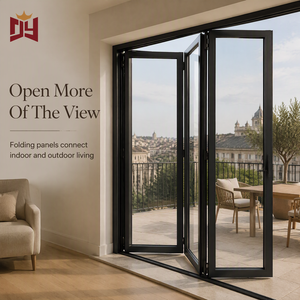
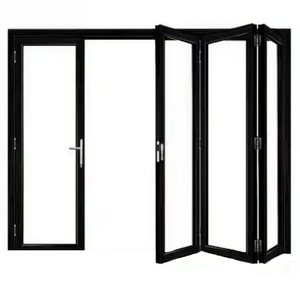
| Ultra-Slim Frame Patio Bifold Door | 1.6 - 2.1 | 32 - 36 dB | Class 3 (EN 12207) / 600 Pa | Residential Vistas, Balcony Access |
| Hurricane Impact Sliding Glass Door | 1.3 - 1.7 | 36 - 40 dB | ASTM E1886 / E1996 Compliant | Coastal Structures, High-Wind Regions |
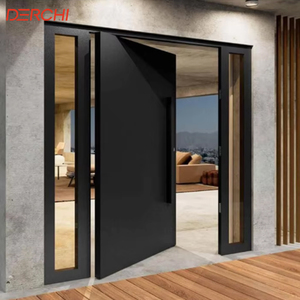
| Cast Aluminum Security Pivot Door | 1.8 - 2.2 | 35 - 39 dB | High Security Anti-Burglar (RC3/RC4) | Luxury Villa Main Entrance, Estates |
| Aluminum Clad Wood Casement Door | 1.1 - 1.5 | 40 - 45 dB | Class 4 (EN 12207) / 1050 Pa | Passive House, Cold Climate Villas |
3. Future Sourcing Trends in Architectural Door Manufacturing (2025–2030)
The global demand for customized aluminum door systems is undergoing a rapid paradigm shift driven by green building regulations, smart home ecosystem integration, and architectural preferences for ultra-narrow profiles.
Decarbonization & Low-Carbon Aluminum Profiles
Leading international developers now mandate Environmental Product Declarations (EPD). Modern OEM facilities are transitioning toward low-carbon primary aluminum smelted using hydropower or incorporating up to 30% recycled post-consumer aluminum scrap. This significantly reduces the embodied carbon footprint without sacrificing mechanical structural performance.
Invisible Frame & Panoramic Sightlines
Architectural trends favor extreme glass-to-frame ratios. Next-generation OEM sliding and bifold doors feature structural interlocks as narrow as 18mm to 22mm while supporting single glass panel weights exceeding 450 kg via precision stainless steel needle-bearing roller tracks.
Smart Access Control & Integrated Automation
The convergence of architectural hardware and digital security has made smart motorized doors standard in commercial and luxury residential builds. OEM/ODM capability now encompasses hidden magnetic drive operators, biometric fingerprint scanners embedded in flush pulls, motorized multi-point lock actuators, and integration with Zigbee / KNX automation protocols.
4. Enterprise Advantages: Why Vexis is Your Premier OEM/ODM Manufacturing Partner
Headquartered in Lishui Town, Foshan, Guangdong—the silicon valley of aluminum architectural products—Vexis Windows & Doors Co., Ltd. offers global buyers an uncompromised integration of R&D engineering, raw material control, precision machining, and export logistics.
Full Custom OEM/ODM Capabilities
From custom extrusion die development to tailor-made shop drawings, we turn architect sketches into certified, code-compliant physical installations.
Rigorous Multi-Level Quality Control
100% dry-fit assembly testing prior to crating. Every door batch undergoes water tightness, air infiltration, and hardware cycle-testing up to 100,000 operations.
Direct Factory Cost Efficiency
Operating a 30,000 m² scale plant allows raw material purchasing leverage and automated CNC machining, offering direct wholesale savings without intermediary markups.
Seaworthy Export Crating
Heavy-duty fully enclosed wooden crates with moisture-absorbent desiccant, corner protective guards, and shrink wrap to guarantee zero-defect transport worldwide.
Comprehensive International Certifications
Our systems hold NFRC, CE, ISO9001, and PAS24 test compliance documentation, facilitating hassle-free local building inspection sign-offs.
5. Technical Sourcing Roadmap for B2B Importers & Contractors
Streamlining international fenestration procurement requires a structured step-by-step workflow to mitigate technical errors, size miscalculations, and logistics delays. Below is our standard engineering process:
CAD Drawing Audit
Submission of architectural elevations, rough opening dimensions, and wind load spec sheets.
Shop Drawings & Engineering
Our R&D team generates 3D structural cross-sections and thermal calculation reports for sign-off.
Extrusion & Assembly
Precision CNC cutting, thermal strip insertion, corner crimping, and EPDM gasket sealing.
Testing & Pre-Fitted Mockup
Full height structural mockup to verify lock alignment, roller smoothness, and glass fit.
FCL Packaging & Shipping
Heavy-duty steel-reinforced timber packaging with sea freight booking to your port of choice.
6. Frequently Asked Questions (FAQ) for B2B Importers & Engineers
What types of windows and doors does Vexis manufacture?
Can you customize sizes, colors, profile thickness, and glass configurations?
How do you adapt products to local building standards and coastal climates?
Which overseas markets does Vexis export to?
What technical documentation should I provide for a rapid factory quote?
Can global buyers or third-party inspection agencies visit the factory base?
What hardware brands are integrated into your OEM aluminum composite doors?
What is the typical production lead time for custom OEM orders?
Partner with a Leading OEM/ODM Door Manufacturer
Whether you are sourcing custom aluminum composite entrance doors for a commercial multi-family development or expanding your fenestration distribution line, our engineering team provides direct wholesale support, shop drawings, and competitive factory quotes.