Featured OEM/ODM Architectural Products
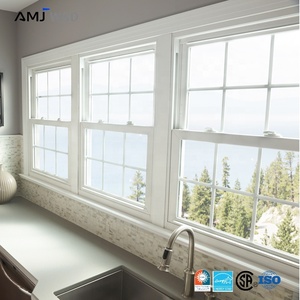
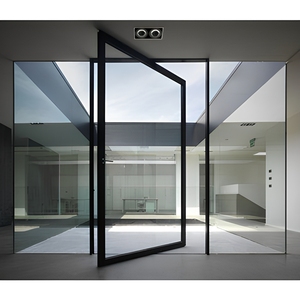
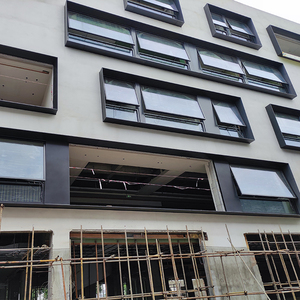
Factory-direct precision engineering: Thermal break bifold doors, heavy-duty sliding systems, structural curtain windows, and architectural pivot entrances designed for global developers and distributors.
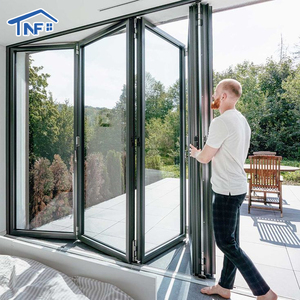
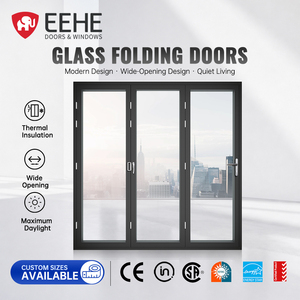
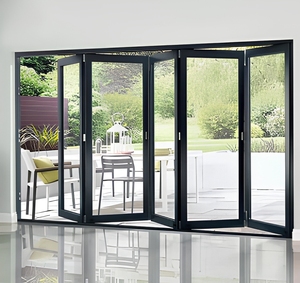
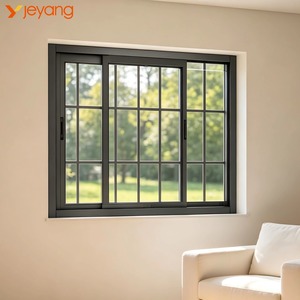
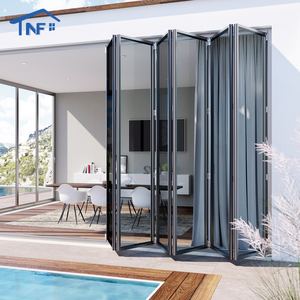
Engineering White Paper: Structural Mechanics & Thermal Physics of Aluminium Collapsible Doors
An authoritative analysis of architectural extrusion alloys, polyamide thermal breaks, motion ergonomics, and weatherisation metrics for commercial and high-end residential fenestration.
High-Tensile Extrusion Metallurgy (6063-T6)
The foundation of structural integrity in heavy-duty collapsible doors rests upon alloy selection. Standard architectural windows utilize 6063-T5 aluminium; however, high-span folding door profiles engineered by Vexis employ artificially aged 6063-T6 aluminium-magnesium-silicon alloys. This specification yields an ultimate tensile strength exceeding 205 MPa and a yield strength of 170 MPa, allowing frame stiles to maintain an ultra-slim visual profile (interlocking stiles as narrow as 35mm) while enduring extreme positive and negative wind pressures exceeding 4,000 Pa (equivalent to Category 5 hurricane pressures). Finite Element Analysis (FEA) is systematically conducted on all profile cross-sections to optimize the Moment of Inertia ($I_x$ and $I_y$), eliminating panel sag and frame warp across multi-panel configurations up to 3.5 meters in height.
Thermal Break Physics & Fenestration Metrics
Uninsulated aluminium profiles possess high thermal conductivity ($k \approx 200 \text{ W/m}\cdot\text{K}$), leading to thermal bridging, interior condensation, and massive HVAC energy loss. To satisfy stringent global energy regulations such as NFRC, CE, and AS2047, Vexis collapsible door frames incorporate structural PA66-GF25 (Polyamide 66 reinforced with 25% glass fiber) thermal barrier strips. These multi-chambered thermal breaks decouple exterior and interior aluminium extrusions, reducing thermal conductivity to under $0.30 \text{ W/m}\cdot\text{K}$. Paired with Double or Triple Insulated Glass Units (IGUs) incorporating Low-Emissivity (Low-E) coatings, Argon gas filling, and warm-edge Swisspacer technology, our overall door systems achieve a certified U-Factor as low as 1.2 W/m²·K (0.21 BTU/h·ft²·°F) and Solar Heat Gain Coefficients (SHGC) controllable down to 0.22.
| Performance Parameter | Standard Commercial Bifold Door | Vexis Heavy-Duty Thermal Break System | Test Standard / Compliance |
|---|---|---|---|
| Aluminium Alloy & Temper | 6063-T5 (Wall Thickness 1.4 - 1.6mm) | 6063-T6 (Wall Thickness 2.0 - 3.0mm) | GB/T 5237 / ASTM B221 |
| Thermal Insulation (U-Factor) | 2.8 - 3.5 W/m²·K | 1.2 - 1.8 W/m²·K (Low-E Double/Triple IGU) | NFRC 100 / EN ISO 10077 |
| Acoustic Rating (STC / Rw) | 28 - 32 dB | 40 - 45 dB (Acoustic PVB Laminated IGU) | ASTM E413 / ISO 717-1 |
| Water Penetration Resistance | 250 Pa - 350 Pa | 600 Pa - 900 Pa (Sub-floor Concealed Drainage) | AS2047 / EN 12208 Class 9A |
| Structural Wind Load | 1,800 Pa - 2,500 Pa | 4,500 Pa - 6,000 Pa (Design Pressure > 100 PSF) | ASTM E330 / AS4055 / EN 12210 |
| Air Infiltration Rate | > 1.5 m³/h·m | < 0.3 m³/h·m (Triple EPDM Gasket System) | NFRC 400 / ASTM E283 |
In operational collapsible doors, air leakage and water ingress occur predominantly at panel-to-panel hinge junctions and floor track contact points. Vexis eliminates these failure points through a proprietary Triplex Weatherisation System utilizing vulcanized EPDM (Ethylene Propylene Diene Monomer) gasket seals co-extruded with magnetic sealing strips. When the door panels unfold into a locked position, the multi-point locking gear compresses adjacent sashes against three continuous barriers of EPDM gaskets. This mechanical compression yields complete air tightness and prevents water driven by gale-force winds from breaching the interior sill. Furthermore, the combination of asymmetrical laminated glass configurations (e.g., 6mm Tempered + 1.52mm PVB + 6mm Tempered + 12Ar + 6mm Low-E) dampens structural resonances, achieving acoustic attenuation up to STC 45dB—making these systems ideal for luxury hotel entrances, beachfront villas, and urban residential towers.
A critical engineering challenge in collapsible doors is smooth, effortless manual operation when supporting sash weights that exceed 150 kg (330 lbs) per panel. Vexis systems utilize bottom-load carrying quad-wheeled roller assemblies manufactured from CNC-machined 304/316 stainless steel housings fitted with sealed precision needle bearings and polyether ether ketone (PEEK) outer tire rims.
- Dual-Track Load Distribution: The primary door weight is transferred to heavy-duty bottom tracks, avoiding ceiling deflection concerns common in top-hung installations.
- German Multi-Point Gear Hardware: Integration with premier German hardware systems (Siegenia, Hoppe, Roto) ensures multi-point security latching along top, side, and bottom jambs with a single turn of the handle.
- Concealed Flush Threshold Sills: Optional ADA-compliant, zero-barrier flush sills feature integrated subsurface channel drains, permitting barrier-free transition while evacuating surface runoff during heavy rainstorms.
Future Procurement Trends & Architectural Industry Development (2026–2030)
Macro market dynamics, decarbonization mandates, and smart building integration driving global demand for next-generation fenestration systems.
1. Ultra-Slim Sightlines & Maximum Glazing Ratios
Architectural aesthetics are leaning heavily toward ultra-minimalism. Future procurement specifications prioritize narrow stile profiles (<30mm visible width) that maximize natural daylight penetration and structural glass sightlines. Advanced glass bonding (structural silicone glazing) allows the glass itself to act as a structural diaphragm, reducing aluminum frame weight while maintaining wind pressure resistance.
2. Low-Carbon Recycled Aluminium & LEED Compliance
With international carbon border adjustment mechanisms (such as EU CBAM) and green building rating systems (LEED v4.1, BREEAM), developers are demanding verified low-embodied-carbon aluminium extrusions. Smelting aluminium using renewable hydropower and incorporating up to 75% post-consumer recycled scrap reduces carbon intensity from $18 \text{ kg CO}_2/\text{kg Al}$ down to under $4.0 \text{ kg CO}_2/\text{kg Al}$, accompanied by official Environmental Product Declarations (EPD).
3. Smart Building IoT & Automated Motion Drive
The integration of concealed low-voltage brushless DC linear drive motors allows giant collapsible doors to be operated electronically via wall touchpads, mobile apps, or building management systems (BMS). Integrated safety sensors, obstacle detection, motorized locking bolts, and automated climate-responsive venting mode will become standard requirements for luxury residential and commercial installations.
4. Climate Adaptability & Extreme Weather Resiliency
Escalating climate volatility has spurred stringent regional building code requirements—from High-Velocity Hurricane Zone (HVHZ) impact certification in coastal Americas to extreme freeze-thaw thermal cycle resilience in Northern Europe and Canada. Sourcing partners are prioritizing factories with in-house structural testing chambers capable of proving water tightness and wind resistance prior to containerization.
Vexis Manufacturing Excellence & Global OEM/ODM Capabilities
Empowering international importers, window brands, and project contractors with factory-direct precision, certified quality control, and full supply chain transparency.
Full-Spectrum OEM/ODM Customization
From preliminary architectural CAD rendering and BIM modeling to custom profile extrusion die creation, Vexis offers complete OEM/ODM services. Importers can customize profile wall thickness, thermal break depth, powder coating colors (RAL palette, fluorocarbon PVDF, anodized, Italian realistic wood grain finishes), glass configurations, and hardware brand integration (Siegenia, Hoppe, Roto, CMECH, or custom-branded hardware).
Stringent Quality Control & Testing Protocols
Every window and door system manufactured in our Foshan base undergoes rigorous multi-stage quality control. Raw aluminum billets are tested for chemical composition and tensile strength. Completed sash assemblies undergo 100% dry-fit assembly checking, corner seam seal inspection, hardware cycling endurance tests (50,000+ open-close cycles), and water penetration pressure testing in our onsite hydrostatic test rig.
International Compliance & Certifications
To ensure frictionless customs clearance and local building compliance, Vexis systems hold comprehensive international certifications, including NFRC (North America), CE Mark / EN 14351-1 (European Union), AS2047 / AS1288 (Australia & New Zealand), and PAS24 / Document Q security standards (United Kingdom). Test documentation and structural calculations are supplied for project tenders.
Export Packing & Ocean Logistics Protection
Overcoming international ocean freight risks requires robust export packaging. Vexis utilizes a 5-layer protective wrapping protocol: protective anti-scratch film on aluminum profiles, corner rubber guards, plastic shrink wrapping, foam sheet wrapping, and fully enclosed IPPC-certified fumigated plywood crates with internal moisture absorber gel packs to guarantee zero damage upon site arrival.
Architectural B2B Procurement FAQ
Key technical and commercial inquiries regarding custom fabrication, minimum order quantities, compliance certifications, and ocean shipping logistics.
What is your typical lead time for custom OEM/ODM aluminium collapsible door orders?
What minimum order quantities (MOQ) do you require for project orders?
How do Vexis collapsible door systems perform against hurricane winds and driving rain?
Can Vexis supply CAD drawings and BIM models for architectural project submittals?
What glass options are available for soundproof and energy-efficient specifications?
What warranty coverage is provided on factory-direct window and door shipments?
Can I visit the Vexis factory base in Foshan, China before issuing a contract?
What documents do you provide to assist with customs clearance in destination ports?
Engineered Fenestration Solutions for Your Next Project
Connect with our senior export engineering team today to review structural drawings, request sample profile kits, or receive a competitive factory-direct price quotation.
Get a Quote