Featured OEM/ODM Aluminium Bifold Systems
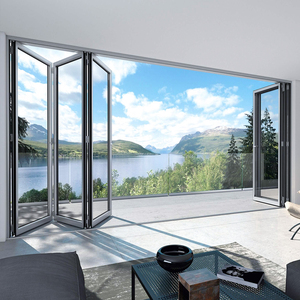
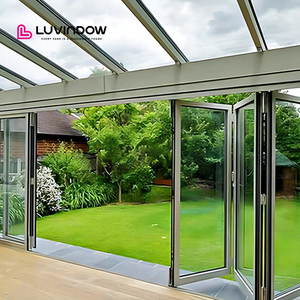
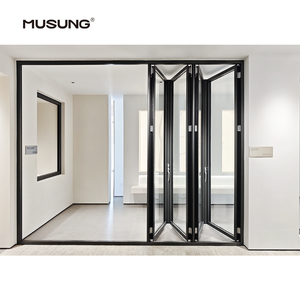
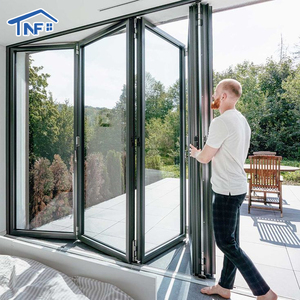
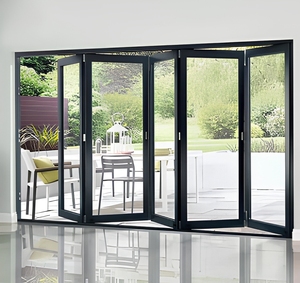
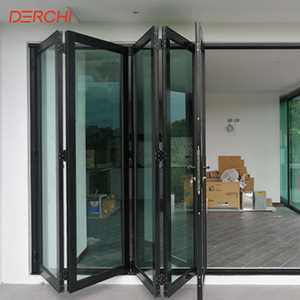
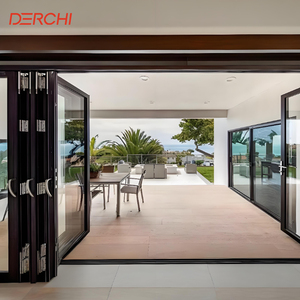
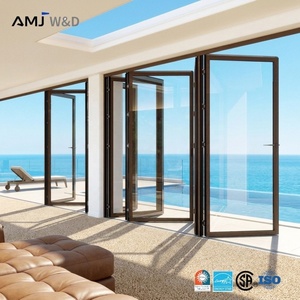
Architectural Whitepaper: OEM/ODM Aluminium Bifold Patio Door Manufacturing & Systems Engineering
In modern architectural design, the boundary between indoor living areas and exterior landscapes is increasingly fluid. As high-end residential, commercial, and hospitality developments demand expansive uninterrupted openings, aluminium bifold patio door systems have evolved from simple folding partitions into highly sophisticated, structurally engineered envelope components. For commercial project developers, architectural specifiers, and hardware importers, selecting an established OEM/ODM aluminium bifold patio doors manufacturer and factory is critical to fulfilling local building code mandates, achieving strict thermal performance targets (U-factor standards), and guaranteeing multi-decade mechanical operation.
This comprehensive industry report delves into the precise mechanical architecture, thermal isolation technologies, structural alloy formulations, and global procurement considerations that govern premium OEM/ODM manufacturing. Based out of Foshan, China—the world’s premier architectural aluminum extrusion hub—our manufacturing operations combine advanced CNC machining, precision surface treatment, and customized system engineering tailored for North American, European, and Australasian regulatory frameworks.
Thermal Break Extrusion
Integrates precision PA66-GF25 polyamide thermal barriers, eliminating conductive thermal bridges and guaranteeing extreme U-value energy compliance.
Hurricane Impact Resilience
Engineered with heavy-duty 6063-T6 aluminum profiles, multi-point stainless steel locks, and PVB/SGP laminated safety glass for high-velocity hurricane zones.
Global OEM/ODM Customization
Full adaptation to NFRC, CE, AS2047, and Florida Product Approval specifications, delivering custom shop drawings and bespoke powder-coated finishes.
Engineering Metallurgy & Thermal Isolation Physics
The foundational strength of any commercial folding door system lies in profile alloy composition and structural chamber geometry. As a dedicated OEM/ODM manufacturer, our factory utilizes primary 6063-T5 and 6063-T6 architectural aluminum extrusions featuring nominal wall thicknesses ranging from 2.0mm to 3.0mm depending on panel height and wind load specifications. Aluminum in its natural state exhibits high thermal conductivity (~200 W/m·K); thus, non-thermal break profiles suffer from condensation buildup and severe energy loss.
To solve this, our thermal break bifold systems incorporate mechanically crimped PA66-GF25 (25% Glass Fiber Reinforced Polyamide) thermal barrier strips. This composite material exhibits thermal expansion coefficients matching aluminum while lowering section thermal conductivity to less than 0.3 W/m·K. Combined with multi-chamber interior profile cavity designs filled with expanded polyurethane (PU) foam insulation, our bifold door systems achieve overall frame U-factors as low as 1.2 to 1.6 W/m²K (U-0.21 to U-0.28 BTU/h·ft²·°F) when paired with Low-E insulated glass units.
| Engineering Parameter | Standard Aluminum Bifold | Thermal Break OEM Bifold System | Hurricane Impact OEM Bifold System |
|---|---|---|---|
| Profile Alloy & Wall Thickness | 6063-T5 (1.4mm - 1.6mm) | 6063-T5/T6 (2.0mm - 2.5mm) | 6063-T6 Structural (2.5mm - 3.0mm) |
| Thermal Insulation (Polyamide Strip) | None (Solid Conductive Aluminum) | PA66-GF25 (14.8mm - 24mm width) | PA66-GF25 Heavy-Duty Reinforced |
| Glass Unit Configuration | 5mm + 9A + 5mm Tempered Clear | 6mm Low-E + 12Ar + 6mm Double/Triple | 6mm Temp + 1.52SGP + 6mm Laminated / Low-E |
| Air Permeability (EN 12207 / ASTM E283) | Class 2 (300 Pa) | Class 4 (600 Pa / ASTM E283 Pass) | Class 4 (High Pressure Sealed) |
| Water Tightness (EN 12208 / ASTM E331) | Class 5A (200 Pa) | Class 9A (600 Pa - 900 Pa) | Design Pressure DP60 - DP90 Compliant |
| Acoustic Insulation (STC / OITC Rating) | STC 28 - 30 dB | STC 38 - 42 dB (Acoustic Interlayer) | STC 40 - 45 dB (Laminated Soundproof) |
| Hardware Carriage Load Capacity | Max 120 kg per panel | Heavy-Duty Bogie (Up to 300 kg/panel) | Structural Steel Rollers (Up to 400 kg/panel) |
Global Sourcing & Procurement Trends (2026–2030)
As global supply chains realign towards higher efficiency, certified product performance, and rapid technical responsiveness, B2B procurement heads and architectural buyers are evaluating manufacturers on several emerging technology fronts:
Architectural preference has shifted dramatically towards minimal visible aluminum profile frames. Global buyers are sourcing bifold doors with vertical interlocking stiles narrowed down to 45mm–68mm, providing glass coverage ratios exceeding 90% while maintaining wind load deflection resistance.
Accessibility laws and seamless indoor-outdoor designs require continuous recessed floor tracks. Advanced sub-track drainage designs integrate hidden channels and stainless steel drainage grates, ensuring flush floor transitions without sacrificing water tightness under heavy wind-driven rain.
Large-span multi-panel bifold doors (6 to 10 panel configurations) are increasingly specified with hidden motorized drive systems. Built-in pinch sensors, smart home protocol connectivity (Zigbee/KNX), and magnetic lock releases represent key growth vectors for commercial projects.
Importers no longer accept generic non-certified factory claims. Tender requirements mandate third-party physical lab test reports for NFRC thermal performance, AS2047 Australian window standards, CE marking under EN14351-1, and Florida High Velocity Hurricane Zone (HVHZ) approvals.
For harsh coastal and high-UV salt spray environments, standard powder coatings are being replaced by 70% PVDF (Fluorocarbon) coatings (AkzoNobel / PPG Paints) or 25-micron anodic oxidation treatments capable of resisting 3,000+ hours of continuous salt spray exposure (ASTM B117).
Modern OEM/ODM orders demand integrated retractable pleated insect screens or heavy-duty stainless steel security mesh (304/316 grade) built into dual-track or triple-track frame extrusions, presenting a clean single-frame solution.
Enterprise Strengths & OEM/ODM Manufacturing Infrastructure
As a leading Chinese manufacturer integrating R&D, structural design, automated production, and direct export services, our production base in Lishui Town, Foshan, Guangdong, spans over 30,000 m² of modern industrial plant space, supplemented by a 1,500 m² interactive architectural exhibition hall. Having supplied builders, distributors, and commercial contractors across 154+ countries over more than two decades, our factory is engineered for complete bespoke flexibility.
Precision Production & CNC Extrusion Machining
Our facility houses multi-axis German CNC machining centers capable of precision cutting, routing, hardware pocketing, and drainage notch milling within ±0.1mm tolerances. This guarantees that every sash corner joint—reinforced with internal aluminum corner cleats and injection sealant—maintains perfect structural squareness under heavy operating loads.
In-House Insulated Glass (IGU) Assembly
Quality glass is central to door thermal efficiency. Our factory operates automated glass washing, dual-seal silicone application lines, and automatic argon gas injection machines. We produce double and triple tempered glass units incorporating Low-E coatings, warm edge composite spacers, and laminated acoustic PVB/SGP interlayers.
Rigorous Quality Control & Testing Chambers
Before mass production dispatch, system prototypes undergo strict in-house physical lab testing. Using our pressurized air, water, and structural load test chambers, we verify weather seal compression, cycle life endurance (over 50,000 opening cycles), and deflection under extreme positive and negative wind pressures.
B2B Procurement & Engineering FAQ
Partner with a Premier OEM/ODM Aluminium Bifold Door Factory
Whether you are expanding a building material distribution brand, sourcing custom systems for a luxury resort project, or seeking high-volume factory-direct pricing, our Foshan engineering team is ready to deliver tailored window and door solutions.