Featured OEM Fenestration & Door Solutions
Precision-engineered extruded aluminum window and door assemblies compliant with AAMA/WDMA, AS2047, and European CE performance benchmarks.
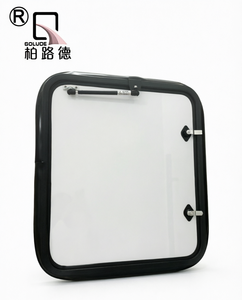
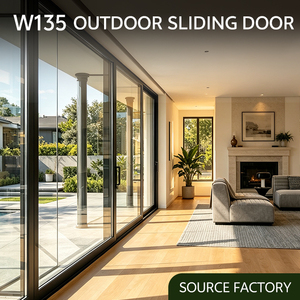
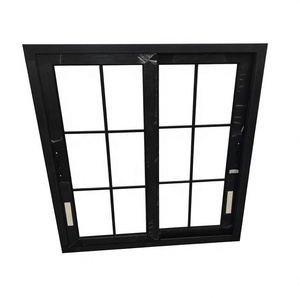
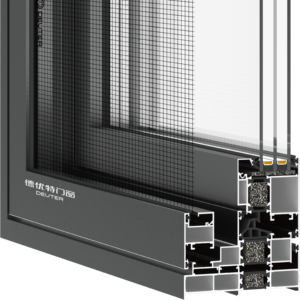
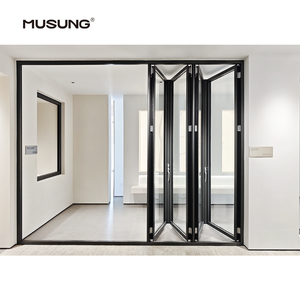
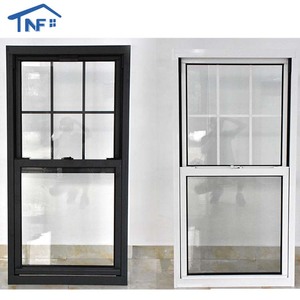
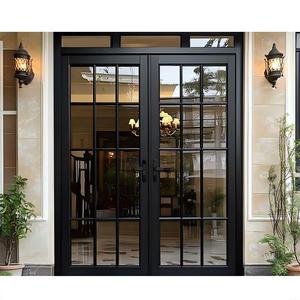
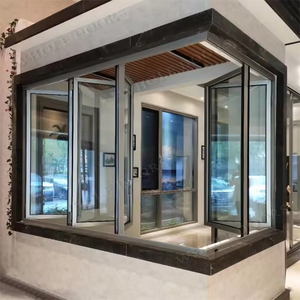
Engineering Blueprint: Original Equipment Manufacturing (OEM) of Architectural Swing Windows
In contemporary architectural design, the window system is no longer merely a transparent barrier; it is an engineered building envelope module responsible for thermal regulation, structural integrity under violent wind pressure, acoustic dampening, and solar energy management. As a leading Custom OEM Aluminum Swing Window Supplier & Exporter based in Foshan, China, Vexis Windows & Doors Co., Ltd. bridges the gap between complex architectural concepts and industrial precision manufacturing.
Aluminum swing windows—commonly designated as casement or side-hung hinged windows—offer superior sealing performance compared to traditional sliding systems. Because swing window sashes compress tightly against the perimeter frame gasket upon closure, they achieve exceptional air tightness and water impermeability. This comprehensive whitepaper evaluates the metallurgical, structural, thermal, and manufacturing considerations critical for architectural procurement teams, developers, and wholesale importers specifying OEM aluminum swing windows for global deployment.
1. Metallurgical Profiles & Structural Extrusion Standards
The fundamental core of any high-performance aluminum window is the structural profile alloy. We utilize primary (non-recycled ingot) 6063-T5 and high-tensile 6063-T6 aluminum alloys. Standard commercial wall thicknesses range from 1.4 mm for standard residential low-rise fenestration up to 2.0 mm–3.0 mm for heavy-duty commercial curtain wall swing inserts and hurricane-impact resistant systems.
Formulated for optimal tensile strength (up to 205 MPa yield strength), providing the flexural rigidity necessary to withstand extreme negative wind pressure in coastal high-rises.
Polyamide 66 reinforced with 25% glass fiber thermal break strips reduce the frame thermal conductivity ($\lambda$) from ~200 W/m·K down to < 1.3 W/m·K.
Advanced surface treatments including AkzoNobel Fluorocarbon (PVDF) spray, architectural anodizing (Class 15/25), and 3D wood-grain sublimation for 25+ year color stability.
2. Thermal Physics & Glazing Technology Integration
To satisfy zero-energy building standards and regional energy codes (such as US NFRC, Canadian ENERGY STAR, and European Passive House criteria), OEM swing windows require engineered Insulated Glass Units (IGUs). The structural interaction between frame thermal breaks and glazed sashes dictates total window system thermal transmittance ($U_{window}$).
Our standard insulated configurations feature double-pane (5mm + 12Ar + 5mm) or triple-pane (5mm + 9Ar + 5mm + 9Ar + 5mm) Low-Emissivity glass. Warm-edge spacer bars (such as TPS or Technoform Swisspacer) replace conventional aluminum spacers to eliminate thermal bridging around perimeter glass edges, preventing interior condensation during freezing winter cycles.
| Glazing Specification | Gas Filling | System U-Factor (W/m²K) | SHGC Rating | Acoustic Attenuation (STC) |
|---|---|---|---|---|
| Double Low-E (5mm + 12A + 5mm) | Air / Dry Argon | 1.6 – 1.8 | 0.35 – 0.45 | 32 – 35 dB |
| Triple Low-E (6mm + 12Ar + 6mm + 12Ar + 6mm) | 90% Argon Gas | 1.0 – 1.2 | 0.25 – 0.32 | 38 – 42 dB |
| Acoustic Laminated (6mm Low-E + 1.52PVB + 6mm) | Argon Gas | 1.3 – 1.5 | 0.28 – 0.35 | 43 – 48 dB |
| Hurricane Impact (6mm Temp + 2.28SGP + 6mm) | Structural Air Gap | 1.5 – 1.7 | 0.30 – 0.40 | 40 – 45 dB |
Global Procurement & Architectural Trends (2026–2030)
As global construction dynamics evolve toward decarbonization and minimalist luxury, foreign trade importers and developers must align their supply chains with key structural design trends. Sourcing from an experienced Chinese OEM manufacturer provides access to agile R&D capable of prototyping next-generation fenestration rapidly.
Modern residential designs demand ultra-slim frame profiles (visible sightlines under 50mm) to maximize day-lighting ratios without sacrificing structural load resistance.
Embedding concealed electric chain actuators and magnetic sensors into window frames, allowing direct synchronization with smart HVAC and home automation units.
Adopting low-carbon hydro-powered aluminum extrusions and non-toxic EPDM gaskets to meet international LEED, BREEAM, and EPD environmental certifications.
Furthermore, Multi-Point Locking Hardware systems engineered from 304/316 stainless steel have become mandatory in international project specifications. Unlike single-point latches, multi-point gear drives lock the sash into the frame at multiple top, side, and bottom keep-points simultaneously. This multi-lock architecture distributes wind loads evenly, enhances burglary resistance to European RC2/RC3 standards, and maintains uniform perimeter gasket compression for life.
Vexis Factory Advantage: Industrial Infrastructure in Foshan
Situated in Foshan, Guangdong—the epicenter of global aluminum extrusion and building materials manufacturing—Vexis Windows & Doors Co., Ltd. operates a state-of-the-art 30,000 m² production complex. We control the complete manufacturing value chain from die extrusion design, thermal break crimping, double-head CNC machining, and automated corner crimping to final IGU glass assembly and pressure chamber testing.
Our 1,500 m² immersive physical showroom hosts international client delegations, real-estate developers, and architectural contractors daily. Every custom OEM order undergoes rigorous quality verification before shipment, including:
- Structural Wind Load Testing (ASTM E330): Verifying sash deflection limits under positive and negative pressures exceeding 5000 Pa.
- Static Water Resistance Testing (ASTM E331): Continuous water spraying at high static pressures to ensure zero leakage through sub-frame drainage paths.
- Air Infiltration Testing (ASTM E283): Verifying tight seal integrity under low and high pressure differentials.
- Hardware Fatigue Testing: Friction stay hinges and gear handles undergo 50,000+ continuous operation cycles.