Product Catalog
Featured Architectural Entrance Systems
Factory-direct thermal break aluminum doors, impact-resistant entrance solutions, and custom folding glass assemblies engineered to international building standards.
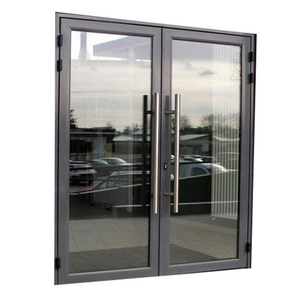
Aluminum Frame Front Door/ KFC Entrance Swing Door/ Spring Floor Shop Aluminum French Door
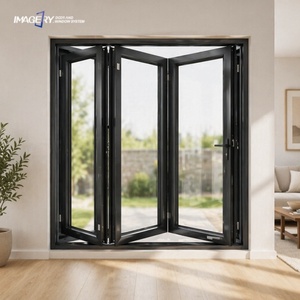
Modern Waterproof Aluminum Folding Glass Door Space Saving Soundproof For House Patio Use
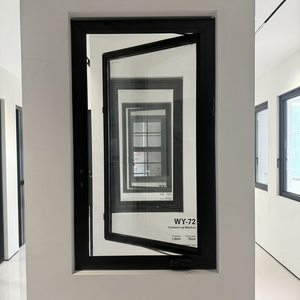
DERCHI Customized Durable French Modern Design Noise Reduction Apartment Window Wall Insulation Hurricane Window Aluminum Frame
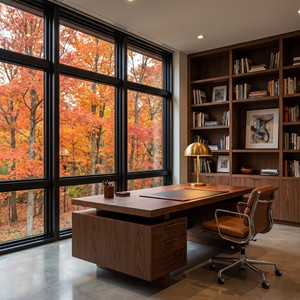
DADE/AS2047/NFRC Picture Office Safe Glass Hurricane Impact Aluminum windows and Doors
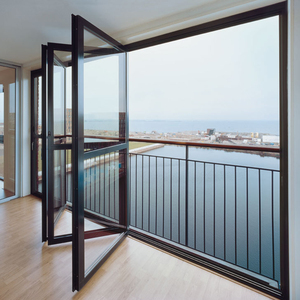
Hot Sale American NFRC Standard Aluminum Interior Patio Folding Bifold Doors
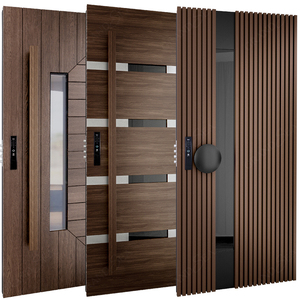
Residential: Exterior Aluminum Security Entrance Door Aluminum Blast Front Door With Security Features For Villas
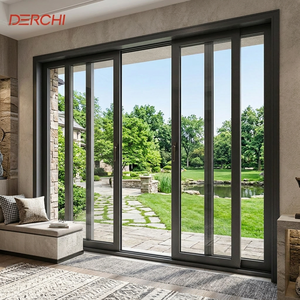
DERCHI Multi Panel Aluminum Sliding Door Security Hurricane Proof Sliding Patio Door Modern Home Doors
Technical Whitepaper
Engineering Standards for OEM Aluminum Glass Front Doors
A comprehensive technical evaluation for architectural specifiers, facade consultants, and commercial developers managing international supply chains.
In modern architectural design, the exterior entrance serves as both a primary aesthetic statement and the first structural barrier against environmental loads, forced entry, and thermal transfer. Sourcing custom OEM aluminum glass front doors requires rigorous technical evaluation beyond surface aesthetics. As building codes worldwide transition toward near-zero energy consumption (NZEB) and elevated wind-load safety factors, leading suppliers must provide holistic structural calculations, advanced alloy selection, and verified thermal barrier performance.
1. Profile Alloy Metallurgy and Structural Mechanics
High-performance entrance assemblies utilize 6063-T6 or 6061-T6 architectural grade aluminum extrusions. The T6 temper process—involving solution heat treatment followed by artificial aging—yields an ultimate tensile strength exceeding 205 MPa and a yield strength of 170 MPa. Profile wall thicknesses for heavy-duty entry swinging and pivot systems range between 2.0mm and 3.5mm, far exceeding conventional residential grade standards (1.4mm).
To resist torsional deformation under sustained wind pressures ($P_k \ge 5.0\text{ kPa}$), extrusions feature internal reinforcement chambers housing galvanized steel stiffeners or carbon-fiber composite spines. This structural integrity allows for expansive, floor-to-ceiling glass panel dimensions up to 3.2 meters in height without compromising deflection thresholds ($\Delta \le L/175$).
2. Thermal Break Mechanics and Energy Performance
Untreated aluminum profiles possess a high thermal conductivity ($k \approx 200\text{ W/m}\cdot\text{K}$), leading to thermal bridging, interior condensation, and energy loss. Premier OEM manufacturers incorporate Polyamide 66 reinforced with 25% fiberglass (PA66-GF25) thermal barrier strips. This material exhibits a thermal conductivity of just $0.3\text{ W/m}\cdot\text{K}$ while retaining a linear expansion coefficient virtually identical to aluminum, eliminating shear failure during extreme temperature fluctuations ($-40^\circ\text{C}$ to $+80^\circ\text{C}$).
| Performance Metric | Standard Specification | High-Performance OEM Grade | Testing Standard / Certification |
|---|---|---|---|
| Thermal Transmittance (U-Factor) | 2.4 – 1.8 W/m²·K | 0.8 – 1.2 W/m²·K (Passive House) | NFRC 100 / EN ISO 10077-2 |
| Acoustic Attenuation (STC / Rw) | 28 – 32 dB | 38 – 45+ dB (Acoustic Laminate) | ASTM E90 / ISO 717-1 |
| Air Infiltration Resistance | Level 3 (300 Pa) | Class 4 / ASTM E283 (600 Pa) | ASTM E283 / EN 12207 |
| Water Penetration Resistance | 300 Pa Static | 750 Pa – 1000 Pa (HVHZ) | ASTM E331 / AS 2047 |
| Structural Load Capacity | 2500 Pa Design Pressure | 5000+ Pa Design Pressure (DP80) | TAS 202 / ASTM E330 |
| Forced Entry Security | Standard Deadbolt | 3-Point / 5-Point Automatic Lock | PAS 24 / EN 1627 RC3 / RC4 |
3. Advanced Glazing Architecture & Impact Resistance
Glass selection dictates both safety and thermal efficiency. OEM front door assemblies leverage double- or triple-glazed insulated units (IGUs) incorporating Low-Emissivity (Low-E) coatings, argon gas fill (90%+ purity), and warm-edge composite spacers (such as Technoform or Swisspacer).
For coastal, hurricane-prone, or high-security installations, glazing units integrate SentryGlas® (SGP) ionoplast interlayers sandwiched between dual tempered glass panes. Unlike conventional PVB interlayers, SGP is five times tougher and up to 100 times stiffer, retaining structural load-bearing capacity even if both glass plies shatter under severe projectile impact (conforming to Florida Building Code High Velocity Hurricane Zone - HVHZ requirements).
Industry Intelligence
Future Sourcing & Procurement Trends (2025–2030)
Key market shifts driving global B2B procurement, material innovation, and smart building integration for architectural door systems.
1. Decarbonization & Low Embodied Carbon Profile Sourcing
Global developers are enforcing strict Environmental Product Declarations (EPD). Sourcing strategies are rapidly pivoting toward aluminum extruded with hydro-powered electricity and recycled post-consumer content, reducing embodied carbon from $18\text{ kg CO}_2/\text{kg Al}$ down to less than $4.0\text{ kg CO}_2/\text{kg Al}$. Suppliers offering LEED and BREEAM compliance documentation gain a definitive competitive edge in commercial tenders.
2. Smart Access & Automated Mechatronic Integration
The traditional mechanical lock is evolving into fully integrated motorized multi-point access control systems. Next-generation OEM entrance doors natively accommodate hidden biometric sensors, facial recognition modules, motorized drop-down perimeter seals, and smart home IoT gateways (Zigbee/Matter protocols), providing seamless commercial and high-end residential access without compromising acoustic or air sealing integrity.
3. Ultra-Large Format Oversized Entrance Engineering
Architectural design language heavily favors unobstructed sightlines and monolithic grand entrances. OEM suppliers must engineer heavy-duty continuous offset pivot hinges capable of smoothly operating single-leaf panels weighing over 400 kg (880 lbs) with zero sag over 100,000 cycles. Internal structural tensioning rods allow precise field adjustments for thermal warping compensation.
4. Extreme Weather Resilience & Blast Protection
Climate volatility has expanded demand for hurricane-impact (AS2047, NFRC, Florida HVHZ) and blast-resistant entrance hardware far beyond traditional coastal zones. B2B importers are increasingly requiring suppliers to submit certified third-party testing reports for water tightness ($>750\text{ Pa}$) and dynamic cyclic load tests prior to contract award.
5. High-Durability Fluorocarbon (PVDF) Coatings
Finishing technology is shifting from basic powder coating to advanced AAMA 2605 compliant 70% Fluorocarbon (PVDF) spray coatings and chemical anodizing (25-micron thickness). These surface treatments withstand salt spray testing exceeding 4,000 hours without chalking, cracking, or color degradation in harsh marine environments.
6. Modular Turnkey OEM Shop-Drawing Workflows
To reduce field installation errors and localized labor costs, global buyers require complete digital BIM (Building Information Modeling) objects, CAD detail drawings, and pre-assembled knock-down (KD) shipping packages. Standardized manufacturing workflows ensure precise tolerances within $\pm0.5\text{mm}$.
Factory Expertise
Enterprise Manufacturing Superiority
Combining state-of-the-art Foshan production infrastructure with world-class engineering support for global architectural projects.
30,000 m² Advanced Production Base in Foshan
Equipped with multi-axis CNC machining centers, automated profile cutting lines, double-head precision miter saws, and specialized corner-crimping machinery. Our large-scale manufacturing infrastructure guarantees rapid turnaround times, consistent quality, and massive volume throughput for commercial and residential developments alike.
Full OEM / ODM Bespoke Customization Capabilities
From architectural shop drawings to custom extrusion die development, our in-house engineering group adapts frame geometry, glass configurations, hardware mortising, and color finishes (RAL colors, fluorocarbon PVDF, anodized, Italian wood grain sublimation) precisely to project spec sheets.
International Testing & Multi-National Certification
Our products undergo rigorous testing against major global standards, including North American NFRC / AAMA, Australian AS2047 / AS1288, European CE (EN 14351-1), and ISO9001 Quality Management Systems. Full test reports and certificate packages are readily available for municipal plan approvals and tender submissions.
Global Logistics & Export-Grade Packaging
Serving clients in over 154 countries, our export department manages complete shipping logistics. Product assemblies are protected with anti-scratch protective film, corner shock absorbers, waterproof plastic wrapping, and fully enclosed fumigated wooden crates designed to withstand ocean transit and multi-stage container handling.
Buyer Guidance
Frequently Asked Procurement Questions
Direct technical and commercial answers addressing common inquiries from overseas importers, facade contractors, and project managers.
What alloy grade and profile wall thickness are standard for custom OEM entrance doors? ↓
We primarily utilize 6063-T6 high-precision architectural aluminum alloy extrusions. For heavy-duty commercial swing doors, shop entrance doors, and large residential pivot doors, main structural wall thicknesses range from 2.0mm to 3.5mm, guaranteeing superior structural load capacity, rigidity, and long-term operating durability without panel sag.
How do your thermal break aluminum front doors achieve high energy efficiency? ↓
Our thermal break systems utilize imported Polyamide (PA66-GF25) reinforced thermal barrier strips inserted between the exterior and interior extruded aluminum frames. Paired with Low-E double or triple tempered insulated glass units (IGUs) filled with argon gas, our door assemblies achieve total U-Factors as low as 0.8 to 1.2 W/m²·K (conforming to NFRC and European Passive House standards).
Can your glass front doors meet regional building codes for hurricane zones (e.g., Florida HVHZ, Australia AS2047)? ↓
Yes. We custom engineer hurricane impact-resistant entrance systems using laminated safety glass with SentryGlas® (SGP) or heavy-duty PVB interlayers, heavy-gauge reinforced profiles, and multi-point locking mechanisms. Our systems have been tested to withstand high wind design pressures ($DP \ge 80\text{ psf}$), large missile impact testing (TAS 201/203), and static/dynamic water penetration tests.
What surface finishes and custom color options are available for OEM orders? ↓
We provide a full spectrum of architectural surface treatments:
- Fluorocarbon (PVDF) Coating: AAMA 2605 certified, offering supreme UV resistance and anti-corrosion protection in marine environments.
- Powder Coating: Full range of RAL colors with matte, fine-texture, or high-gloss finishes.
- Anodizing: Silver, bronze, champagne, and black anodized finishes (15 to 25-micron thickness).
- Wood Grain Sublimation: Italian heat-transfer technology reproducing natural wood textures with zero maintenance.
What hardware brands and locking options can be integrated into your doors? ↓
We integrate premium global hardware systems including Siegenia, CMECH, HOPO, Sobinco, and GU, as well as high-grade custom OEM hardware. Options include multi-point security locking systems, concealed heavy-duty hydraulic floor springs, continuous pivot hinges, keypad access, biometric fingerprint readers, and automated smart-lock integrations.
What is the typical production lead time for custom OEM projects? ↓
Standard manufacturing lead time is approximately 25 to 35 business days following shop drawing confirmation and deposit receipt. For complex custom extrusion profiles or specialized glass configurations (e.g., SGP laminates, custom ceramic frit patterns), lead time is typically 35 to 45 days. Expedited production schedules can be arranged for urgent commercial tenders.
How do you protect doors from damage during international ocean freight? ↓
All door assemblies are subject to strict export packaging protocol: 1) Surface protective film on aluminum profiles; 2) EPDM edge/corner shock guards; 3) Multi-layer bubble wrap and stretch film encapsulation; 4) Fully enclosed, fumigated ISPM-15 compliant plywood crates with internal foam cushioning.
What technical information is required to receive a detailed engineering quote? ↓
To provide an accurate quotation, please supply: 1) Structural elevation drawings or rough opening dimensions; 2) Quantity and opening configurations (inswing, outswing, pivot, bifold, sliding); 3) Glass specifications (double/triple pane, Low-E, laminated, tinted); 4) Color finish preference; 5) Destination port or project location for code compliance verification.
Ready to Accelerate Your Architectural Glazing Supply Chain?
Consult with our senior technical engineering team today. We provide CAD/BIM shop drawings, structural performance calculations, and factory-direct pricing for your project specifications.