Factory-Direct Double Pane Aluminum Glazing Systems
With over two decades of metallurgical precision and Fenestration testing expertise, Vexis Windows delivers structural double pane aluminum systems certified to international building codes across 154+ countries.
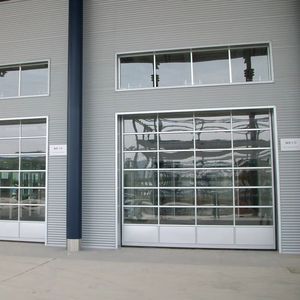
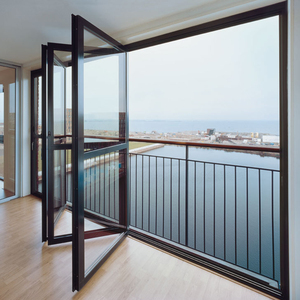
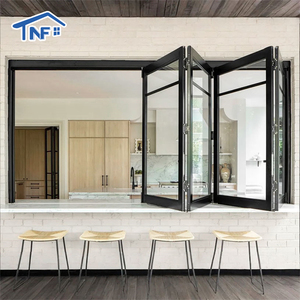
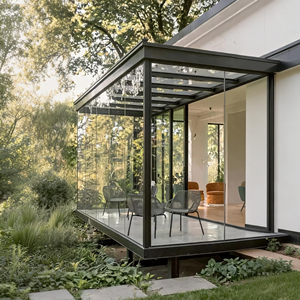
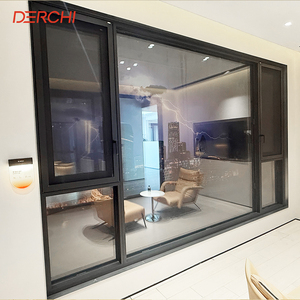
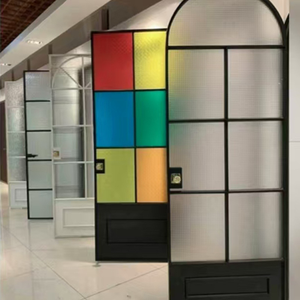
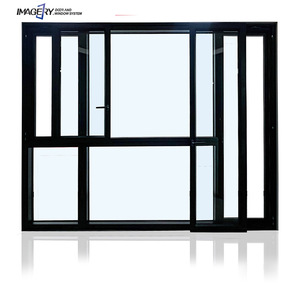
20+
Years Engineering R&D
154+
Export Destination Countries
30,000m²
State-of-the-Art Factory Base
0.12 U
Achievable Thermal Value (W/m²K)
Engineering White Paper: Technical Standards of China Wholesale Double Pane Aluminum Windows
Modern architectural design demands a rigorous convergence of energy efficiency, structural longevity, and aesthetic minimalism. As a premier wholesale manufacturer in Foshan, China, Vexis Windows addresses the core technical imperatives of commercial developers, fenestration importers, and general contractors worldwide. Double pane aluminum windows—also referred to as double-glazed unit (DGU) window systems—serve as the foundation of modern high-performance building envelopes.
Standard aluminum extrusions exhibit high thermal conductivity (~200 W/m·K). Without a structural polyamide thermal barrier, double-glazed glass loses up to 55% of its thermal resistance through the frame. Vexis utilizes PA66-GF25 (Polyamide 66 reinforced with 25% glass fiber) thermal breaks, dropping overall window U-factors to under 1.4 W/m²K (0.24 Btu/h·ft²·°F) for NFRC and Energy Star compliance.
1. Metallurgical Profiles & Alloy Specifications
The structural reliability of double-pane window systems hinges on raw material composition. Standard market extrusions often compromise on alloy purity or heat treatment, leading to frame deflection under high wind loads. Vexis employs prime-grade 6063-T5 and 6063-T6 aluminum alloys across all system extrusions:
- Wall Thickness Rigor: Profile nominal wall thickness strictly adheres to 1.4mm – 2.0mm for residential windows and 2.0mm – 3.0mm for heavy-duty commercial curtain walls and wide-span sliding systems (exceeding ASTM B221 and GB 5237 standards).
- Tensile & Yield Strength: T6 temper heat treatments achieve ultimate tensile strength ≥ 205 MPa and yield strength ≥ 180 MPa, ensuring zero frame warp under extreme negative wind pressure in coastal typhoon zones.
- Surface Finishing Technology: Surface options include AkzoNobel fluorocarbon (PVDF) spray coatings, architectural-grade powder coating (60-80 microns thickness), and electro-anodizing (grade A15), guaranteeing 25+ years of resistance against UV chalking, salt spray degradation, and atmospheric pollutants.
2. Insulated Glass Unit (IGU) Design & Solar Optics
A double pane window's acoustic and thermal envelope performance is governed by the configuration of its insulated glass unit. A single glass failure point compromises the hermetic seal, leading to internal fogging. Vexis integrates automated double sealing using butyl primary sealant and structural silicone secondary sealants surrounding warm-edge spacers:
| Glazing Configuration | Overall Thickness | U-Factor (W/m²K) | SHGC Range | Sound Reduction (STC) |
|---|---|---|---|---|
| Standard Double Clear (5+12A+5) | 22 mm | 2.6 - 2.8 | 0.68 - 0.75 | 32 dB |
| Low-E + Argon Fill (5+14Ar+5) | 24 mm | 1.4 - 1.6 | 0.27 - 0.40 | 36 dB |
| Triple-Pane Low-E (5+12Ar+5+12Ar+5) | 39 mm | 0.8 - 1.1 | 0.22 - 0.32 | 42 dB |
| Acoustic Laminated Double (6+1.52PVB+6 + 12A + 6) | 31.5 mm | 1.3 - 1.5 | 0.30 - 0.45 | 45 - 48 dB |
3. Air Tightness, Water Penetration & Structural Wind Performance
Fenestration imports must comply with destination building codes such as North America’s NFRC/AAMA/WDMA, Europe’s CE (EN 14351-1), and Australia’s AS2047. Vexis double pane aluminum windows incorporate triple-stage EPDM weather-stripping gaskets, pressure-equalized drainage chambers, and concealed friction hinges to achieve superior physical performance indicators:
- Air Infiltration Rating: Tested to < 0.1 ft³/min/ft² under ASTM E283 / EN 12207 Class 4 standards.
- Water Resistance Threshold: Static water pressure seal tested up to 700 Pa (14.6 psf) under ASTM E331 without internal frame leakage.
- Structural Wind Loading: Engineered to withstand design pressures (DP) up to DP65 (approx. 3.12 kPa), satisfying Miami-Dade coastal hurricane code guidelines when coupled with SentryGlas® laminated glass.
Enterprise Sourcing Advantages & Manufacturing Competence
Direct factory procurement eliminate broker markups while securing total oversight of production timelines, structural compliance, and custom architectural specifications.
30,000m² Automated Production Base
Located in Lishui Town, Foshan, our high-precision manufacturing hub operates automated CNC cutting centers, corner crimping robots, and dual-component silicone sealing lines to produce over 450,000 m² of system windows annually.
Full Multi-National Certification
We supply verified test reporting and structural calculation packages for local authority submittals. Our systems hold certification compliance under North American NFRC, European CE, Australian AS2047, and ISO9001 Quality Management.
Bespoke OEM / ODM Customization
From custom mullion extrusion dies to specialized structural sightlines, our engineering department transforms CAD architectural drawings into production-ready shop drawings tailored to your exact jobsite dimensions.
Export Logistics & Crate Protection
Preventing transit abrasion is paramount. Every order is wrapped in anti-scratch protective film, corner-shielded with high-density EVA foam, and fully enclosed in heat-treated, fumigation-free plywood crates for safe ocean freight transport.
Future Procurement Trends in the Global Aluminum Window Industry
As the international construction landscape pivots toward net-zero carbon targets, green building certifications (LEED, BREEAM, Passivhaus), and supply chain auditability, procurement managers must evaluate several macroeconomic shifts driving fenestration exports from China:
Trend 1: Decarbonization & Low-Carbon Aluminum Extrusions
International environmental directives are pushing buyers to mandate low-carbon footprint extrusions. Traditional primary aluminum smelting generates significant CO2 per ton. Future B2B procurement agreements increasingly specify aluminum processed via hydro-electric or renewable energy sources, alongside Environmental Product Declarations (EPDs) documenting life-cycle environmental impacts.
Trend 2: Ultra-Narrow Sightlines & Structural Adhesive Bonding
Modern architectural design continues to favor maximal glass area and minimal frame visibility. The industry is transitioning from mechanical glass retention to structural silicone adhesive bonding (SSG). This technology integrates the insulated double glass directly into the aluminum frame profile, enhancing overall structural rigidity while achieving ultra-slim interlocking sightlines down to 18mm.
Trend 3: Smart Dynamic Glass & BIPV Integration
Double pane windows are evolving from passive thermal barriers into active energy-generating elements. Procurement pipelines for high-end commercial projects now regularly feature dynamic electrochromic glass (switchable privacy or tinting) and Building-Integrated Photovoltaic (BIPV) window spandrels integrated into thermal break aluminum framing systems.
Trend 4: Digital Twin CAD/BIM Integration in Wholesale Orders
Leading international developers demand seamless BIM (Building Information Modeling) file compatibility before placing bulk production orders. China exporters providing parametric Revit/IFC digital twin models allow architectural teams to simulate solar heat gain, day lighting, and structural load behavior prior to factory extrusions.
Product Development Trends: The Evolution of Double-Glazed Fenestration
To keep pace with stringent building codes in North America and Western Europe, double pane aluminum window technology is undergoing rapid engineering iteration across several key dimensions:
1. Multi-Cavity Polyamide Thermal Break Technology
First-generation thermal breaks featured simple flat nylon strips. Advanced product development centers on multi-cavity PA66-GF25 structural breaks populated with expandable foam insulation (such as polyurethane or aerogel inserts). This multi-barrier construction disrupts convection loops inside the frame cavity, pushing whole-window U-factors down toward passive house levels.
2. Hidden Drainage & Concealed Hardware Systems
Visible plastic drainage caps and bulky exposed hinges are rapidly becoming obsolete. Contemporary window development prioritizes concealed internal gravity drainage paths with micro-valves that prevent wind-driven water blowback, combined with heavy-duty 180-degree concealed 304 stainless steel friction hinges supporting sash weights up to 180 kg.
3. Universal Modular Window Wall Systems
Developers are shifting from traditional punch-hole window installations toward unitized, semi-unitized, and modular window wall systems. Factory-assembled double pane window walls streamline jobsite installation speeds by over 50%, reducing costly skilled field labor requirements while ensuring factory-controlled weatherproofing seals.
Frequently Asked Questions for Window Wholesale Sourcing
Essential engineering and logistics advice for real estate developers, window distributors, and general contractors sourcing from China.
Ready to Elevate Your Project's Fenestration Performance?
Connect directly with Vexis engineering specialists to request factory wholesale price lists, structural shop drawings, or physical sample kits for your upcoming commercial or residential development.
Contact Us