Wholesale Tilt & Turn Window Series & Architectural Door Systems
Precision-engineered thermal break aluminium profiles, double/triple insulated Low-E glass, and European standard multi-point hardware configurations for commercial and high-end residential projects.
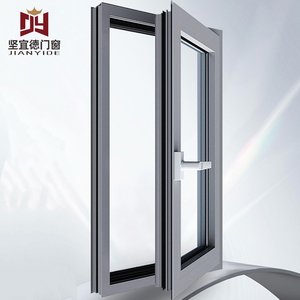
High Quality Aluminum Alloy Tilt Turn Window for Villa Multi-Function Casement Low-E Insulated Glass Windproof Waterproof
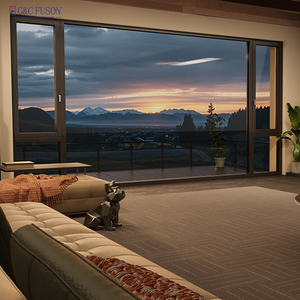
Fuson High Quality Durable Thermal Break Triple Glazing Inward Opening Tilt and Turn Aluminum Windows Bulletproof Windows
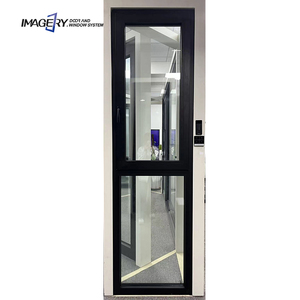
Smart Houses Thermal Break Aluminum Electric Tilt and Turn Windows Double Glazed Glass For Villa Bedroom
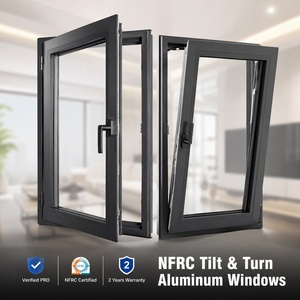
NFRC Tilt and Turn Black Narrow Frame Double Glazed Thermal Break Modern Residential Aluminum Windows House Aluminium Window
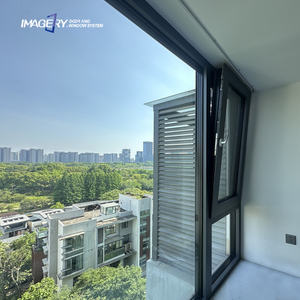
High Quality Thermal Break Aluminum Tilt and Turn Window Weather Resistant Tempered Glass Sound Proof For House
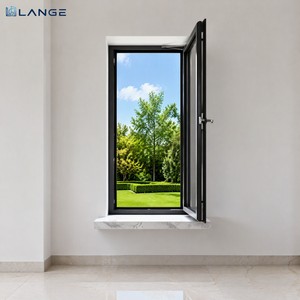
LANGE Luxury CE Certified Thermal Break Aluminum Tilt Turn Casement Windows Aluminum Alloy Windows Inward Opening Windows
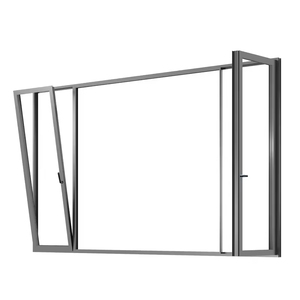
Modern Design Ventilation Thermal Break Aluminum Alloy Swing Casement Windows
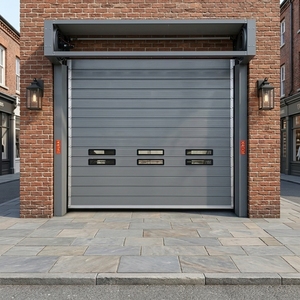
Heavy Duty Aluminum Spiral High Speed Door Windproof Anti-Theft Fast Door Aluminum Entrance Door For Retail Stores
Engineering Principles of Modern Aluminium Tilt & Turn Windows
An authoritative analysis of dual-action fenestration kinematics, thermal separation physics, structural integrity, and acoustic dampening for high-load architectural envelope design.
1. Dual-Kinematic Opening Mechanics & Hardware Integration
Aluminium Tilt and Turn windows represent the pinnacle of European-engineered fenestration technology, blending two distinct operational modes into a single handle mechanism through sophisticated perimeter hardware gearings. In the Turn Position (handle rotated 90 degrees horizontal), the sash swings inward on vertical side hinges, providing 100% full-aperture clear opening. This facilitates complete interior access for safe glass cleaning in high-rise structures, maximum emergency egress, and rapid cross-ventilation.
In the Tilt Position (handle rotated 180 degrees vertical), the top of the sash tilts inward by approximately 100mm to 150mm while remaining securely anchored at the bottom corners. This creates an engineered draft-free micro-ventilation chimney effect. Rising interior warm air escapes efficiently through the top opening, while cool ambient air is drawn in gradually from the sides. Crucially, the tilted sash acts as a natural rain baffle, preventing moisture ingress even during heavy downpours, while retaining an anti-burglary barrier that deters unauthorized entry from the exterior.
2. Thermal Break Mechanics & Energy Metrics (PA66 GF25 Polyamide Strips)
Aluminium is inherently a highly conductive material ($k \approx 200 \text{ W/m}\cdot\text{K}$). To meet modern stringent energy standards (such as NFRC, ENERGY STAR®, and Passive House institute thresholds), structural aluminium extrusions must incorporate a mechanical thermal barrier. Our factory utilizes high-precision PA66 GF25 (Polyamide 66 reinforced with 25% structural fiberglass) thermal break strips inserted between the inner and outer extrusions.
This structural thermal break effectively arrests conductive heat transfer across the window profile, lowering the total frame U-factor ($U_f$) down to range levels of 1.0 to 1.4 W/m²K. When paired with triple-pane Low-E insulated glass units (IGUs) filled with 90%+ Argon gas and warm-edge composite spacers, total window thermal transmittance ($U_w$) reaches as low as 0.75 W/m²K (0.13 BTU/hr·ft²·°F). This drastic reduction in thermal energy loss minimizes HVAC consumption in severe heating climates and reduces solar heat gain coefficients (SHGC) in tropical or high-radiation environments.
3. Triple Gaskets Sealing & Air/Water Infiltration Control
Traditional sliding or awning fenestration systems rely on brush piles or single compression strips, leading to eventual air leaks and water weeping during extreme storm events. Our wholesale aluminium tilt and turn windows feature an integrated Triple EPDM (Ethylene Propylene Diene Monomer) Gasket System:
- Central Drainage Gasket (Equated Pressure Chamber): Creates a pressure-equalized rain screen within the profile frame. Water entering the outer chamber drains instantly outward through hidden weep holes before reaching the interior seal line.
- Inner Acoustic & Air-Tight Gasket: Provides continuous peripheral compression when the multi-point locking gear is engaged, eliminating draft leakage and achieving Class 4 (EN 12207) air permeability.
- Outer Weathering Gasket: Blocks UV degradation, dust, and driven rain at the exterior interface.
Technical Specification Benchmarks (Engineering Performance Criteria)
| Performance Parameter | Testing Standard / Specification | Achieved Engineering Rating | B2B Project Application Advantage |
|---|---|---|---|
| Thermal Transmittance ($U_w$) | ISO 10077-2 / NFRC 100 | 0.75 – 1.3 W/m²K (Triple Low-E) | Meets Passive House and strict LEED green building energy compliance. |
| Wind Load Resistance | ASTM E330 / EN 12210 | Class C5 / P3 $\ge 5000 \text{ Pa}$ | Suitable for coastal hurricane zones, high-rise towers, and extreme exposed geography. |
| Water Tightness | ASTM E331 / EN 12208 | Class E1050 (1050 Pa Static Pressure) | Zero water leakage under severe wind-driven torrential rain storms. |
| Air Permeability | ASTM E283 / EN 12207 | Class 4 ($Q_{100} \le 0.5 \text{ m}^3/\text{h}\cdot\text{m}$) | Maximizes indoor air quality, reduces air conditioning load leakage to absolute minimum. |
| Acoustic Insulation ($R_w / STC$) | ISO 717-1 / ASTM E90 | STC 38 dB – 45 dB (Laminated Glazing) | Dampens high-frequency urban traffic, airport, and industrial noise pollutions. |
| Anti-Burglary Protection | EN 1627 / PAS 24 | RC2 / RC3 Security Standard | Multi-point mushroom head locking cams prevent forced entry levering. |
Future Global Sourcing & Procurement Trends (2025–2030)
Strategic intelligence for architectural specifiers, developers, and wholesale building material importers operating in global markets.
1. Ultra-Slim Sightlines & Maximum Glass Ratio
Architectural aesthetics are shifting dramatically toward concealed sashes and narrow sightlines (under 50mm visible profile face width). Importers are requesting structural 6063-T6 aluminum alloys with elevated tensile yield strength to support giant glass panes up to 300kg without sacrificing structural deflection limits.
2. Smart Electric Actuators & Building Automation
Future fenestration procurement integrates hidden motorized chain actuators inside the tilt turn frame. Controlled via RS485, Zigbee, or KNX smart home protocols, windows automatically tilt open during optimal night cooling cycles and auto-close upon rain detection from integrated weather stations.
3. Carbon Neutrality & Circular Recycled Aluminium
Strict European CBAM (Carbon Border Adjustment Mechanism) and green building rating codes require verified Environmental Product Declarations (EPD). Modern Chinese suppliers utilize low-carbon hydro-powered primary aluminium billets or recycled post-consumer scrap exceeding 75% recycled content.
4. Prefabricated Modular Fenestration Assemblies
To reduce high on-site labor costs in North America, Europe, and Australia, wholesale procurement is moving toward factory-glazed, fully assembled window units equipped with pre-attached sub-frames, mounting flanges, and factory-tested weatherproofing flashings.
5. High-Security Bulletproof & Impact-Resistant Systems
Commercial and luxury residential developments demand multi-layered laminated safety glass (PVB/SGP interlayers) paired with heavy-duty structural thermal profiles capable of resisting ballistic impacts (EN 1063 BR4-BR7) and high-velocity hurricane projectile impacts (Miami-Dade NOA standard compliance).
6. Advanced Surface Treatment & Durability Warranties
Procurement specs are favoring AkzoNobel or PPG Qualicoat Class 2 / Class 3 fluorocarbon (PVDF) powder coatings and anodic oxidation layers exceeding 25 microns ($\mu\text{m}$). This ensures a 30-year resistance against salt fog corrosion, color fading, and chalking in severe coastal environments.
State-of-the-Art Manufacturing & Quality Control Innovations
How our Foshan production hub achieves micron-level machining precision and flawless structural integrity.
Precision CNC Machining & Hydraulic Corner Crimping
Every profile frame undergoes 5-axis automated CNC milling for lock pockets, drainage slots, and hinge anchoring holes. Frame corners are joined using heavy-duty cast aluminum corner keys combined with dual-component pneumatic glue injection. This eliminates mechanical joint flexing, preventing corner seal degradation and air leak paths over decades of thermal expansion cycles.
- German-imported digital cutting equipment with 0.1mm tolerance.
- Automated corner injection sealant ensures 100% water barrier.
- Reinforced stainless steel hinge plates withstand up to 180kg sash loads.
Automated Double/Triple Glazing Assembly Line
Insulated glass units are produced in an ultra-clean dust-free environment. Automated robotic arms apply continuous dual-seal butyl primary sealant and silicone secondary structural sealant. Argon gas injection is performed online with automated sensor verification to guarantee gas retention rates exceeding 95% for long-term thermal retention.
- Low-E soft coating glass options (Single, Double, or Triple silver).
- Swiss warm-edge composite spacers for reduced edge-of-glass U-values.
- Tempered safety glass certified to ANSI Z97.1, CE EN 12150, and AS/NZS 2208.
Enterprise Competence & Global Export Infrastructure
Vexis Windows & Doors Co., Ltd. — Foshan's premier factory-direct manufacturer of architectural system windows and doors.
Integrated R&D, Custom Engineering & Global Supply
Vexis Windows & Doors Co., Ltd. operates a modern 30,000 m² integrated production base and a 1,500 m² immersive architectural exhibition hall located in Lishui Town, Foshan, Guangdong, China. With over 20 years of fenestration export experience, we have successfully delivered system windows and doors to clients across 154+ countries and regions.
Our in-house technical engineering team continuously upgrades profile kinematics, thermal break structures, multi-chamber extrusion geometries, and seal interfaces. We adapt each system specifically to the local building codes, wind loads, climate stresses, and installation standards of the destination country — offering true OEM/ODM customization based on architectural CAD drawings.
Core Enterprise Capabilities & Certifications:
- Comprehensive Product Ecosystem: Thermal break casement, sliding, folding, tilt & turn, awning, skylights, ultra-slim doors, heavy-duty sliding doors, and aluminum sunrooms.
- International Standards Conformance: Fully verified by NFRC, CE, ISO9001, CSA, and AS2047 test documentation for smooth project tender submissions.
- Extensive Global Project Track Record: Proven installation cases across North America (USA, Canada), Europe, Australia, and tropical hurricane regions like the Philippines.
- Rigorous Export Packaging: Multi-layer protective film, foam corner protectors, vacuum wrapping, and reinforced fumigated wooden crates to withstand long-distance ocean freight.
Frequently Asked Questions for Sourcing & Procurement Managers
Clear, technical answers to common queries regarding wholesale pricing, engineering adaptation, logistics, and quality assurance.
What are the key structural and energy advantages of Aluminium Tilt & Turn windows compared to traditional sliding or casement windows?
Can Vexis customize window profile depth, wall thickness, glass specs, and frame colors to match specific architectural shop drawings?
How does Vexis ensure window products comply with local building regulations such as North American NFRC, European CE, or Australian AS2047 standards?
What hardware brands are available for wholesale orders, and what is the weight capacity per window sash?
What is the typical manufacturing lead time, Minimum Order Quantity (MOQ), and shipping protection for ocean export orders?
What technical information should project managers prepare to receive an accurate factory-direct quotation?
- Architectural elevation drawings or rough structural opening dimensions and quantities.
- Preferred window system type (e.g., thermal break tilt turn, slim frame sliding, or casement).
- Glass performance specifications (e.g., double double-pane Low-E, triple glazed, acoustic laminated, glass thickness).
- Frame finish/color choice (RAL color code or wood-grain finish).
- Destination port or final project site location for freight calculation.