Featured Architectural Aluminum Glass Doors
Engineered for extreme structural wind load, superior acoustic damping, and maximum thermal insulation. Choose from our export-certified systems made to order.
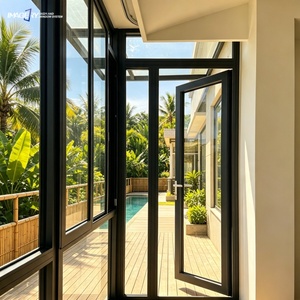
Modern Aluminium Casement Swing Door Triple Glazed Glass For Balcony Patio Front Entry Residential
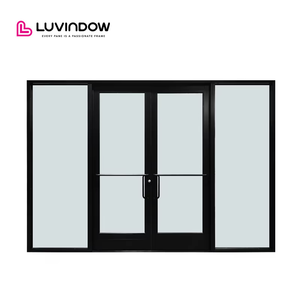
Customizable Aluminum Commercial Door Modern Glass Wall Exterior Aluminum Storefront Entrance Door for Retail Spaces
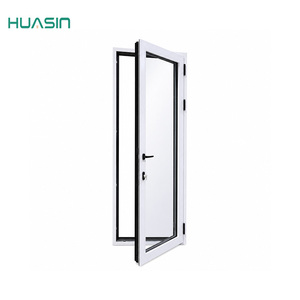
Huasin Customized Modern Design Lowe Double Tempered Glass Sound Heat Insulation Swing Aluminum Casement Door
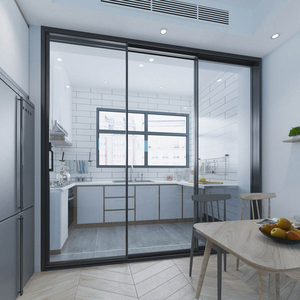
Aluminum Sliding Glass Door Energy Efficient Double Glass Partition Sliding Doors for Residential Interior Kitchen
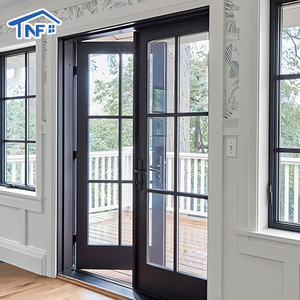
15 Year Warranty Tempered Glass Casement Door Balcony Apartment Mall Aluminum French Door
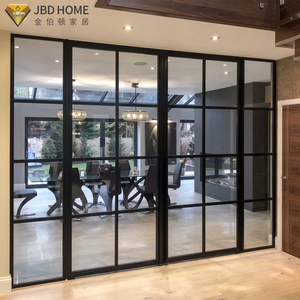
NFRC Certified Black Aluminum Sliding Glass Door Slim Frame Double Glazed Modern Patio Entrance for Residential Villa Projects
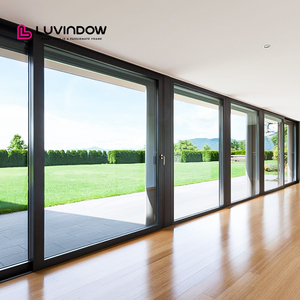
Promotion Wholesale Fashion Design Aluminum Alloy Double Glass Bedroom Cabinet Sliding Door Glass Triple Aluminum Tempered
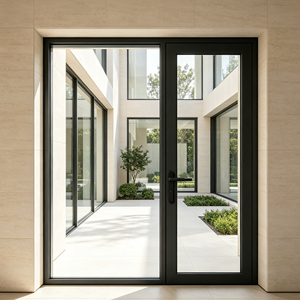
Custom Australian Standard Casement Door Stable Aluminum Alloy Double Glazed Tempered Glass Modern Interior Doors with AS2047
Architectural Engineering Guide: Modern Aluminum Glass Door Systems
Evaluating thermal break performance, structural load resistance, glazing integration, and hardware reliability for international construction projects.
In contemporary commercial and high-end residential architecture, the envelope design relies heavily on fenestration systems that balance structural transparency with rigorous building envelope performance. As a premiere China top aluminum with glass door manufacturer and factory based in Lishui Town, Foshan, Vexis Windows integrates advanced aluminum extrusion manufacturing, structural glazing technology, and precision assembly lines to yield systems tailored for worldwide building regulations.
Selecting the appropriate door system involves detailed intent mining regarding climatic exposure, operational frequency, structural wind loads (Pa), U-value thermal requirements (W/m²K), and target acoustic STC ratings. Below is an engineering evaluation of primary product configurations designed to maximize project performance and long-term durability.
Thermal Break Casement & French Swing Doors
Engineered with multi-chamber profile extrusions utilizing Technoform PA66GF25 polyamide thermal barriers, casement swing doors provide compression sealing superior to sliding mechanisms.
- Acoustic Rating: Up to STC 42 dB with laminated double glazing.
- Sealing System: Continuous EPDM triple-gasket compression seals.
- Applications: Villa front entries, high-exposure balcony access, luxury hotels.
Panoramic Ultra-Slim Sliding Glass Doors
Featuring interlock sightlines as narrow as 20mm, these systems maximize daylight penetration while employing heavy-duty stainless steel carriage rollers supporting panel loads up to 400kg.
- Sightline Width: 20mm - 45mm ultra-slim vertical meeting stiles.
- Glazing Capacity: Double Low-E toughened or triple acoustic glass units.
- Drainage: Concealed threshold subterranean water management.
Heavy-Duty Commercial Storefront Entrances
Constructed from robust 6063-T6 aluminum alloy profiles with wall thickness up to 3.0mm, ideal for high-traffic retail spaces, office lobbies, and public infrastructure projects.
- Structural Grade: Architectural 6063-T6 alloy for impact resistance.
- Hardware Integration: Overhead concealed door closers & panic hardware.
- Finishing Standard: Fluorocarbon (PVDF) AAMA 2605 coating.
System Technical Performance Matrix
The matrix below highlights verified structural, acoustic, and thermal envelope metrics across our product categories for project submittals.
| System Category | Aluminum Profile Alloy & Wall Thickness | Thermal Transmittance (Uw Value) | Wind Load Resistance (Pa) | Water Tightness (Pa) | Acoustic Isolation (STC) |
|---|---|---|---|---|---|
| Triple Glazed Casement Door | 6063-T5 / 2.0mm - 2.5mm | 1.1 – 1.4 W/m²K | 4500 Pa (Class 9A) | 700 Pa | STC 40 – 44 dB |
| Heavy Duty Sliding Patio Door | 6063-T6 / 2.0mm - 3.0mm | 1.5 – 1.8 W/m²K | 3800 Pa (Class 8A) | 600 Pa | STC 36 – 40 dB |
| Commercial Glass Storefront | 6063-T6 / 2.5mm - 3.0mm | 2.0 – 2.4 W/m²K | 5000 Pa (Class 10A) | 500 Pa | STC 34 – 38 dB |
| Bi-Fold Folding Glass Door | 6063-T5 / 1.8mm - 2.2mm | 1.4 – 1.7 W/m²K | 3500 Pa (Class 7A) | 450 Pa | STC 35 – 39 dB |
2026-2030 Global Sourcing Trends in Aluminum Glass Door Procurement
Key technological, environmental, and regulatory shifts shaping procurement strategies for international builders and importers.
1. Decarbonization & Carbon-Neutral Profile Metallurgy
Global building rating systems (such as LEED v4.1 and BREEAM) are prioritizing lower embodied carbon. Importers are increasingly demanding recycled aluminum billet extrusions produced via hydro-electric powered smelters. Chinese manufacturers equipped with green carbon trace documentation provide a distinct sourcing advantage in North America and Western Europe.
2. Extreme Thermal Decoupling & Low-E Triple Glazing
With energy codes tightening globally (e.g., Australia's NCC energy requirements and North America's Energy Star Version 7.0), single and standard double glazing are giving way to argon-filled, warm-edge spacer Low-E triple glazed units integrated into multi-cavity polyamide thermal barrier profiles.
3. Smart Access & Automated Motorized Fenestration
Commercial storefronts and luxury residential sliders are moving rapidly toward integrated access control. Future procurement specs emphasize factory-installed electronic multipoint locking, biometric recognition, and automated heavy-panel motorization compatible with Smart Home IoT protocols (Zigbee, Matter, KNX).
4. Pre-Engineered Modular Assemblies & Shop Drawing BIM Integration
Contractors are shifting away from on-site component assembly to unitized, pre-tested door frame packages. Chinese factories capable of providing custom CAD shop drawings, 3D BIM Revit models, and pre-drilled assembly channels significantly reduce on-site labor overhead for general contractors.
Innovations in Aluminum Surface Finishing & Structural Mechanics
How state-of-the-art chemical engineering and extrusion design prolong operational lifespan under harsh environmental conditions.
The structural durability of an aluminum glass door system is determined by two critical factors: its surface oxidation barrier and its hardware load transfer system. China's top manufacturers have transitioned from basic powder coatings to advanced fluorocarbon resin finishes and architectural anodizing techniques.
AAMA 2605 Fluorocarbon Coating (PVDF)
Utilizing 70% Kynar 500 / Hylar 5000 resins, our PVDF coating process passes 4,000-hour salt spray corrosion testing. Recommended for coastal installations subject to high UV radiation and marine salinity.
Multi-Point Locking & Security Hardware
Partnering with elite hardware suppliers like Siegenia, Hoppe, CMECH, and King Long, our door systems incorporate anti-lift hooks, mushroom head locking cams, and anti-drill cylinder plates conforming to European PAS 24 security standards.
Advanced Safety Glazing Interlayers
Beyond standard tempered glass, our factory offers SGP (SentryGlas® Plus) structural interlayers and PVB acoustic interlayers. SGP laminates maintain structural stiffness even if both glass panes are fractured, preventing dynamic wind blow-outs.
Why Direct Factory Sourcing from Foshan Vexis Guarantees Project Success
Over two decades of OEM/ODM manufacturing capability, rigorous quality control, and end-to-end export support.
30,000m² Manufacturing Facility
Located in Foshan, Guangdong—the world’s epicenter for aluminum processing. Equipped with CNC double-head cutting machines, automatic corner-crimping units, and insulated glass production lines.
Comprehensive Quality Control
Every batch undergoes rigorous quality assurance: profile thickness validation via ultrasonic gauge, coating adhesion cross-hatch testing, and air/water pressure chamber verification before packing.
Full Customization & CAD Services
No off-the-shelf limitations. We tailor opening sizes, mullion configurations, grille designs, screen mesh options, and dual-color powder coat finishes to exact architectural specifications.
Proven Export Compliance (154+ Countries)
Hands-on experience supplying commercial developments, residential apartments, and coastal resorts across Canada, USA, Australia, Philippines, UK, and the Middle East.
Export Packing & Damage-Free Transit
Door frames and glass panels are wrapped in protective PE film, reinforced with corner protectors, and encased in fully sealed, fumigated solid wooden crates engineered for LCL/FCL ocean freight.
Direct Factory Pricing & Transparency
Eliminate intermediary trading margins. We offer factory-direct wholesale pricing, transparent bill of materials (BOM), and direct technical consultations with our senior engineering staff.
Frequently Asked Questions for B2B Importers & Developers
Detailed technical answers to common queries regarding ordering, custom specifications, compliance, and shipping logistics.
What structural standards and international certifications do Vexis aluminum glass doors meet?
Our aluminum door systems are engineered and tested to satisfy major international building code standards. For the Australian market, select systems conform to AS2047 (Windows and External Glazed Doors in Buildings) and AS1288 (Glass in Buildings). For North American projects, our thermal break doors can be specified to meet NFRC energy performance metrics and CSA / AAMA window performance standards. Additionally, our factories maintain ISO9001 quality management certification, and European submittals include CE documentation (EN 14351-1).
How does a thermal break profile differ from a non-thermal break aluminum profile?
Aluminum is an inherently high-thermal-conductive metal. A standard (non-thermal break) profile easily transfers heat and cold between the exterior and interior of a building, leading to high HVAC energy bills and internal surface condensation. A thermal break profile features a structural insulating strip—typically composed of Technoform polyamide reinforced with 25% glass fiber (PA66GF25)—placed directly between the inner and outer aluminum extrusions. This mechanical separation effectively blocks conductive thermal transfer, drastically lowering the overall door U-value and stopping interior condensation.
What information should be submitted for an accurate engineering quote?
To provide a precise quotation and structural recommendation within 24 hours, our engineering team requires:
- Architectural window/door schedule or shop drawings indicating rough opening dimensions (Width x Height).
- Desired door operation type (Casement swing, heavy-duty sliding, slim sliding, or folding bi-fold).
- Glass specifications (Single, double, triple glazed; Low-E coating, tinting, laminated acoustic or impact glass).
- Surface finish & color preference (Powder coat RAL colors, PVDF fluorocarbon, or wood-grain transfer).
- Destination port and targeted local building code requirements (e.g., wind design load).
What is the typical manufacturing lead time for custom aluminum door orders?
Standard lead times for custom-extruded aluminum glass doors are generally 25 to 35 business days following final approval of shop CAD drawings and deposit confirmation. For custom non-standard RAL powder coat colors, specialized anodizing, or custom-imported hardware brands (e.g., German Siegenia), lead time may extend slightly to 35–40 days. Sample production for mock-up validation can be completed within 15–20 days.
How are fragile glass doors packed to guarantee zero breakage during sea freight?
We implement a multi-layer heavy-duty export packaging protocol designed for rough ocean container transport. First, aluminum frames are sealed in protective anti-scratch PE film and thick foam corner protectors. Glass panels are cushioned with rubber separation blocks. Assembled units are then packed into reinforced, fully enclosed fumigated plywood crates equipped with built-in forklift pallets. We maintain a glass break-free transit rate of over 99.8% across thousands of export shipments.
Can Vexis customize low-threshold or flush-transition hardware for accessible design?
Yes. We offer barrier-free, zero-step flush thresholds for sliding and bi-fold door systems. These low-profile tracks sit flush with finished interior flooring while incorporating subterranean channel drainage to divert rainwater outward. This solution complies with barrier-free accessibility design standards without sacrificing water tightness performance.
Ready to Upgrade Your Fenestration Sourcing?
Get direct access to factory pricing, CAD shop drawings, and technical support from China’s leading aluminum glass door manufacturer.
Inquire Now