Engineered Product Portfolio
Top-Rated Export Aluminum Windows & Doors
Direct factory solutions engineered for extreme thermal insulation, cyclone-rated wind loads, and acoustic damping.
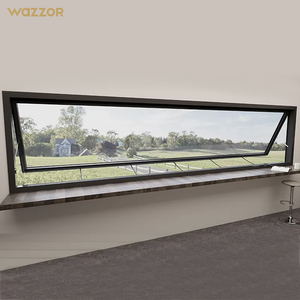
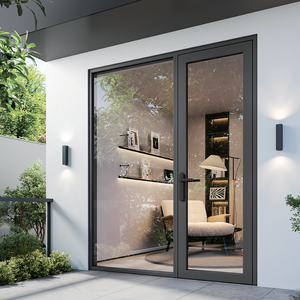
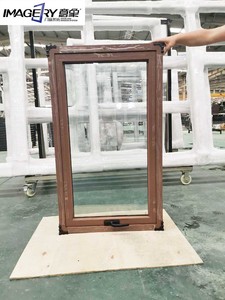
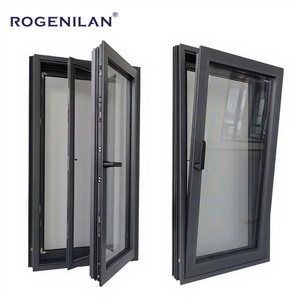
Engineering Excellence in Aluminum Crank-Out Window Manufacturing
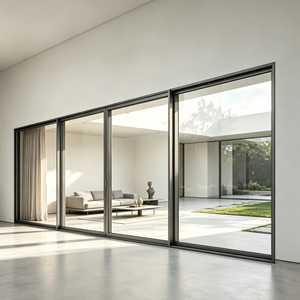
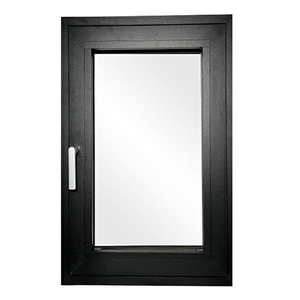
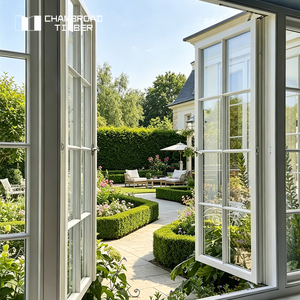
Aluminum crank-out windows—comprising top-hinged awning systems and side-hinged casement configurations operated via rotary mechanical gears—represent the pinnacle of modern structural fenestration. Unlike conventional sliding mechanisms that rely on brush seals prone to friction wear, crank-out windows leverage compression-seal technology to yield near-zero air infiltration and superior rain resistance.
For global architectural specifiers, commercial developers, and high-volume fenestration importers, identifying a qualified manufacturer in China requires analyzing profile alloy purity, thermal break structural integrity, hardware torque endurance, and certified fenestration testing under ASTM, AS2047, and CE frameworks. China’s premium window manufacturing ecosystem, anchored in Foshan, Guangdong, has evolved from standard OEM assembly into high-precision engineering of multi-chambered, thermal-break architectural systems.
Information Gain Insight: The mechanical leverage provided by dual-arm rotary operators allows crank-out windows to compress multi-lip EPDM gaskets uniformly along the entire perimeter frame, achieving air permeability ratings under 0.05 CFM/ft² (ASTM E283)—outperforming standard sliding doors by over 400%.
Enterprise Sourcing Advantages & Production Infrastructure
As a leading Chinese manufacturer integrating R&D, architectural modeling, precision extrusion processing, and export logistics, our manufacturing center in Foshan delivers uncompromising industrial quality. Operating across a 30,000 m² state-of-the-art production complex paired with a 1,500 m² interactive architectural exhibition hall, we provide structural fenestration tailored to stringent regional building codes.
Primary 6063-T6 Extrusions
Utilizing virgin 6063-T6 architectural aluminum profiles with wall thicknesses ranging from 1.6mm to 3.0mm, ensuring zero frame distortion under wind loads exceeding 5,000 Pa.
PA66-GF25 Thermal Barriers
Integrating 24mm to 34mm polyamides reinforced with 25% glass fiber (PA66-GF25) to eliminate thermal bridging, preventing interior condensation in sub-zero climates.
Rotary Gear Operator Hardware
Equipped with heavy-duty stainless steel 304 linkage arms and die-cast zinc crank housings tested for over 50,000 continuous opening cycles without mechanical slop.
End-to-End Quality Management & Global Compliance
Our factory operates under strict ISO 9001 quality protocols. Every production run undergoes automated CNC mitering, corner crimping with dual-component epoxy injection, automated insulating glass unit (IGU) gas filling, and pressure chamber testing for water penetration under static and dynamic head pressure.
With export footprints spanning 154+ countries across North America, Europe, Australia, and Southeast Asia, our fenestration assemblies carry full testing verification including AS2047 (Australia), CE Marking (European Union), and NFRC energy certification standards.
Future Sourcing & Engineering Trends in Aluminum Crank Windows (2025–2030)
The global fenestration sector is experiencing a profound paradigm shift driven by stringent municipal energy mandates (such as the EU Energy Performance of Buildings Directive and US Title 24), modern minimalism, and extreme weather frequency. Bulk buyers and project procurement directors must realign their sourcing specs to encompass three core macro-trends:
1. Ultra-Low U-Factor & Passive House Certification
Standard double glazing is rapidly being superseded by warm-edge spacer triple-glazed units filled with 90%+ Argon gas and dual Low-E coatings (Pyrolytic & Sputtered). Advanced thermal break crank windows now hit target U-factors below 0.8 W/m²·K (0.14 BTU/h·ft²·°F), qualifying for Passive House energy benchmarks in North America and Northern Europe.
2. Concealed Operators & Smart Motorization
Architectural aesthetics favor clean sightlines. Next-generation crank-out windows utilize folding crank handles that seat flush against the sash, or completely hidden motorization actuators connected to smart building automation systems (BMS) with automated rain and wind sensor triggers.
3. Hurricane Impact & Coastal Anti-Corrosion
Coastal developments in North America and Australia require fenestration compliant with high-velocity hurricane zones (HVHZ). Premium Chinese factories now process PVB/SGP laminated glass pairs with multi-point locking gear systems capable of surviving DP70 design pressure criteria and 3,000-hour fluorocarbon (PVDF) salt spray testing.
Fenestration System Comparison & Performance Benchmarks
To assist project engineers and procurement officers in selecting the appropriate operating mechanism, the table below provides an authoritative comparison of structural, thermal, and acoustic metrics across key window typologies manufactured at our Foshan facility.
| Window System Type | Air Permeability (ASTM E283) | Water Resistance (ASTM E331) | Structural Load Rating | Thermal U-Value Range | Acoustic STC Rating |
|---|---|---|---|---|---|
| Thermal Break Crank Awning | < 0.05 CFM/ft² (Top Tier) | 700 Pa - 1000 Pa | DP60 - DP90 | 0.85 - 1.30 W/m²·K | STC 38 - 45 dB |
| Thermal Break Crank Casement | < 0.05 CFM/ft² (Top Tier) | 600 Pa - 900 Pa | DP55 - DP85 | 0.90 - 1.40 W/m²·K | STC 36 - 44 dB |
| Tilt & Turn German System | < 0.08 CFM/ft² | 600 Pa - 850 Pa | DP50 - DP80 | 0.80 - 1.25 W/m²·K | STC 38 - 46 dB |
| Thermal Break Sliding Window | 0.20 - 0.30 CFM/ft² | 300 Pa - 450 Pa | DP35 - DP50 | 1.60 - 2.20 W/m²·K | STC 28 - 34 dB |
Frequently Asked Questions for Importers & Engineers
Exhaustive answers to technical, manufacturing, and shipping questions commonly raised during OEM/ODM project negotiations.
1. What makes aluminum crank out windows superior to conventional sliding windows for high-rise or coastal projects? ▼
Crank out windows (awning and casement) utilize a continuous perimeter compression seal mechanism operated by a scissor-arm drive gear. When closed, the crank pulls the sash directly into multi-lip EPDM rubber weather-strips embedded within the frame channel. This eliminates the air and water gaps inherent in sliding windows, which depend on brush pile weather-strips. For coastal and high-rise environments exposed to driving rain and heavy wind loads (up to DP70 or higher), crank out windows prevent water ingress and wind whistle while delivering significantly higher thermal retention.
2. How does your factory prevent thermal bridging in aluminum window frames? ▼
Aluminum is a natural thermal conductor. To prevent thermal transfer between the interior and exterior environments, we engineer thermal break profiles using high-grade Polyamide 66 reinforced with 25% structural glass fiber (PA66-GF25). The exterior aluminum extrusion and interior aluminum extrusion are mechanically joined over this non-conductive polyamide strip. This thermal barrier prevents heat loss during winter, blocks exterior radiant heat during summer, and prevents interior frame condensation.
3. Can your crank out window systems be customized to meet Australian AS2047 or US NFRC certifications? ▼
Yes. We regularly supply major residential and commercial projects complying with Australian Standard AS2047 (tested for deflection, air infiltration, water resistance, and ultimate strength) as well as NFRC energy benchmarks in North America. We provide certified mill test reports, glass performance calculations (using LBNL WINDOW software), and third-party laboratory test documentation for smooth municipal building plan approvals.
4. What glass configurations are recommended for maximum soundproofing (high STC ratings)? ▼
For superior sound attenuation, we specify double or triple Insulated Glass Units (IGUs) incorporating asymmetrical pane thicknesses (e.g., 6mm outer pane + 12mm Argon space + 8mm inner pane) or acoustic PVB laminated glass combinations (e.g., 6mm + 1.52Acoustic PVB + 6mm). The asymmetric mass disrupts soundwave frequencies, achieving sound transmission class (STC) ratings up to 45 dB—ideal for airport perimeter developments or urban arterial roads.
5. What hardware brands and surface treatment finishes are available for OEM production? ▼
We partner with world-renowned hardware manufacturers including Truth Hardware (USA), Siegenia (Germany), Hoppe (Germany), and CMECH, as well as offering high-durability proprietary Foshan-manufactured stainless steel systems. Available surface finishes include AkzoNobel fluorocarbon (PVDF) powder coating, architectural anodizing (20 microns+), wood-grain heat transfer sublimation, and electro-coating for maximum corrosion resistance in marine environments.
6. What is the standard production lead time and export packaging protection process? ▼
Standard production lead time for custom architectural orders is 25 to 35 business days following final shop drawing sign-off and deposit receipt. For export packaging, each window unit undergoes protective surface film application, corner rubber guard wrapping, bubble wrap insulation, and encasement in fully enclosed, fumigation-free plywood crates reinforced with steel strapping to prevent ocean transport shifting.
7. How do top-out awning crank windows handle rain during ventilation? ▼
Awning crank windows hinge at the top and push outward from the bottom. This outward-sloping glass pane creates a natural protective awning screen. Even during light to moderate rain, the open sash sheds water outward and away from the building envelope, allowing continuous fresh air ventilation inside the room without risking interior water damage.
8. Can insect screens and security grilles be integrated into your crank out window frames? ▼
Absolutely. Because crank out window sashes push outward, insect screens are installed on the interior side of the frame. We offer fixed interior fiberglass mesh screens, retractable spring-loaded roll-up screens, or high-tensile Stainless Steel 304 security mesh screens (crimsafe type) with integrated interior magnetic latches or key locks for security and burglar resistance.
9. What information should buyers prepare to receive an accurate factory quotation? ▼
To receive a detailed line-item bill of quantities (BOQ) and price estimate, please provide: (1) Project elevation drawings or opening schedule sizes; (2) Preferred window typologies; (3) Thermal break profile wall thickness requirements; (4) Glass performance specs (e.g., Clear Double Glazed, Low-E Tinted, Triple Glazed); (5) Hardware preference and frame color choice; and (6) Destination sea port for freight calculation.
10. Does your enterprise support factory site audits and pre-shipment inspections? ▼
Yes, we actively welcome project buyers, third-party inspection firms (such as SGS, Bureau Veritas, or TÜV), and client-appointed agents to conduct on-site factory audits at our Foshan facility. Furthermore, prior to container loading, our QC department issues detailed pre-shipment inspection reports covering structural tolerances, squareness, coating thickness, hardware operation, and seal integrity.
Direct Factory Connection
Streamline Your Architectural Procurement Today
Partner directly with Foshan’s premier aluminum window manufacturer. Whether you require standard wholesale profile systems or custom engineered fenestration for mega commercial projects, our technical export team delivers unmatched precision and pricing transparency.