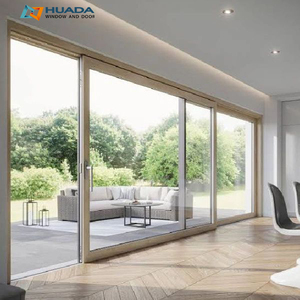
Hurricane Impact Lift & Slide Patio Doors (Triple Glazed)
Hurricane ProofTriple GlazedLift & SlideHigh DP Rating
Contact Us
Precision-engineered sliding, casement, pivot, and tilt-and-turn door/window systems designed to comply with AS2047, NFRC, CSA, and European CE structural standards.
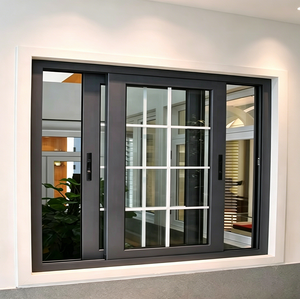
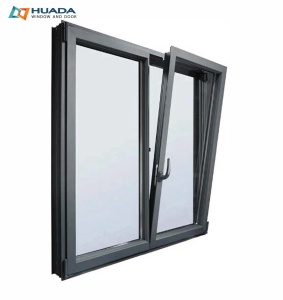
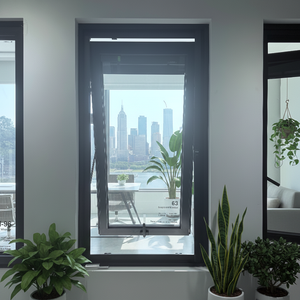
The global construction and architectural envelope market is undergoing a structural transition toward ultra-high thermal efficiency, storm resilience, and low-embodied-carbon building products. As international developers, general contractors, and building material importers evaluate potential supply partners, China has firmly established itself as the world’s premier manufacturing hub for architectural aluminum profiles, glazed curtain walls, thermal break sliding doors, and specialized hurricane impact fenestration systems.
However, selecting a high-performing exporter requires a rigorous analysis of structural engineering capability, metallurgy standards, glazing thermodynamics, and international code compliance. This technical white paper provides procurement directors with an actionable framework for evaluating Chinese manufacturers and understanding key performance metrics.
The core structural integrity of any modern glass door system depends on the alloy composition and tempering of the underlying aluminum extrusion. Leading Foshan manufacturers utilize primary-grade 6063-T5 or high-tensile 6063-T6 aluminum alloys. Compared to secondary recycled scrap aluminum, primary 6063 alloy guarantees superior tensile strength (exceeding $205 \text{ MPa}$) and yield strength (exceeding $180 \text{ MPa}$), preventing sash deflection under severe wind load conditions.
| Technical Parameter | Standard Commercial Grade | Vexis Export Engineering Grade | International Compliance Benchmark |
|---|---|---|---|
| Aluminum Alloy Grade | Recycled 6063-T5 | Primary Virgin 6063-T5 / 6063-T6 | ASTM B221 / GB 5237.1-2017 |
| Main Profile Wall Thickness | 1.4mm – 1.6mm | 2.0mm – 3.0mm Structural Reinforcement | AS2047 / AAMA 101/I.S.2/A440 |
| Thermal Break Strip | PVC / Low-grade Nylon | PA66-GF25 (Polyamide 66 with 25% Glass Fiber) | DIN 4108 / EN 14024 |
| Glazing Unit Structure | Single / Double Clear Glass | Triple Tempered Low-E + Argon Gas + SGP Interlayer | IGCC / NFRC / CSA Certified |
| Weather Seals & Gaskets | Standard Rubber / PVC | Multi-Channel Continuous EPDM Gaskets | ISO 3934 / ASTM C864 |
| Surface Coating | Standard Powder Coating | AkzoNobel PVDF Fluorocarbon / Anodized 25µm | AAMA 2605 / QUALICOAT Class 2 |
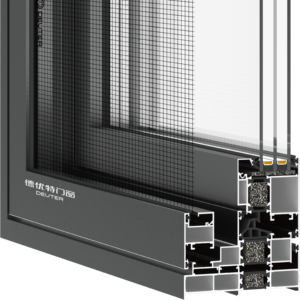
Uninsulated aluminum exhibits high thermal conductivity ($k \approx 200 \text{ W/m}\cdot\text{K}$), which creates severe thermal bridging, interior condensation, and HVAC energy loss. To satisfy modern energy conservation codes such as North America’s NFRC/Energy Star and Europe’s EnEV standards, premium exporters engineer profile sashes with multi-chamber Polyamide thermal barriers.
By inserting structural PA66-GF25 (Polyamide 66 reinforced with 25% structural glass fibers) isolation strips, the conductive path between exterior and interior profile sections is severed. This technical configuration reduces profile thermal conductivity to below $0.3 \text{ W/m}\cdot\text{K}$, enabling structural folding and sliding door assemblies to meet stringent U-factor requirements without sacrificing structural load capability.
Glass constitutes over 80% of a door system’s surface area, making glazing specification paramount for thermal and impact performance. Leading export manufacturers leverage fully automated, clean-room insulated glass unit (IGU) assembly lines capable of producing:
Integrating R&D, structural design, automated CNC fabrication, and international export logistics under one 30,000 m² manufacturing hub in Foshan, Guangdong.
Our Foshan factory houses multi-axis German CNC milling centers, automated corner-crimping machinery, and double-glazing lines, capable of producing over 250,000 m² of system doors and windows annually.
With over 20 years of direct foreign trade experience, Vexis products are tailored to meet localized building standards, wind loads, and customs requirements across North America, Europe, Australia, and Asia.
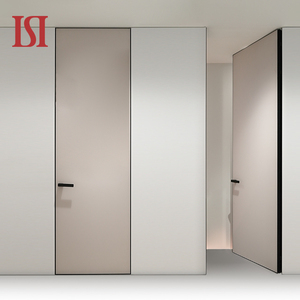
We provide complete architectural customization—from oversized motorized patio doors and flush invisible frames to custom PVDF powder colors, wood-grain transfers, and specialized hardware setups.
Every product line undergoes structural and thermal verification, carrying test documentation for Australian AS2047, North American NFRC / CSA, and European CE marking.
Heavy-duty export shipping preparation featuring shrink-wrap protective film, shock-absorbing corner protectors, steel-banded solid wooden crates, and moisture control for long-distance ocean transit.
As global architectural design shifts toward clean lines, maximum daylight penetration, smart home connectivity, and net-zero carbon footprints, procurement strategies are evolving rapidly. General contractors and importers who stay ahead of these technical shifts gain substantial commercial advantages.
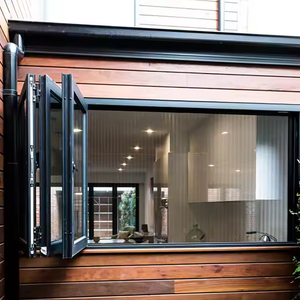
Architectural demand for minimalist framing has driven the adoption of ultra-slim interlocks with visible profiles under 20mm, while utilizing heavy-duty stainless steel rollers capable of carrying sashes over 400kg.
Commercial and luxury residential developments are increasingly specifying hidden electromagnetic or chain-actuated drive systems, integrating doors with smart home protocols (Zigbee, KNX, RS485) and rain/wind sensors.
With European CBAM and green building certifications (LEED, BREEAM), developers require Environmental Product Declarations (EPDs) and verified low-carbon aluminum extruded using renewable hydro or solar energy.
Clear, direct answers to common questions about technical specifications, custom manufacturing, logistics, and quality assurance.