High-Performance Aluminium & Glass Systems
Engineered in Foshan, China to satisfy international architectural codes. Precision manufactured with multi-chamber profiles, double/triple glazing, and heavy-duty structural hardware.
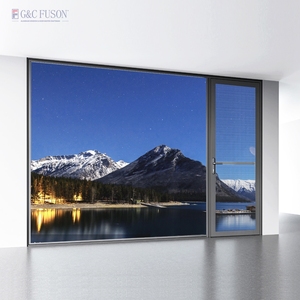
Fuson Passive House Windows Triple Glazed Windows Passive House Windows for Home
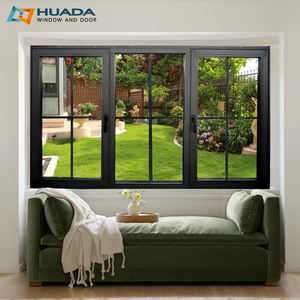
American Style NFRC Energy Efficient Dual Action Window Panoramic Tilt and Turn Window Insulating Glass Casement Windows
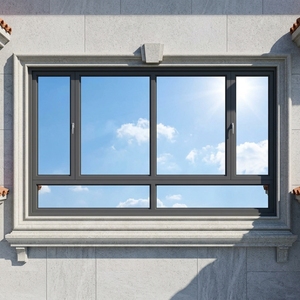
Factory Direct Price Aluminium Windows Energy Efficient Double Glaze NFRC windows Thermal Break Aluminum Casement Window
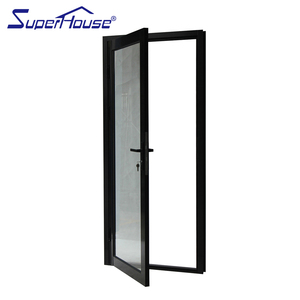
For Superhouse Modern Single Exterior Aluminum Door Commercial Aluminium Glass Storefront for Hotel Applications
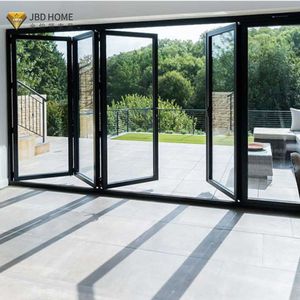
Australia Standard Heavy Duty Aluminum Folding Door Interior Modern Design Bi-fold Doors With Finished Surface
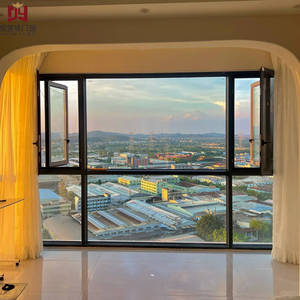
Direct From Factory: Aluminum Casement Windows with Inward/Outward Opening & Tilt-In Option
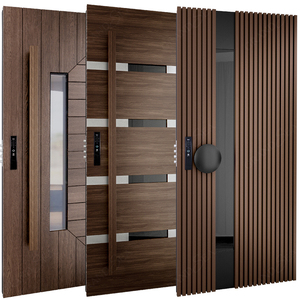
Residential: Exterior Aluminum Security Entrance Door Aluminum Blast Front Door With Security Features For Villas
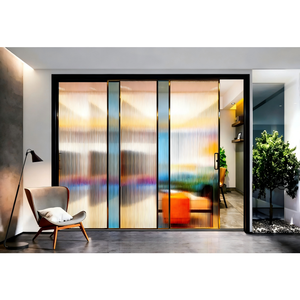
AS2047 Modern Double Glazed Stacker Sliding Aluminum Alloy Doors Windows Australia Standard Fiberglass Interior Kitchen Garage
Foshan Manufacturing Powerhouse: Vexis Windows & Doors
Operating from China's primary architectural aluminum hub in Lishui Town, Foshan, our facility combines vertical integration, rigorous testing labs, and comprehensive export logistics.
When sourcing architectural envelope solutions, evaluating China best aluminium with glass door manufacturers & factories requires an in-depth audit of metallurgical standards, thermal break insertion accuracy, glass unit lamination, and severe weather resistance capabilities. Vexis Windows & Doors Co., Ltd. represents the apex of Chinese system door engineering. Located at 20D Wenjiao Road, Lishui Town, Foshan, Guangdong, our facility operates high-precision CNC machining centers, automated corner-crimping lines, and double-insulated glass assembly plants.
Unlike unbranded fabrication workshops, our operational methodology relies on total system integration. We engineer complete fenestration ecosystems where aluminum alloy extrusions, Polyamide (PA66-GF25) thermal barriers, EPDM weatherstripping gaskets, and heavy-duty architectural hardware work in perfect mechanical synergy. This vertical integration guarantees compliance with strict regional building regulations, including Australia’s AS2047 / AS1288 standards, North America’s NFRC / AAMA codes, and European CE / Passive House energy metrics.
Engineering Principles of Modern Aluminium Glass Door Systems
An executive procurement guide analyzing alloy metallurgy, thermal break mechanics, acoustic glazing physics, and structural load calculations.
1. Alloy Metallurgy & Extrusion Geometry
The structural foundation of premium glass doors relies on primary-grade 6063-T5 or 6063-T6 architectural aluminum alloy. Leading Chinese factories maintain wall thicknesses between 2.0mm and 3.0mm for heavy-duty sliding and bifold doors, far exceeding commercial minimums. High structural tensile strength prevents frame deflection under extreme wind loads (up to 5000 Pa). Surface treatments utilize fluorocarbon (PVDF) electrostatic spraying or AkzoNobel powder coatings, resisting salt spray corrosion in coastal climates for over 25 years.
2. Thermal Break Engineering (PA66-GF25)
Un-insulated aluminum profiles exhibit high thermal conductivity. To eliminate thermal bridging, top tier manufacturers insert Polyamide PA66 reinforced with 25% fiberglass (PA66-GF25) structural insulation strips. This mechanical separation isolates the exterior frame from interior indoor spaces, reducing the overall system U-factor to below 1.4 W/m²K. When paired with multi-cavity thermal design, condensation risk is completely eliminated even in sub-zero alpine conditions or scorching desert climates.
3. Advanced Glazing Architecture & Acoustic Physics
Glass constitutes 80%+ of a door’s total surface area. Leading Chinese manufacturers incorporate double-pane (5mm+12Ar+5mm) or triple-pane (5mm+12Ar+5mm+12Ar+5mm) Insulating Glass Units (IGUs) fitted with Low-Emissivity (Low-E) soft coatings and Argon gas filling. For high-noise urban environments, asymmetric laminated acoustic glass (e.g., 6mm + 1.14PVB/SGP + 6mm) achieves sound reduction ratings up to STC 45 dB, effectively insulating indoor environments from airport or traffic noise.
4. Structural Hardware & Multi-Point Locking
Operability and security depend on hardware load ratings. Premium systems utilize German-engineered (CMECH, Hoppe, Siegenia, Roto) or top-tier custom stainless steel roller tracks capable of carrying sash weights up to 400kg. Integrated multi-point locking gearboxes engage stainless steel mushroom head bolts along the frame perimeter. Coupled with continuous multi-layered EPDM ternary ethylene-propylene rubber weatherstripping, systems achieve Class 4 air permeability and 1000 Pa water tightness.
Technical Specification Matrix: Standard vs. Vexis System Glass Doors
To provide full transparency for global procurement officers, architects, and real estate developers, the technical matrix below details how engineered thermal-break aluminum glass doors compare against standard market alternatives:
| Performance Parameter | Standard Residential Doors | Vexis System Glass Doors | International Standard Reference |
|---|---|---|---|
| Aluminum Alloy Grade | Recycled / Standard 6063-T5 (1.4mm) | Primary Virgin 6063-T5 / T6 (2.0mm - 3.0mm) | GB/T 5237 / ASTM B221 |
| Thermal Insulation Strip | PVC / Low-grade Plastic Strips | PA66-GF25 Structural Polyamide (24mm - 34mm) | EN 14024 / DIN 16941 |
| Thermal Transmittance (U-Factor) | > 3.5 W/m²K | 0.8 - 1.4 W/m²K (Passive House Grade) | NFRC 100 / ISO 10077 |
| Acoustic Attenuation (STC) | 22 - 28 dB | 38 - 45+ dB (Acoustic Laminated IGU) | ASTM E90 / ISO 717-1 |
| Water Penetration Resistance | 150 - 250 Pa | 700 - 1000 Pa (High-Sill Drainage System) | AS4420.4 / ASTM E331 |
| Ultimate Wind Pressure Load | 1500 - 2500 Pa | 4500 - 6000 Pa (Cyclonic Typhoon Proof) | AS2047 / ASTM E330 |
| Hardware Cycle Endurance | 10,000 - 20,000 Cycles | 100,000+ Cycles (Stainless Steel Bearings) | EN 13126 / AAMA 904 |
Future Procurement Trends in Aluminium Glass Door Manufacturing
Strategic analysis of architectural shifts, zero-carbon building mandates, structural glass trends, and smart supply chain integration for B2B buyers.
Trend 1: Minimalist Ultra-Slim Sightlines & Pocket Stacking
Architectural demand has shifted decisively toward ultra-slim frame designs (interlock sightlines under 20mm). Modern high-end residential and commercial projects favor floor-to-ceiling glass panels exceeding 3.5 meters in height. Leading Chinese factories utilize concealed frame profiles, structural silicone bonding, and recessed bottom tracks that seamlessly slide into wall pockets, creating unobstructed indoor-outdoor living transitions.
Trend 2: Decarbonization & Net-Zero Envelope Mandates
With stringent building energy codes introduced across North America (IECC 2024), Europe (EPBD), and Australia (NCC 2023), sourcing focus has elevated from basic aesthetic appeal to certified energy performance. Procurement directors are demanding Passive House Institute (PHI) certified thermal break windows and doors, low embodied-carbon aluminum billets, vacuum insulated glass (VIG), and fully recyclable EPDM sealing systems.
Trend 3: Smart Access Automation & Motorized Hardware
The integration of IoT-enabled electronic hardware is reshaping modern entrance and large sliding doors. Smart doors now incorporate motorized drive actuators, biometric fingerprint recognition, electromagnetic multi-point locks, and automated rain sensors. Automated heavy-duty sliding panels weighing up to 600kg can be operated smoothly via mobile smartphone interfaces, wall switches, or smart home integration hubs.
Trend 4: BIM Integration & Direct-to-Factory CAD Workflows
B2B buyers are streamlining custom ordering processes through digital transformation. Top Chinese suppliers provide direct Building Information Modeling (BIM/Revit) families, 3D DWG shop drawings, and structural load simulation reports prior to mass production. This digital verification guarantees exact field dimension matching, reduces lead times, and eliminates costly job-site adjustments for commercial construction projects.
B2B Procurement & Technical FAQ
Expert guidance addressing certification, engineering, custom manufacturing, shipping logistics, and compliance for overseas importers.
What technical compliance certificates do Chinese aluminium glass door manufacturers provide? +
How does factory-direct custom dimensional ordering work for architectural projects? +
What is the difference between standard aluminum doors and thermal break aluminum doors? +
What protective packaging methods prevent glass breakage and frame scratching during ocean freight? +
What are the standard production lead times and minimum order quantities (MOQs)? +
Can Vexis supply hardware brands from Europe alongside factory-engineered options? +
Partner with China's Premier Aluminium Glass Door Manufacturer
Request engineering consultation, complete technical system specifications, CAD detail libraries, and competitive factory-direct wholesale pricing for your upcoming residential or commercial development.
Get Catalog