Top-Tier Coated Aluminium Door Systems
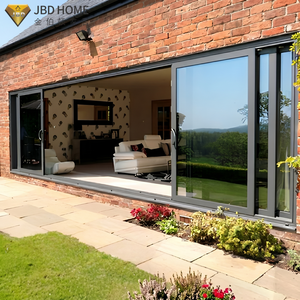
Modern Exterior 4 Panel Aluminum Sliding Glass Door Double Glazed Tempered Patio Entrance For Residential Villa Projects
Contact Us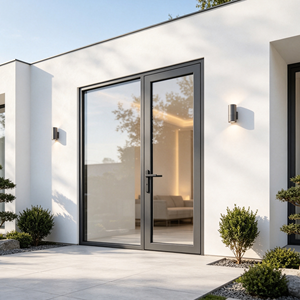
Weather Resistance Premium Powder-coating Finished Aluminum Glass Outward Opening Casement Doors with Australian Standard AS2047
Contact Us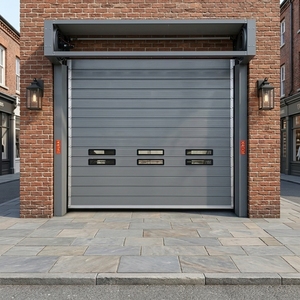
Heavy Duty Aluminum Spiral High Speed Door Windproof Anti-Theft Fast Door Aluminum Entrance Door For Retail Stores
Contact Us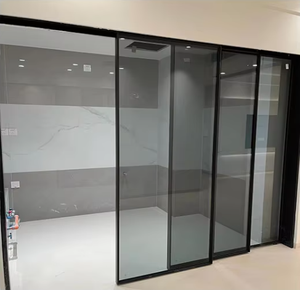
Modern Design Sliding Patio Door System Exterior Flush Aluminum Alloy Double Glazing Tempered Glass Waterproof Kitchen Door
Contact Us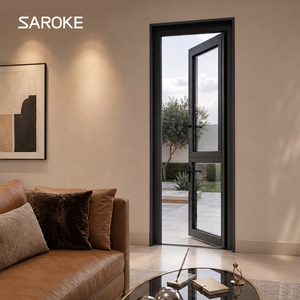
American Standard House Black Metal Patio Exterior Thermal Break Aluminum Doors and windows
Contact Us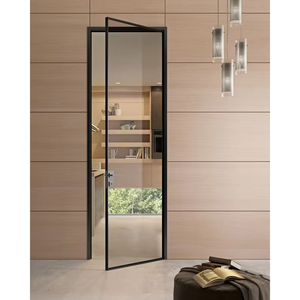
Modern French Design Narrow Frame Aluminum Glass Hinged Casement Door for Interior Kitchen Bedroom Exterior Patio Bathroom Mesh
Contact Us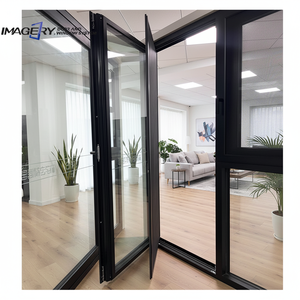
Wholesale Modern Aluminium Glass Double Swing Doors Design Tempered Glass Soundproof Door for Home Houses Business
Contact Us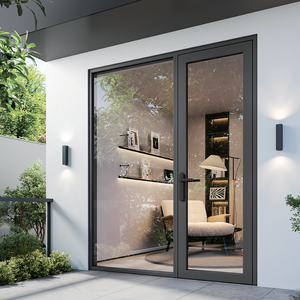
Australian Standard AS2047 Certificated Luxury Swing Door Thermal Break Double Glazed Tempered Glass Casement Aluminum Doors
Contact UsArchitectural Standard Specification for Coated Aluminium Door Assemblies
An exhaustive technical evaluation for architects, facade engineers, procurement directors, and commercial real estate developers specifying coated aluminium door systems from top China manufacturers.
Executive Overview: Why China Leads Global Coated Aluminium Door Manufacturing
The global market for high-performance architectural fenestration has experienced a structural shift toward extruded aluminium alloy assemblies enhanced by advanced surface coatings. China has established itself as the undisputed epicentre of metallurgical refinement, precision extrusion, and state-of-the-art surface treatment technology. Modern architectural specifications demand far more than basic structural framing; contemporary projects require fluorocarbon (PVDF) coatings, Qualicoat-certified electrostatic powder coats, and advanced anodized finishes capable of enduring aggressive coastal salinity, intense UV irradiation, and extreme thermal cycling.
As premier China manufacturers and factories integrate thermal break technology (utilizing PA66GF25 polyamide structural insulation strips) with multi-chamber profile geometry, the baseline performance of OEM/ODM door systems has surpassed international standards such as Australia's AS2047, European CE certifications, and North American NFRC benchmarks. This technical guide delivers an in-depth analysis of coating chemistry, structural engineering trends, product classification matrix, and strategic procurement frameworks vital for international buyers.
Surface Coating Science: PVDF, Powder Coating & Anodizing
Understanding the molecular durability, chemical composition, and performance profiles of architectural coatings applied to 6063-T5 / 6063-T6 extrusions.
Fluorocarbon (PVDF) Coatings
Utilizing Kynar 500® or Hylar 5000® resin bases (70% PVDF ratio), PVDF coatings represent the gold standard for severe environmental exposures. Formulated with inert chemical bonds, PVDF provides exceptional resistance to chalking, atmospheric pollution, acid rain, and UV degradation. Standard coating thickness ranges from 30μm (2-coat system) to over 40μm (3 to 4-coat fluoropolymer systems for marine settings).
Thermosetting Powder Coating
Compliant with Qualicoat Class 1, Class 2 (Superdurable Polyester), and AAMA 2604/2605 standards. Electrostatic deposition creates an even film thickness (60-80μm) with zero volatile organic compounds (VOCs). Offers superior scratch resistance, mechanical impact buffer, and virtually unlimited RAL color matching, textured tactile finishes, and wood-grain sublimation finishes.
Electrophoretic & Anodized Finishes
Anodization converts the aluminium surface into a durable, corrosion-resistant, anodic oxide layer (AA15 to AA25 micron film thickness). Electrophoresis adds a transparent organic resin coat over the anodized base, ensuring ultra-smooth tactile feel, chemical wash resistance, and high structural hardness ideal for contemporary industrial aesthetic doors.
| Coating Technology | Typical Film Thickness | Salt Spray Resistance (ISO 9227) | UV Stability (AAMA Spec) | Primary Commercial Application |
|---|---|---|---|---|
| PVDF Fluorocarbon (3-Coat) | 35 - 45 μm | > 4,000 Hours | AAMA 2605 (10-Yr Florida Exposure) | High-Rise Facades, Coastal Villas, Luxury Towers |
| Superdurable Powder Coat | 60 - 80 μm | > 2,000 Hours | AAMA 2604 (5-Yr Florida Exposure) | Residential Villas, Commercial Entrances, Patio Doors |
| Hard-Anodized (AA25) | 20 - 25 μm | > 3,000 Hours | AAMA 2604 Compliant | Modern French Casements, High-Traffic Entrances |
| Wood-Grain Sublimation | 60 - 75 μm | > 1,500 Hours | Qualicoat Class 1 / AAMA 2603 | Eco-Friendly Residential Patio & Garden Doors |
Coated Aluminium Door Classification & System Mechanics
Examining structural profile options, water infiltration thresholds, wind pressure ratings, and thermal insulation capabilities across specialized product formats.
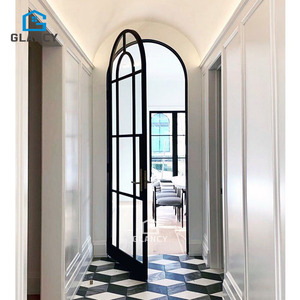
French Exterior Entry Main Modern Glass Arch CE Certified Black Power Interior Exterior Insulation Made of Aluminium Doors
Contact Us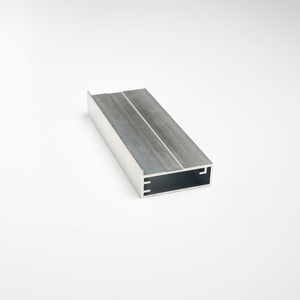
Hinged Cabinet Doors Corrosion Resistance Aluminium Glass Cabinet Door Custom Aluminum Window Screen Frame
Contact Us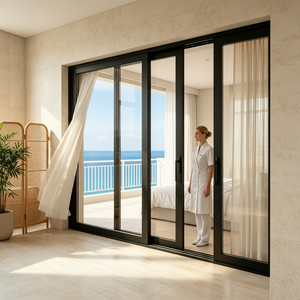
Customized Aluminum Alloy Outdoor Courtyard Sliding Doors Hurricane-Resistant Double Tempered Glass Silent Sliding Living Room
Contact Us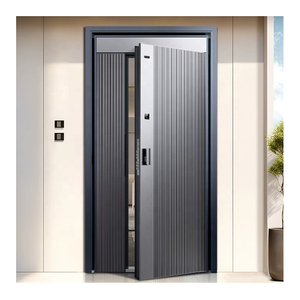
SJUMBO Customization Modern Commercial Security Double-Layer Aluminium Swing Exterior Entrance Smart Door
Contact Us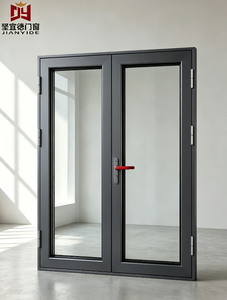
Thermal Break Aluminium Casement Doors Energy Efficient Waterproof Windproof For European Villas Custom OEM And ODM CE Certified
Contact Us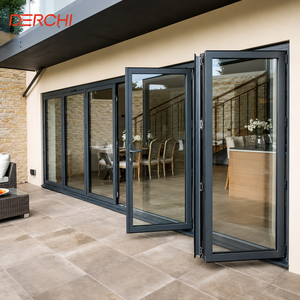
Hurricane Proof Aluminum Exterior Door Balcony Patio Lowe Soundproof Glass Garden Aluminum Bifold Folding Door
Contact Us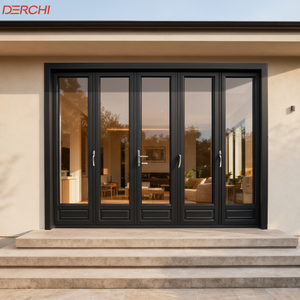
DERCHI Custom Security Bi-fold Aluminum Patio Doors with Double Tempered Glass Waterproof Design for Outdoor Use
Contact Us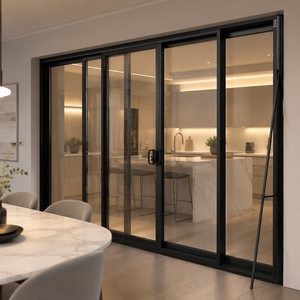
Customized Size Sliding Doors Double Glass Aluminum Doors Heat Insulation Energy Efficient Balcony Sliding Patio Door For Sale
Contact UsHeavy-Duty & Ultra-Slim Sliding Door Systems
Engineered with sightline interlocks as narrow as 20mm to maximize natural day-lighting without compromising wind resistance. Featuring multi-track configurations (2-track, 3-track, 4-track with integrated fly-screens), precision stainless steel tandem rollers capable of carrying up to 400kg sash weights, and hidden drainage gutters that achieve zero-threshold flush transit.
Thermal Break Bi-Fold & Folding Assemblies
Bifold door configurations create seamless indoor-outdoor transitions for expansive patio openings. Utilizing top-hung stainless steel guide tracks and bottom load-bearing rollers, panels stack smoothly with minimal force. Multi-point locking hardware combined with continuous EPDM triple-gasket seals guarantees airtight sealing under high wind loads.
Impact-Resistant Pivot & High-Security Entrance Doors
Designed for luxury commercial headquarters and flagship villa entrances. Featuring heavy-duty floor pivots capable of supporting giant door leaves up to 3.5 meters in height. Systems incorporate multi-point automatic electronic deadbolts, smart biometric access integration, double/triple tempered laminated glass, and bullet-resistant internal reinforcement cores.
Future Development Trends in Aluminium Door Manufacturing (2025–2030)
Key technological shifts driving next-generation fenestration performance, energy compliance, and smart building integration.
Ultra-Low U-Value Thermal Architecture
With global energy codes tightening (such as EU Passivhaus standards and US ENERGY STAR 7.0), the future of aluminium doors centers on ultra-wide multi-cavity polyamide thermal breaks, aerogel insulation infills, and warm-edge spacer glass units (TPS). Future production targets whole-assembly U-values lower than 0.8 W/m²K without sacrificing structural frame strength.
Eco-Friendly & Zero-VOC Surface Treatments
Environmental regulation is transforming factory surface treatment lines across Foshan and Guangdong. Traditional chrome-based pretreatments are fully replaced by eco-friendly zirconium and titanium passivation baths. Next-generation superdurable bio-based powder coatings reduce carbon footprints during curing while extending maintenance-free exterior life up to 30 years.
Smart Automation & IoT Hardware Integration
Modern high-end aluminium doors are evolving into active building envelope elements. Future procurement trends show surging demand for concealed linear actuators, integrated smart sensors (rain, wind, air quality), automated motorized sliding mechanisms, and electrochromic (smart dynamic tinting) glass controlled via central Building Management Systems (BMS).
Future Sourcing & OEM/ODM Procurement Trends
How international developers, wholesalers, and general contractors optimize their China supply chain for quality, compliance, and cost efficiency.
Key Metrics for Evaluating China Aluminium Door Manufacturers
Navigating the vast ecosystem of Chinese door suppliers requires a structured evaluation framework that goes beyond initial unit price quotation. Procurement directors must assess factory capabilities based on five fundamental pillars:
-
✔
Raw Material Alloy Integrity: Verification of primary 6063-T5 / 6063-T6 virgin aluminium billet sourcing vs. recycled scrap content to ensure tensile strength (≥ 160 MPa) and yield strength (≥ 110 MPa).
-
✔
Surface Treatment Line Certification: Ensuring factory in-house powder coating or PVDF lines hold official Qualicoat, Qualanod, or AAMA license accreditations.
-
✔
Hardware System Engineering: Availability of premium European hardware integration (e.g., German Siegenia, Hoppe, GU, Roto) alongside top-tier factory custom hardware suites for smooth 100,000+ cycle opening tests.
-
✔
Third-Party Compliance Documentation: Provision of project-specific test reports for air infiltration (ASTM E283 / EN 12207), water resistance (ASTM E331 / EN 12208), structural wind pressure (ASTM E330 / EN 12210), and AS2047 certification.
Why Partner With Our Foshan Production Base
Integrating R&D, structural design, automated production, and turnkey global export management under one roof.
30,000m² Scale Manufacturing Base
Located in Lishui Town, Foshan, Guangdong—the core hub of Chinese aluminium extrusion. Equipped with automated precision CNC cutting centers, double-head corner crimping machines, and high-speed automatic insulating glass production lines to support rapid volume turnover.
Export Mastery to 154+ Countries
With over 20 years of direct international trade experience, our engineering team thoroughly understands regional installation practices, climatic challenges, building codes, and container loading optimization across North America, Australia, Europe, Southeast Asia, and the Middle East.
Full Bespoke OEM/ODM Customization
From architectural shop drawing development to custom extrusion die creation, tailored surface coating formulation, specialized glass specs (tinted, low-E, reflective, acoustic laminated, smart glass), and branded protective packaging.
Frequently Asked Questions (FAQ) for Global Buyers
Crucial answers regarding engineering specs, order lead times, shipping safety, quality guarantees, and customization options.
What distinguishes fluorocarbon (PVDF) coating from standard powder coating on aluminium doors? +
How do China aluminium door factories verify Australian Standard AS2047 compliance? +
Can thermal break profile systems be customized for hurricane-prone regions? +
What is the standard production lead time for custom architectural OEM orders? +
How are fragile glass and coated aluminium frames packaged for ocean transport? +
Can we request custom RAL colors, metallic textures, or dual-color powder coatings? +
Partner With China's Premier Aluminium Door Manufacturer
Whether you are requesting project shop drawings, customized unit quotations, technical performance documentation, or factory visit arrangements, our engineering team is ready to assist.
Contact Us