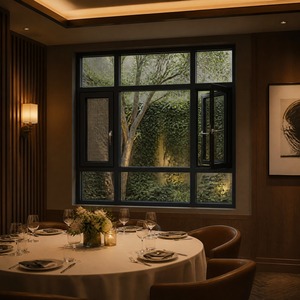
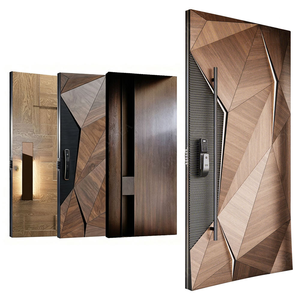
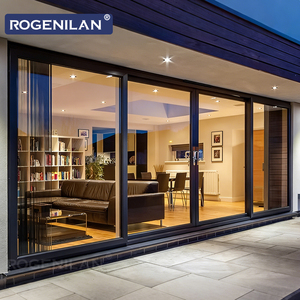
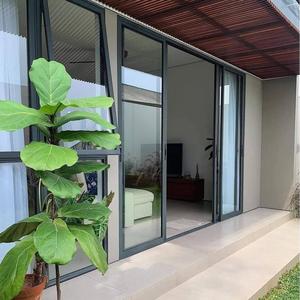
Foshan Production Powerhouse
Integrating research, industrial design, precision CNC machining, and automated assembly line production. Our plant produces over 300,000 square meters of high-performance architectural aluminum window and door systems annually.
CE & EN Standard Verification
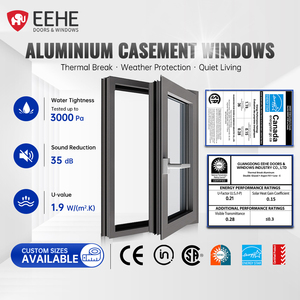
Fully compliant with European Standard EN 14351-1. Every storm window system undergoes rigorous third-party laboratory testing for air permeability (EN 12207 Class 4), water tightness (EN 12208 Class E1050), and resistance to wind load (EN 12210 Class C5).
Global Logistics & Export Expertise
Serving commercial developers, facade contractors, and building material importers across 154+ countries. Customized sea-freight ISPM-15 compliant wooden crate packaging guarantees zero-damage arrival at overseas job sites.
Whitepaper: Engineering & Sourcing Principles of CE Certified Aluminum Storm Windows
As global severe weather events escalate in frequency and kinetic magnitude, architectural specifications for exterior building envelopes have undergone a fundamental paradigm shift. Traditional secondary storm glazing has evolved into engineered, high-load aluminum storm window systems capable of serving as the primary barrier against cyclonic wind forces, driven rain, and extreme thermal gradients. For B2B procurement directors, commercial contractors, and real estate developers, selecting certified aluminum storm windows requires a precise understanding of material science, structural engineering, and European normative compliance.
1. Metallurgy & Metallurgical Profile Engineering
The structural integrity of storm windows begins with the aluminum alloy specification. Vexis utilizes high-grade 6063-T5 and 6060-T6 architectural aluminum extrusions featuring a minimum wall thickness ranging from 1.8mm to 3.0mm depending on opening span requirements. Alloy 6063-T5 delivers an optimal strength-to-weight ratio, excellent surface finish for anodizing and electrostatic powder coating, and exceptional resistance to atmospheric stress corrosion cracking.
To eliminate the natural thermal conductivity of metal profiles (aluminum thermal conductivity ≈ 200 W/m·K), our CE certified storm windows incorporate continuous Polyamide PA66-GF25 thermal break strips reinforced with 25% glass fiber. These structural thermal barriers decouple the interior and exterior aluminum chambers, dramatically reducing thermal conduction and preventing interior condensation formation even under ambient temperature differentials exceeding 40°C.
2. Mechanical Performance & Severe Weather Testing Parameters
CE certification demands that manufacturers validate system performance under standard test criteria. The following benchmark values represent Vexis engineering standards for extreme weather environments:
| Performance Metric | Standard Test Method | CE Certification Level / Result | Engineering Significance |
|---|---|---|---|
| Air Permeability | EN 1026 / EN 12207 | Class 4 (600 Pa test pressure) | Prevents draft forced by high velocity winds; maximizes HVAC energy retention. |
| Water Tightness | EN 1027 / EN 12208 | Class E1050 (1050 Pa static head) | Zero water penetration during simulated torrential rainfall at wind speeds > 140 km/h. |
| Resistance to Wind Load | EN 12211 / EN 12210 | Class C5 (P3 = 2500 Pa structural load) | Ensures frame deflection remains under 1/300th of span under extreme storm pressures. |
| Thermal Transmittance (Uw) | EN ISO 10077-2 | Uw ≤ 1.1 - 1.4 W/(m²·K) | Meets NZEB (Nearly Zero-Energy Buildings) and passive house building codes. |
| Acoustic Performance (Rw) | EN ISO 717-1 | Rw (C; Ctr) = 38 dB to 45 dB | Attenuates low-frequency wind noise, urban traffic, and ambient storm rumblings. |
3. Advanced Glazing Architecture for Impact & Thermal Resistance
The glass unit constitutes up to 85% of a storm window's total surface area. Vexis CE certified systems offer customized Insulated Glass Units (IGU) and Laminated Safety Glass configurations engineered specifically for severe impact zones:
- Double/Triple Double-Glazed Units (DGU/TGU): Configured with 6mm + 12Ar + 6mm tempered glass combinations, utilizing warm-edge composite spacers and 90% Argon gas filling to minimize radiative and convective heat transfer.
- SentryGlas® (SGP) & PVB Interlayer Lamination: For hurricane-prone coastal regions, storm sashes utilize multi-layer laminated glass featuring DuPont SGP structural interlayers. SGP interlayers offer 5 times the tear strength and 100 times the rigidity of conventional PVB, maintaining structural barrier integrity even if glass panes are fractured by airborne debris.
- Low-Emissivity (Low-E) Coatings: Magnetron-sputtered double and triple silver Low-E coatings selectively reflect far-infrared thermal radiation while allowing up to 72% natural daylight transmission, lowering Solar Heat Gain Coefficients (SHGC) to as low as 0.23.
1. Decarbonization & Low-Carbon Aluminum Sourcing
International environmental regulations (including the EU's Carbon Border Adjustment Mechanism - CBAM) are compelling procurement managers to audit the embodied carbon of building materials. Sourcing trends favor manufacturers utilizing hydro-powered primary aluminum smelting and high-recycled-content aluminum alloys (minimum 30-50% post-consumer scrap), reducing the carbon footprint per kilogram of extrusion below 4.0 kg CO2e.
2. Ultra-Narrow Sightlines with Heavy-Duty Structural Capacity
Architectural preferences lean heavily toward minimalist design languages featuring ultra-slim frame profiles (interlock width ≤ 25mm). Future-proof storm window systems must achieve these narrow sightlines without compromising moment of inertia or structural resistance against wind loads, utilizing concealed multi-point locking mechanisms and stainless steel hardware reinforcement.
3. Integration of Smart Electrochromic & Sensor Technologies
Next-generation storm window assemblies are rapidly incorporating IoT sensors to detect wind shear, rain drop impacts, and frame pressure shifts. Integrated electrochromic (smart tinting) glass units automatically adjust visual light transmittance (VLT) and solar heat gain based on real-time solar radiation levels, eliminating the need for exterior mechanical louvers.
Engineering Trends: Evolution of Hardware, Sealing & Corrosion Science
The operational longevity of aluminum storm windows in harsh marine or industrial environments hinges upon advancements in surface engineering and mechanical hardware integration. Key structural evolutions include:
Advanced Surface Finishing & Salt Spray Endurance
Standard architectural paint coatings often degrade under prolonged exposure to saline air, UV radiation, and acid rain. Modern high-specification storm windows utilize Fluorocarbon PVDF (Polyvinylidene Fluoride) coatings applied via multi-coat electrostatic baking, or high-thickness Qualicoat Class 2 / Class 3 powder coatings. These coatings endure rigorous 3,000-hour continuous neutral salt spray testing (ISO 9227 / ASTM B117) without micro-blistering, chalking, or color fading, making them indispensable for coastal resort and high-rise villa installations.
Continuous Multi-Barrier EPDM Gasket Systems
Traditional vinyl or PVC weatherstripping loses elasticity over time, hardening under extreme cold and degrading under solar heat. Vexis storm systems deploy continuous EPDM (Ethylene Propylene Diene Monomer) cellular rubber gaskets with vulcanized corner joints. Utilizing a triple-seal architectural system (outer wind flap seal, central compression cavity seal, and interior sound gasket), these components maintain compression recovery across operating temperatures from -40°C to +120°C.
Concealed Heavy-Duty Hardware & Security Locking
European tilt-and-turn and casement storm sashes feature multi-point gear-driven locking hardware manufactured from high-grade 304 or 316 stainless steel. Mushroom-head locking cams engage with reinforced steel strike plates across all four sash edges, providing resistance against forced entry (RC2/RC3 burglar protection rating under EN 1627) while compressing the sash evenly against the frame weather seals.
What specific documentation confirms CE certification for Vexis storm windows?
Every shipment of CE certified aluminum storm windows from Vexis is accompanied by a formal Declaration of Performance (DoP) issued in compliance with EU Construction Products Regulation No 305/2011. Additionally, we provide initial type testing (ITT) laboratory reports from accredited Notified Bodies validating EN 14351-1 parameters, including air tightness, water tightness, structural wind load performance, and thermal transmittance values.
Can window profiles be customized to fit specific architectural shop drawings and regional building codes?
Yes. 100% of our production is made-to-order based on client-provided architectural elevations, CAD drawings, or BIM models. Our internal engineering department reviews your shop drawings to ensure sash dimensions match structural wind load requirements, recommending custom frame depths, glass build-ups, sub-frame anchoring details, and thermal break widths tailored to local building codes (such as Florida Building Code HVHZ, Australian AS2047, or European EN standards).
How does Vexis adapt products for typhoon-prone or high-salinity coastal climates?
For coastal applications (e.g., Caribbean, Southeast Asia, Florida), we specify heavy-wall 6063-T5 aluminum profiles (2.0mm+ wall thickness), Qualicoat Class 2/3 or PVDF fluorocarbon surface coatings, SS316 stainless steel hardware components, and SGP laminated safety glass. Drainage channels are engineered with internal non-return flap valves to prevent sea breeze back-pressure from forcing water backward through the weep holes during storm surges.
What is the typical factory lead time and minimum order quantity (MOQ) for custom project orders?
Our standard production lead time is 25 to 35 calendar days following shop drawing approval and color sample confirmation. Because we operate an industrial 30,000 m² base, our minimum order quantity is flexible: we accommodate single high-end residential villa projects (MOQ ≥ 50 sq.m) up to large-scale commercial mixed-use developments requiring thousands of square meters in full container loads (FCL).
What measures are taken to prevent transport damage during international ocean freight?
All finished storm windows undergo a 5-layer protective packaging protocol: (1) Surface protective film on aluminum profiles, (2) Corner guard protectors, (3) Shock-absorbing PE foam wrapping, (4) Waterproof stretch film, and (5) Fully enclosed ISPM-15 compliant fumigation-free wooden cases or heavy-duty steel A-frame racks for crane/forklift unloading.
Can I visit the Vexis manufacturing facility and exhibition hall prior to contract signing?
We welcome global clients, developers, contractors, and third-party inspection agencies (such as SGS, TUV, or Intertek) to visit our 30,000 m² manufacturing plant and 1,500 m² immersive exhibition hall located in Lishui Town, Foshan, Guangdong, China. Virtual factory tours and live video production audits are also available upon request.