Technical Whitepaper: CE-Certified Aluminum Security Mesh Door Engineering
Modern architectural developments demand exterior envelope systems that resolve opposing functional needs: maximum airflow, unobstructed optical transparency, intrusion resistance, and weather durability. CE-certified aluminum mesh security doors engineered by leading Chinese exporters have emerged as a mandatory architectural specification across Europe, North America, the Middle East, and coastal Australasia.
Under the European Standard EN 14351-1:2006+A2:2016 (Windows and doors - Product standard, performance characteristics), CE marking serves as a legal Declaration of Performance (DoP). It mandates rigorous verification of essential characteristics including structural wind-load resistance, air permeability, water tightness, acoustic isolation, thermal transmittance (U-factor), and mechanical durability under sustained dynamic loading.
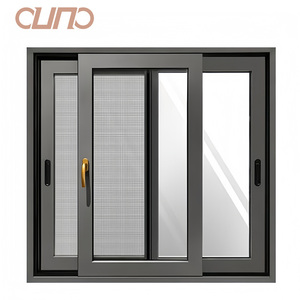
Information Gain Insight: Standard flyscreen mesh relies on soft vinyl or 0.2mm flexible wire that yields under minimal manual force. Structural Security Mesh Screen Systems utilize high-tensile AISI 304 or 316 marine-grade stainless steel wire (diameter 0.80mm to 1.00mm) woven into a high-density 11-mesh per linear inch layout, embedded into heavy-duty 6063-T5 extruded aluminum profiles via pressure-clamped wedge insertion systems.
Material Metallurgy & Profile Structural Dynamics
The structural framework of an architectural mesh door relies heavily on aluminum alloy selection and temper state. High-grade factory exporters specify Aluminium Alloy 6063-T5 / T6, possessing a ultimate tensile strength exceeding 205 MPa and yield strength over 170 MPa. Profile wall thicknesses for heavy-duty security mesh doors range from 1.8mm to 2.5mm, ensuring frame rigidity under dynamic kick tests and forced-entry attempts.
To eliminate galvanic corrosion between dissimilar metals (aluminum frame and stainless steel mesh), specialized PVC or EPDM isolation gaskets prevent direct electrolytic contact. Additionally, profile surface finishing undergoes electro-statically applied thermosetting powder coatings (such as AkzoNobel or Tiger Drylac fluorocarbon coatings) adhering strictly to QUALICOAT Class 2 standards, achieving over 1,000 hours of neutral salt spray exposure (ASTM B117) without film blistering or cross-hatch corrosion propagation.
Security Mesh vs. Conventional Screen Performance Matrix
| Performance Characteristic |
316 Marine Stainless Security Mesh |
304 Standard Stainless Mesh |
Perforated Aluminum Plate |
Traditional Fiberglass Mesh |
| Wire Diameter / Thickness |
0.80mm – 0.90mm Wire |
0.80mm Wire |
1.20mm – 2.00mm Sheet |
0.25mm Flexible Strand |
| Shear & Tensile Capacity |
> 900 MPa Tensile Strength |
~ 750 MPa Tensile Strength |
~ 220 MPa Tensile Strength |
< 50 MPa (Easily Cut) |
| Anti-Intrusion Standard |
EN 1627 RC2 / RC3 Compliant |
EN 1627 RC2 Compliant |
Basic Knife Shear Protection |
No Security Capability |
| Corrosion Resistance |
Exceptional (C5 Coastal Grade) |
High (C3 Urban Grade) |
Moderate (Powder Coated) |
Degrades Under UV Exposure |
| Airflow Ventilation Rate |
60% – 65% Free Air Area |
60% – 65% Free Air Area |
40% – 48% Free Air Area |
70% Free Air Area |
| CE Mark Compliance |
Full EN 14351-1 Certification |
Full EN 14351-1 Certification |
Partial Conformance |
Non-Structural Component |
Global B2B Procurement Trends for Architectural Aluminum Systems (2026–2030)
Analyzing global commercial intent metrics reveals a fundamental shift in how developers, principal contractors, and window importers source fenestration packages from Chinese manufacturing bases. Procurement strategies are evolving from simple price-per-square-meter transactions into multi-tiered risk mitigation partnerships.
1. Decarbonization & Thermal Break Profiles
Global energy codes (such as EU EPBD directives and US ASHRAE 90.1) mandate thermal break insulation. Modern aluminum mesh doors integrate structural Polyamide (PA66 GF25) thermal barrier strips to achieve overall U-factors below 1.6 W/m²K.
2. Multi-Point Security & Smart Integration
Single-point latching systems are obsolete in export markets. Procurement now specifies European standard multi-point locks (3-point to 5-point shoot-bolt mechanisms) integrated with smart biometric access control and micro-switch alarm sensors.
3. Modular Pre-Engineered Customization
Developers demand shop drawings (CAD/BIM models) and factory-assembled sub-frames to minimize job-site installation labor. Precision-machined CNC corner crimping guarantees squareness and zero air leakage on site.
Architectural Design Dynamics: The Rise of Ultra-Slim Folding Mesh Doors
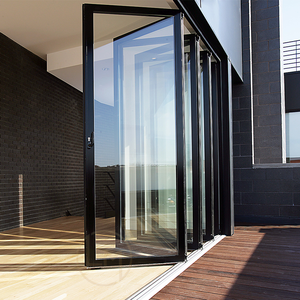
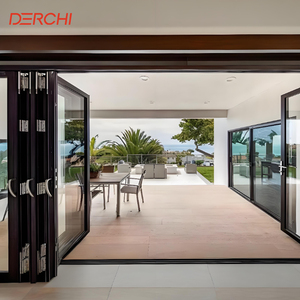
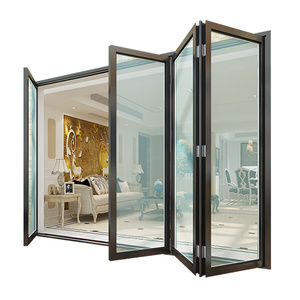
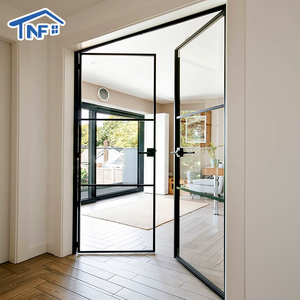
Modern luxury residential design emphasizes biophilic connection and seamless transitions between interior living rooms and outdoor living spaces. Large-span bifolding mesh doors allow homeowners to stack multiple leaves away entirely, opening up to 90% of the structural aperture while maintaining complete insect and security barriers when closed.
Key engineering innovations include heavy-duty bottom-running stainless steel roller assemblies rated for panel weights exceeding 200 kg, recessed zero-threshold sill tracks with integrated sub-floor drainage channels, and concealed hinge systems that maintain clean aesthetic sightlines.
Comprehensive B2B Procurement FAQ for Importers & Contractors
Direct answers from our senior fenestration engineering team addressing technical compliance, quality control, shipping preservation, and custom specifications.
What exact CE test certificates and DoP documentation do you provide for custom aluminum mesh doors?
▼
We provide full Factory Production Control (FPC) documentation alongside third-party laboratory test reports conforming to EN 14351-1:2006+A2:2016. This includes formal Declaration of Performance (DoP) certificates detailing Wind Load Resistance (EN 12210), Water Tightness (EN 12208), Air Permeability (EN 12207), Thermal Transmittance (EN ISO 10077-2), and forced-entry burglary resistance classifications under EN 1627 (RC2 / RC3 ratings).
How does 316 Marine Grade Stainless Steel Security Mesh differ from standard 304 mesh in coastal environments?
▼
Grade 316 stainless steel contains 2.0% to 3.0% Molybdenum, which dramatically enhances pitting and crevice corrosion resistance in high-salinity marine environments (within 5 km of coastlines). Grade 304 lacks molybdenum and can develop tea-staining (surface oxidation) under prolonged salt spray exposure. For coastal projects, we specify 316 mesh combined with a 80-micron powder coating layer pre-treated with chromate-free conversion coatings.
Can your aluminum security mesh doors be customized to fit specific architectural opening sizes and colors?
▼
Yes. Every order is manufactured to bespoke architectural opening schedules. Buyers can select frame profiles in custom powder-coated RAL colors, anodized metallic finishes, or authentic wood-grain sublimated textures. Opening styles include single hinged, French double doors, multi-panel bifolding systems, horizontal sliding, and stackable patio configurations.
What structural measures prevent the mesh screen from being kicked out or forced out of the aluminum profile?
▼
Our security mesh door systems do not rely on standard rubber splines or mechanical screws to retain the screen. We utilize a patented wedge-clamping system: the stainless steel mesh edge is bent at a precise angle and locked into a dedicated internal profile cavity using a continuous aluminum pressure bar and high-tensile fasteners. This creates uniform perimeter tension capable of withstanding dynamic impacts exceeding 100 Joules without mesh detachment.
How are the products packaged to prevent scratching and frame distortion during ocean shipping?
▼
All finished door assemblies undergo a 5-layer export protective packaging protocol: (1) Surface protective film over all aluminum profiles; (2) EPDM corner guards on all frame corners; (3) Heavy-duty PE bubble wrapping around individual panels; (4) Custom corrugated cardboard outer sleeves; and (5) Fully enclosed, fumigation-free plywood crates reinforced with steel strapping to withstand containerized sea freight vibrations and humid transit conditions.
What is the typical manufacturing lead time for container load orders (FCL)?
▼
Standard production lead time for full container loads (20GP / 40HQ) is 25 to 35 calendar days following shop drawing approval and deposit receipt. For complex custom extrusion dies or specialized powder coat formulations, an additional 10 days may be required for initial tooling verification and sample sign-off.