Featured Commercial & Architectural Product Series
Factory-direct high-performance thermal break windows, panoramic bifold glass systems, and structural sliding doors manufactured strictly to international building codes.
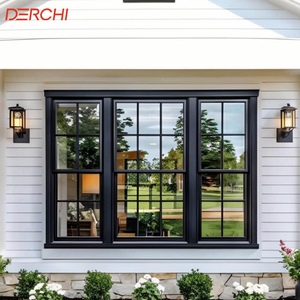
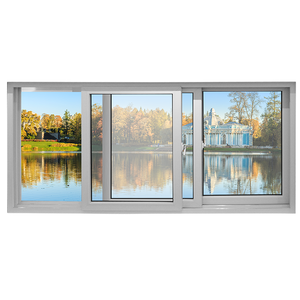
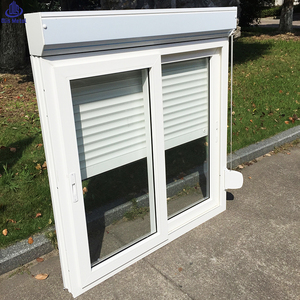
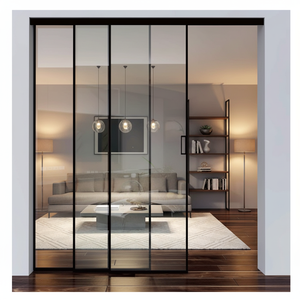
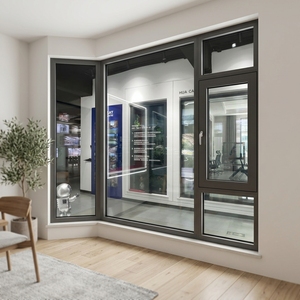
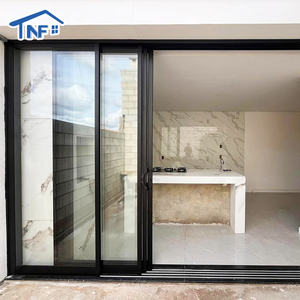
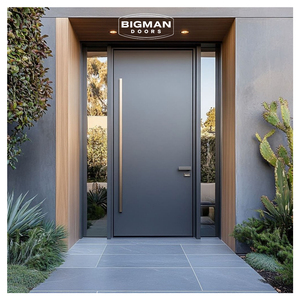
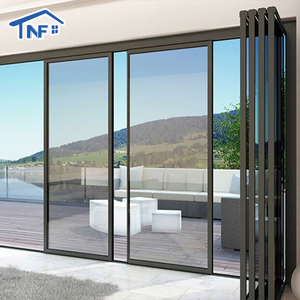
CE Certified Aluminum Bifold Windows: Technical Whitepaper & Structural Engineering
In modern architectural fenestration, the specification of CE Certified Aluminum Bifold Windows represents the intersection of structural engineering, thermal performance optimization, and spatial flexibility. As global building energy codes tighten—driven by the European Union’s Energy Performance of Buildings Directive (EPBD) and North America's ASHRAE 90.1 energy standards—importers, structural engineers, and commercial developers demand window systems that go beyond aesthetics. CE certification (Conformité Européenne) under harmonious standard EN 14351-1:2006+A2:2016 serves as the mandatory benchmark verifying structural wind-load resistance, air permeability, water tightness, and acoustic isolation across international project environments.
The fundamental challenge in manufacturing expansive folding window systems lies in mitigating thermal bridging while maintaining structural rigidity across multi-panel configurations. Standard non-thermal aluminum frames exhibit thermal conductivity ($k$) ratings around 200 W/m·K, resulting in massive heating/cooling losses and internal condensation risk. Advanced bifold window assemblies overcome this through precision-engineered Polyamide PA66-GF25 thermal barrier struts. Reinforced with 25% structural glass fiber, these polyamide thermal breaks physically isolate the exterior aluminum extrusion from the interior envelope, dropping overall window U-factors down to $\le 1.2 \text{ W/m}^2\text{K}$ when integrated with low-emissivity double or triple insulated glass units (IGUs).
Mechanical durability under continuous dynamic loading is another engineering pillar. Bifold window systems experience significant shear and cantilever forces during multi-panel articulation. High-spec factories employ heavy-duty stainless steel (SUS304/SUS316 grade) top-hung or bottom-load roller carriage assemblies featuring precision sealed ball bearings. These assemblies endure rigorous life-cycle testing—exceeding 100,000 continuous opening and closing cycles under EN 1191 standards—without track deformation or operation fatigue.
Enterprise Advantages & Smart Manufacturing Authority
Operating from an expansive 30,000 m² automated manufacturing base in Lishui Town, Foshan, Guangdong—the epicenter of global architectural aluminum production—Vexis Windows & Doors Co., Ltd. stands as a premier direct-factory manufacturer and exporter. Integrating structural design, R&D engineering, extrusion processing, hardware matching, and rigorous quality control under one roof, Vexis has supplied high-tier residential, commercial, and hospitality developments across more than 154 countries and regions over a 20+ year manufacturing legacy.
Precision CNC Fabrication
Equipped with multi-axis automated CNC machining centers ensuring extrusion cutting tolerances within ±0.2mm and corner crimping joint strength exceeding European EN standards.
CE & ISO Quality Control
Fully certified under ISO9001:2015 quality management and CE EN 14351-1 testing protocols for wind pressure resistance, water tightness (Class 9A), and air infiltration.
Global Project Customization
1,500 m² immersive exhibition center displaying custom opening profiles, hurricane-impact glass, acoustic double/triple glazing, and AkzoNobel powder-coated finishes.
Next-Generation Global Procurement Trends in Aluminum Bifold Windows
As architectural firms and real estate developers prioritize net-zero building designs and seamless indoor-outdoor living, the procurement landscape for aluminum bifold fenestration is undergoing rapid technological transition. Sourcing managers and project specifiers must align their supply chains with these key multi-year developments:
1. Ultra-Slim Sightlines & Flush Thresholds
Architectural demand is rapidly shifting from traditional 110mm frame profiles toward ultra-narrow interlock sightlines (down to 45mm–68mm). Furthermore, universal design standards require ADA-compliant zero-step concealed drainage sills that maintain a water-tight seal without posing trip hazards.
2. Low-Carbon Recycled Aluminum Procurement
Driven by EU Green Deal mandates and ESG reporting, major commercial project buyers require Environmental Product Declarations (EPD). Factories utilizing post-consumer recycled aluminum billets ($<4.0 \text{ kg CO}_2\text{e/kg Al}$) are taking precedence in tender awards.
3. Dual-Performance Hurricane Impact & Thermal Synergy
Extreme weather patterns have forced building codes in coastal zones (e.g., North American HVHZ and Australian Cyclone Regions) to require dual compliance: SGP laminated missile-impact safety glass combined with structural thermal break insulation.
Industry & Technological Innovation Pathways
To achieve high-efficiency thermal performance and structural resilience across multi-fold window apertures, leading manufacturers are integrating several breakthrough technologies:
-
A
Multi-Barrier EPDM Vulcanized Gasket Seals: Replacing cheap PVC weatherstripping, continuous EPDM gasket corners utilizing microwave vulcanization ensure air infiltration rates below $0.1 \text{ m}^3/(\text{h}\cdot\text{m}^2)$ under EN 12207 Class 4 standards.
-
B
Surface Finish Science (AkzoNobel & Qualicoat Seaside): Advanced electrostatic powder coating and fluorocarbon PVDF spray lines deliver 25-year anti-fading durability, offering C5-M extreme marine environment corrosion resistance for coastal cliffside villas.
-
C
Warm-Edge Spacer & Inert Gas Glazing Technology: IGUs integrated with stainless steel-polypropylene composite warm-edge spacers and 90% Argon gas fill reduce perimeter thermal bridging, eliminating internal edge condensation in cold climates.
Frequently Asked Procurement Questions
Technical guidance, compliance protocols, and logistics considerations for B2B importers, builders, and architectural buyers.
What technical documentation comes with CE Certified Aluminum Bifold Windows? +
How does thermal break aluminum compare to non-thermal aluminum in bifold windows? +
Can Vexis customize opening configurations, mullion profiles, and frame finishes? +
What measures ensure large-span bifold glass panels do not sag over time? +
How are fragile oversized bifold glass assemblies packaged for ocean transport? +
What information should be submitted to receive a structural engineering quote? +
Partner with a Direct-Factory Fenestration Manufacturer
Whether you are sourcing custom thermal break bifold windows for luxury residential projects or specifying high-volume commercial glass systems, our engineering team provides direct shop drawings, factory-direct pricing, and technical support.
Get a Quote