Precision Engineered Aluminium Windows & Glass Doors
Direct factory production matching European Union CE standards, North American NFRC benchmarks, and high-load hurricane impact resistance specs.
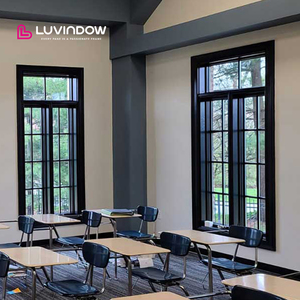
American Style Double Safety Glass Residential Window Aluminum Clad Wood Crank Open Windows
Inquire Now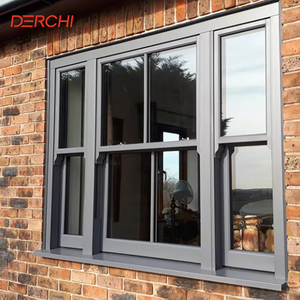
Derchi American Style Aluminum Alloy Single Hanging Vertical Sliding Window Pit Hurricane Sash Window
Inquire Now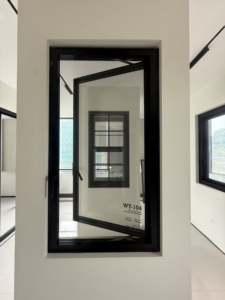
DERCHI Modern Aluminum and Glass Windproof Customizable Size High-Performance Casement Window Hurricane Proof windows
Inquire Now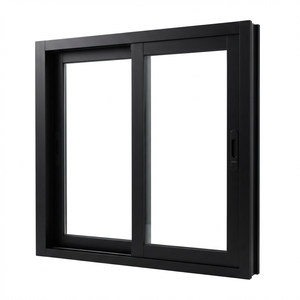
Corrosion Resistant Finish Slim Line Aluminum Sliding windows Double Track Smooth Operation Residential Flat
Inquire Now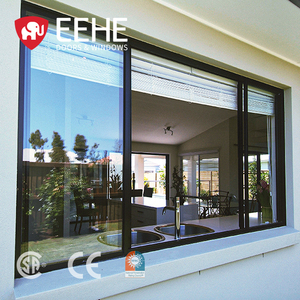
Mobile Home Simple Aluminum Double Glazed Sliding Window Aluminum Mirror Glass Triple Track Screen Sliding Window
Inquire Now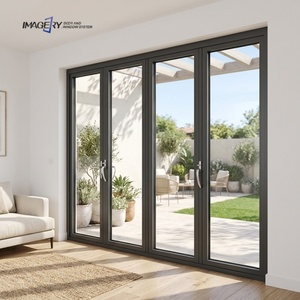
Aluminium Bi-Fold Thermal Break Slide Fold Door Toughened Glass Anti Mosquito Mesh Anti Jam Design for Garden Deck Restaurant
Inquire Now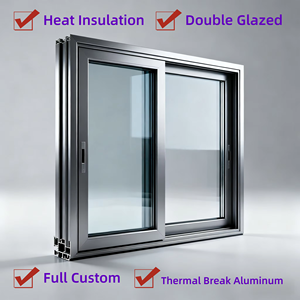
Full Custom Insulated Double Glazed Heat Insulation Shutters Aluminum Sliding Windows for Residential Construction Project
Inquire Now
Aluminum Alloy Accents Frosted Glass Privacy Panels Vintage Aluminum Doors
Inquire NowVexis Windows & Doors Co., Ltd.: Integrated R&D and Export Ecosystem
Operating from Foshan, Guangdong—the global manufacturing capital of architectural aluminium—Vexis combines heavy-duty industrial fabrication with advanced structural engineering for worldwide commercial and luxury residential developments.
Vexis Windows & Doors Co., Ltd. stands as an industry-leading manufacturer integrating architectural research, profile extrusion design, thermal break precision assembly, and international project distribution. Positioned at 20D Wenjiao Road, Lishui Town, Foshan, our modern manufacturing facility operates state-of-the-art CNC machining centers, automated corner-crimping units, and dual-component structural silicone potting lines. Unlike general trading companies or uncertified local workshops, Vexis designs fenestration systems strictly aligned with international building codes, catering directly to commercial developers, facade engineers, general contractors, and bulk importers across North America, Europe, Australia, and the Asia-Pacific region.
Decoding CE Certification Standards for Aluminium Glass Double Doors
An exhaustive engineering guide to EN 14351-1 compliance, thermal transmittance optimizations, acoustic attenuation parameters, and structural wind-load safety.
1. The Anatomy of CE Certified Fenestration (EN 14351-1 Standard)
In the architectural and commercial construction sectors, the CE mark on aluminium double doors is far more than a decorative compliance label. It signifies rigorous conformity with EN 14351-1 (Windows and doors - Product standard, performance characteristics), which enforces standardized testing across key performance parameters. B2B buyers and architectural specifiers must evaluate five vital physical performance characteristics when procuring double-glazed aluminium entrance and patio doors:
Wind Load Resistance (EN 12210)
Engineered to withstand positive and negative pressure up to Class C5/P3 (2000 Pa to 5000 Pa). Deflection limits ($f \le L/300$) are strictly tested on heavy-duty double door sashes up to 3.5 meters in height.
Watertightness (EN 12208)
Features multi-barrier EPDM gasket sealing and cascaded internal drainage chambers. Certified up to Class E900 (withstanding continuous wind-driven water pressure up to 900 Pa without internal leakage).
Air Permeability (EN 12207)
Achieves Class 4 ratings—the highest standard under European regulations—preventing unwanted air infiltration, drastically lowering HVAC thermal loss, and optimizing building airtightness metrics.
Architects specifying exterior double glass doors for commercial entrances or luxury villas must ensure the manufacturer provides valid Initial Type Testing (ITT) reports issued by accredited notified testing bodies. Vexis Windows & Doors ensures every profile series—ranging from slim-frame heavy-duty sliding double doors to heavy inswing casement French doors—undergoes rigorous factory production control (FPC) audit loops.
Technical Insight: Thermal Transmittance Optimization ($U_w$ Values)
Under current European Energy Performance of Buildings Directives (EPBD), standard non-thermal break profiles are virtually obsolete. High-performance CE certified aluminium double doors utilize Technform or Ensinger polyamide thermal break strips (PA66-GF25 with 25% glass fiber reinforcement). Combined with double-glazed low-emissivity (Low-E) units filled with 90% Argon gas and Technoform warm-edge spacers, overall door $U_w$ thermal transmittance values drop from an uninsulated 5.8 W/m²K down to an energy-conserving 1.1 – 1.4 W/m²K.
2. Comparative Technical Evaluation: Standard Commercial Doors vs. CE-Certified Heavy-Duty Systems
To assist procurement directors and project engineers in evaluating fenestration specifications, the matrix below details the structural and thermal performance disparities between commercial-grade non-certified aluminium doors and Vexis CE-certified double glass door systems:
| Engineering Metric | Standard Non-Certified Aluminium Doors | CE Certified (EN 14351-1) Vexis Systems | Architectural Benefit |
|---|---|---|---|
| Profile Alloy & Temper | Recycled Alloy / 6063-T5 (Wall: 1.2mm) | Primary 6063-T6 Structural Aluminium (Wall: 2.0mm – 3.0mm) | Superior flexural strength; prevents frame warp under high wind pressure. |
| Thermal Insulation | Non-Thermal Break / PVC Insulators | PA66-GF25 Multi-Chamber Polyamide Strips | Cuts building energy consumption by up to 40%; eliminates thermal bridging. |
| Glass Assembly | Single 6mm or Annealed Double Glazing | EN 12150 Double Toughened (6mm Low-E + 12Ar + 6mm Clear) | High impact safety, anti-spall protection, Low-E solar radiation block. |
| Hardware Mechanism | Single Point Latch / Generic Rollers | Multi-Point Locking (German Siegenia / Hoppe / Custom Vexis) | EN 1627 RC2 / RC3 burglar resistance; tested to 100,000+ cycle durability. |
| Weather Gaskets | Standard PVC or Rubber Strips | Continuous EPDM / Silicone Dual-Density Seals | Prevents seal cracking from UV exposure; maintains air tight integrity for decades. |
| Acoustic Rating ($R_w$) | 22 dB – 26 dB Noise Reduction | 38 dB – 45 dB Sound Insulation (EN ISO 717-1) | Ideal for urban hotels, residential towers near highways, and luxury estates. |
3. Advanced Architectural Glass Configurations for Double Door Systems
The glass component constitutes approximately 80% of the total surface area of an aluminium double door. Consequently, specifying the correct Insulated Glass Unit (IGU) configuration is paramount to achieving structural safety, solar heat control, and acoustic isolation.
A. Toughened Safety Glass (EN 12150-1 Standard)
All glass sashes supplied by Vexis undergo thermal tempering, increasing bending strength four to five times compared to standard annealed float glass. In the event of catastrophic impact, toughened glass fractures into tiny, blunt fragments, drastically reducing bodily injury risk in high-traffic commercial environments.
B. Laminated & Hurricane Impact Glass (EN 14449 / ASTM E1996)
For hurricane-prone regions (such as Florida, the Caribbean, and Southeast Asia), Vexis manufactures double glass doors incorporating SentryGlas® (SGP) or high-grade Polyvinyl Butyral (PVB) interlayer films sandwiched between tempered glass sheets. Even if the outer glass pane shatters under severe storm debris impact, the structural interlayer maintains structural integrity, preventing building envelope breach.
C. Solar Control Low-E & Argon Gas Filling
By applying a microscopic metallic oxide coating to surface #2 or #3 of the insulated double glazing, short-wave infrared heat radiation is reflected away from the interior while permitting high visible light transmittance (VLT). Argon gas filling in 12mm or 16mm airspace cavities further suppresses convective heat transfer inside the IGU.
Future Procurement & Technological Trends in Aluminium Fenestration
Strategic market analysis for architectural buyers, real estate developers, and construction material importers preparing for 2026-2030 regulatory and aesthetic shifts.
1. Minimalist Ultra-Slim Sightlines (<20mm)
Modern architectural trends favor maximum daylighting and seamless indoor-outdoor transition. Modern slim-frame sliding double doors hide outer frame sashes within building masonry, leaving interlock sightlines as narrow as 18mm to 22mm without compromising wind load resistance.
2. Decarbonized Low-Carbon Aluminium
With ESG mandates and EU Carbon Border Adjustment Mechanisms (CBAM) coming into full force, developers are specifying aluminium door extrusions crafted with hydropower-smelted primary aluminium or high percentage post-consumer recycled alloys, cutting embedded carbon footprint by up to 60%.
3. Smart Home & PDLC Glass Integration
Integration of Polymer Dispersed Liquid Crystal (PDLC) switchable smart privacy glass into double door sashes is rising dramatically. Combined with motorized drive systems, biometric access locks, and smart building management protocols (BACnet/KNX), modern glass doors serve as intelligent security nodes.
Frequently Asked Questions for B2B Procurement
Direct technical and operational responses from Vexis engineering and export team to assist global trade buyers.
How does Vexis verify CE compliance for bespoke aluminium double door sizes?
What aluminium profile alloy and surface finishes are used for coastal anti-corrosion?
Can Vexis supply shop drawings and CAD structural engineering support for project bidding?
How are glass double doors packaged to ensure zero transit damage during sea transport?
What is the standard production lead time and minimum order quantity (MOQ)?
Are factory audits and pre-shipment inspections permitted?
Partner with a Certified Global Fenestration Manufacturer
Accelerate your project schedule with factory-direct pricing, custom CAD shop drawings, and full CE-compliant aluminium double door systems engineered for world-class developments.