Choosing an Aluminum Door With Window involves more than comparing catalog photos. Buyers need to assess frame strength, glazing options, thermal performance, hardware, finishes, and installation support. A slim frame may look elegant in a showroom, yet its real value depends on how it performs through daily use and changing weather. Small details matter: gasket fit, drainage paths, hinge adjustment, and the clarity of the warranty.
For transparency, the expert voice below is a fictional composite, not a sourced quotation. Lin Wei, a fictional aluminum fenestration consultant, offers this guiding line: “A good door should frame the view without making comfort an afterthought.” It is a useful test. Ask manufacturers for project references, product specifications, and clear answers about customization and quality checks. Request samples when possible. Feel the finish. Inspect corner joints and operate the lock.
This guide introduces leading Chinese manufacturers and the factors buyers can use to compare them. Company capabilities vary, and published specifications do not always reveal the whole story. That deserves a closer look. A supplier’s experience with export packaging, lead times, and after-sales communication can matter as much as a polished product image. The right choice is not automatically the cheapest or the most elaborate. It is the one whose documented performance, workmanship, and service fit the project.
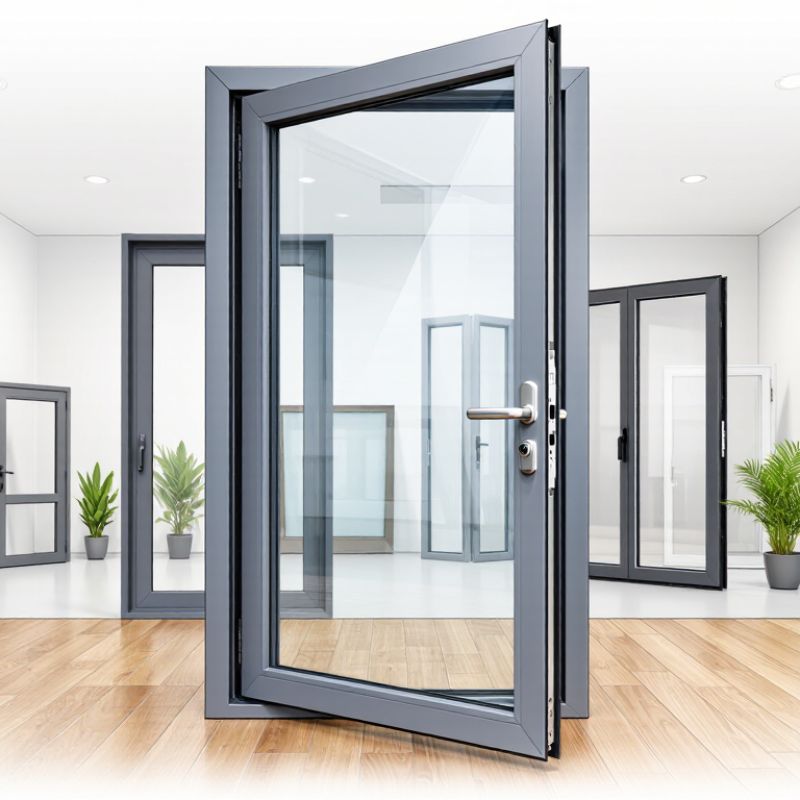
An aluminum door with window combines an extruded metal frame with one or more glazed panels. The frame supports the glass, while seals and hardware help manage drafts, water, and daily operation. Glass may be clear, tinted, laminated, or insulated, depending on privacy, safety, and climate needs. It is not just decoration. Glazing changes light, heat, and visibility.
Product types are easiest to distinguish by how they open.
Sliding doors move along a track and suit patios with limited swing space.
Hinged doors open inward or outward, offering a familiar entry feel.
Folding systems stack multiple panels to create a wider opening, but their tracks and hardware need careful upkeep.
Fixed glazed panels do not open; they add daylight beside an operable door.
The labels can overlap.
Performance deserves equal attention.
DOE Energy Saver estimates window heat gain and loss account for 25–30% of residential heating and cooling energy use. That figure concerns windows overall, not aluminum doors alone, but it shows why glass selection matters.
The ANSI/AAMA/WDMA/CSA 101/I.S.2/A440 standard evaluates fenestration products for factors such as air leakage, water penetration, and structural performance. Ask for tested ratings for the specific door size and configuration. A brochure alone is not enough.
For buyers comparing aluminum doors with windows, GB/T 8478-2020 and GB/T 7106-2019 address different questions. GB/T 8478-2020 covers technical requirements for aluminum alloy doors and windows, including materials, construction, and performance. It helps define what the finished product should meet. A glazed door’s frame, sash, seals, and hardware all affect its performance. Small details matter.
GB/T 7106-2019 sets test methods for air permeability, watertightness, and resistance to wind load in exterior doors and windows. Ask manufacturers for test reports that identify the tested product, configuration, and dimensions. A report for one model may not represent a larger door or a different glass and hardware combination. That distinction matters. These GB/T standards are recommended national standards, but project specifications or contracts may call them up. Check the requirements for your project, and confirm that the evidence matches the door you plan to order. Even a sound test result cannot remove every installation risk; site measurements and fitting quality still need attention.
When comparing aluminum doors with windows, do not judge performance by frame thickness alone. Ask for documented air leakage, water penetration, and wind-pressure results for the complete door assembly. Air ratings show how much air passes through gaps under a stated pressure difference. Lower leakage can help reduce drafts near the sill on a windy day. Water ratings indicate the pressure at which water enters during testing, often while water is sprayed across the door. Check the test setup and reported units; figures from different methods may not be directly comparable. Numbers need context.
Wind-pressure ratings describe how a door responds to load, including deflection and possible damage. A higher rating may suit exposed façades, but it is not automatically the right choice for every building. Match the tested performance to local exposure, door size, glazing, and installation details. Ask whether the test used the same configuration you plan to order, including hardware and glass. A small change in panel dimensions can affect results. That detail is easy to overlook. Also confirm that the frame can be anchored securely to the wall; strong test data cannot compensate for poor installation. No single rating tells the whole story, and product sheets sometimes leave important conditions unclear.
When comparing aluminum doors with windows from manufacturers in China, look beyond the frame’s finish. The aluminum alloy and temper influence strength, weight, and resistance to everyday wear. Ask for the stated alloy designation and wall thickness, rather than relying on phrases such as “heavy duty.” A thicker section is not automatically better if the design lacks suitable reinforcement. Small details matter.
Profile design affects how the door seals, drains, and fits the opening. Check frame depth, thermal breaks, gasket placement, and drainage paths in the technical drawings. For a large glazed panel, the meeting stile and hardware may need additional support. A deeper profile can improve room for insulation and glass, but it may also reduce the clear opening. Measure the actual project dimensions before comparing quotations.
Glass specifications shape both comfort and safety. Confirm the glass build-up, such as double glazing, and ask for its total thickness and documented performance values. Low-emissivity coatings can help limit heat transfer, while laminated glass holds fragments together if cracked. Yet coating position and local climate matter, so a generic “energy-saving glass” claim tells little. Request test records and a sample specification. I would also check that the quoted glass thickness matches the profile and hardware; this detail is easy to overlook.
A practical comparison of specification choices commonly offered for aluminum doors with glazed panels. Values below are typical configurable examples, not universal requirements; confirm the applicable standard, tested performance, and project-specific details with the supplier.
| Specification dimension | Common options or example data | Effect on the finished door | What to verify when comparing quotations |
|---|---|---|---|
| Aluminum alloy | Architectural extrusions commonly use 6063-series aluminum, with temper such as T5 or T6 specified according to the extrusion and product requirements. | Alloy and temper influence strength, extrudability, surface finish, and the profile’s suitability for the intended load and span. | Request the alloy and temper stated in the technical specification and supporting material documentation; do not compare by alloy number alone. |
| Profile design and wall thickness | Profile depth, internal chambers, reinforcement, and wall thickness vary by door system and opening size. A nominal wall thickness around 1.4–2.0 mm may appear in some product ranges, but it is not a universal requirement or performance guarantee. | The frame and sash geometry affect stiffness, hardware support, glass capacity, and resistance to deflection. Larger or heavier panels may require a different system. | Ask which profile sections the stated thickness applies to, and request section drawings, maximum panel dimensions, and applicable structural test data. |
| Thermal-break construction | Options include non-thermal-break profiles and thermally broken profiles using an insulating separator between interior and exterior aluminum sections. | A thermal break can reduce heat transfer through the frame, but whole-door thermal performance also depends on the glass, seals, frame geometry, and installation. | Confirm whether the quoted system is thermally broken and request a tested or calculated whole-product U-factor for the specified door configuration and test method. |
| Glazing configuration | Examples include single glazing, insulating glass units such as 5 mm glass + 12 mm air space + 5 mm glass, and laminated glass such as 5 mm glass + 0.76 mm interlayer + 5 mm glass. | The glass build-up affects thermal and acoustic performance, safety characteristics, weight, and the glazing pocket required in the frame. | Specify each pane, cavity width, interlayer, and coating where applicable. Check that the frame and hardware are rated for the selected glass weight. |
| Safety glass and standards | Tempered or laminated safety glass may be selected where required by the location and applicable building rules. In China, relevant product standards can include GB 15763.2 for tempered glass and GB 15763.3 for laminated glass. | Tempered glass is designed to break into smaller particles; laminated glass is designed to retain fragments on an interlayer. The appropriate choice depends on the hazard and code requirements. | Confirm the required safety-glazing locations, standard edition, glass marking, and certificates for the actual glass supplied. |
| Glass coatings and gas fill | Optional insulating-glass features may include a low-emissivity coating and argon gas in the cavity. Availability and suitable coating position depend on the unit design. | Coatings and cavity fill can improve thermal performance; visible light transmission, solar heat gain, and appearance vary with the selected glass make-up. | Request declared values for the complete glass unit, including U-factor, solar heat gain coefficient, and visible light transmittance where relevant. |
| Surface finish | Common finishes include powder coating, anodizing, and wood-grain effects. Color and gloss are usually selected from a defined finish range. | Finish affects appearance and surface protection. Durability depends on preparation, coating process, exposure conditions, and maintenance. | Specify the finish type, color reference, coating thickness or applicable quality standard, and any required corrosion or weathering evidence. |
| Seals and weather performance | EPDM or other specified elastomeric gaskets may be used at glazing and frame interfaces. Weather performance depends on the complete door assembly and installation. | Seal layout, compression, drainage paths, and threshold design influence air leakage and resistance to water penetration. | Compare test results for the same door type and size, including air leakage, water penetration, and wind-load performance where required. |
| Hardware and opening style | Configurations may include hinged, sliding, or folding doors, with hinges, rollers, locks, handles, and track systems matched to the design and panel load. | Opening style and hardware affect usable opening width, operation, security, maintenance, and allowable panel size and weight. | Request hardware specifications, load ratings, finish, replacement availability, and confirmation that the complete assembly has been tested as quoted. |
| Performance documentation | Relevant documentation may include product drawings, material records, glass certificates, and test reports for thermal, air, water, structural, or acoustic performance. | A report is meaningful only when its tested specimen and configuration correspond closely to the product being supplied. | Check the issuing laboratory, test method, specimen dimensions, glass build-up, hardware, and report date; verify project-specific code requirements independently. |
When comparing Chinese manufacturers of aluminum doors with windows, request test reports for the exact product configuration you plan to buy. Frame profile, glass thickness, hardware, and seals can change performance. Ask whether testing covers air leakage, water penetration, and structural resistance under standards relevant to your destination market. A report for a similar model is not enough.
Check certification details, not just the logo on a brochure. Confirm the issuing body, validity dates, product scope, and factory name directly with the issuer when possible. Ask how production batches are inspected and how defects are recorded. Details matter. A certificate supports due diligence, but it does not guarantee every shipment will match the tested sample.
Export experience is easiest to assess through specific records. Request redacted shipping documents, packaging photos, and references from buyers in markets with similar climates or requirements. Confirm who handles customs paperwork, replacement parts, and damage claims. A polished factory video can still leave gaps. One common mistake is focusing on the showroom sample and overlooking the packing method; glass corners and frame edges need clear protection. Ask for a pre-shipment inspection plan, then make sure its checks match your purchase specifications.
GB/T 8478-2020 covers technical requirements for aluminum alloy doors and windows. GB/T 7106-2019 describes tests for air leakage, water penetration, and wind resistance. They answer different questions.
Yes. Ask for reports that identify the tested product, size, glass, and hardware. A report for a smaller model may not apply to your door. Check the details.
It shows how much air passes through gaps under a stated pressure difference. Lower leakage may reduce drafts near a sill on a windy day. Numbers need context.
Check the test method, units, and product configuration. Water results describe when water enters during testing. Wind results describe how the door responds to load, including deflection or damage.
Not necessarily. Match the rating to local exposure, door size, glazing, and installation. A high number alone does not guarantee a suitable door. That is easy to miss.
Not by itself. Alloy, temper, profile design, and reinforcement also affect strength. Ask for the stated alloy and wall thickness, not just “heavy duty.” Small details matter.
Review frame depth, thermal breaks, gasket placement, drainage paths, and clear opening dimensions. A deeper profile may allow more room for insulation and glass, but reduce the opening.
Ask for the glass build-up, total thickness, and documented performance values. Coating position and climate can affect results. I would check that the glass matches the profile and hardware. Easy to overlook.
No. The frame still needs secure anchoring, accurate site measurements, and careful fitting. Good test data cannot fix poor installation. It is worth checking twice.
An Aluminum Door With Window combines an aluminum frame with glazed panels to bring daylight into a space while providing access and separation. Common options include hinged, sliding, folding, and fixed-panel designs, with configurations suited to different openings and uses. Product performance depends on more than appearance: alloy selection, profile thickness and structure, hardware, sealing details, and glass type all influence strength, insulation, safety, and everyday operation.
When comparing Chinese manufacturers, buyers can use GB/T 8478-2020 as a reference for aluminum alloy doors and windows, and GB/T 7106-2019 for testing air permeability, water tightness, and resistance to wind pressure. Ask for relevant test reports and certification documents, and confirm that the tested specifications match the product being offered. Export experience, quality-control procedures, clear technical documentation, and the ability to meet project requirements can also help identify a dependable supplier.