0%

Choosing an Aluminum Bathroom Door is more than selecting a frame, finish, and handle. It affects privacy, ventilation, cleaning, safety, and the bathroom’s daily comfort. Global buyers often compare folding, sliding, hinged, pivot, bi-fold, louvered, framed, frameless, frosted-glass, and waterproof composite designs. Each type solves a different problem. A compact apartment may need a sliding door. A busy hotel may value durable hinges and quick maintenance.

William McDonough, a respected architect and sustainable-materials authority, said, “Design is the first signal of human intention.” His idea fits bathroom doors well. A narrow matte-black frame can make a small room feel sharper. A louvered panel can move humid air after a hot shower. A powder-coated surface can resist stains, but it is not indestructible. Buyers still need to inspect coating thickness, seal quality, hardware strength, and installation details.

This guide examines ten Aluminum Bathroom Door types for international purchasing decisions. It considers climate, building use, cleaning habits, appearance, and long-term performance. Some options look similar in photographs but behave differently in real bathrooms. That difference matters. A beautiful door can still rattle, leak, or corrode around neglected fittings. The ranking is useful, yet not perfect. Supplier quality, local workmanship, and project conditions can change the final result. Therefore, buyers should treat specifications as evidence, not promises.
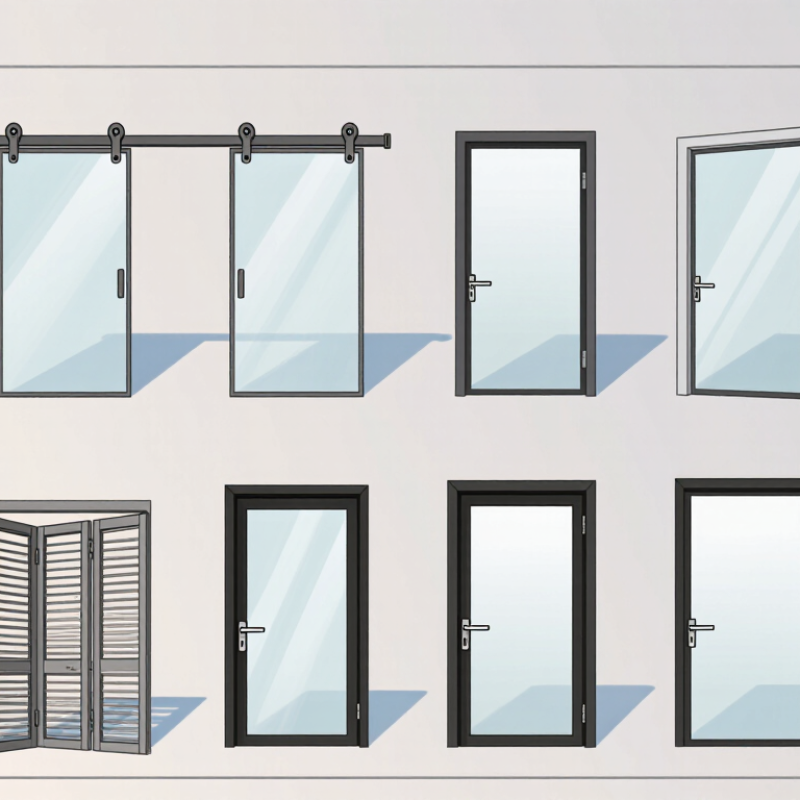
Top 10 Types of Aluminum Bathroom Doors for Global Buyers

What Are Aluminum Bathroom Doors and Why Are They Widely Used?

Aluminum bathroom doors are door systems built around extruded aluminum frames, usually paired with tempered glass, acrylic, or moisture-resistant panels. The frame supports hinges, seals, handles, and drainage details. Unlike solid wood, aluminum does not absorb bathroom humidity. It also remains relatively light, which helps reduce stress on hinges and wall fixings.

Their popularity has practical evidence behind it. The Aluminum Association reports that building and construction consume about 25% of aluminum demand in the United States. The International Aluminium Institute also identifies construction as a major aluminum end-use sector. These figures do not measure bathroom doors alone. Still, they show why this material is common in wet-area construction. Aluminum can be anodized or powder-coated for better surface protection. Good detailing matters more than appearance alone. Poorly sealed joints may still allow water to reach fasteners and wall edges.

Maintenance is simple, but not effortless. Regular cleaning removes soap residue and prevents deposits around sliding tracks. The International Aluminium Institute states that recycled aluminum requires about 5% of the energy used for primary production. Its reporting also notes that roughly 75% of aluminum ever produced remains in use today. That supports the material’s long service potential. However, buyers should question broad claims such as “rust-proof” or “maintenance-free.” Coating quality, alloy selection, hardware, ventilation, and installation decide real performance. A beautiful frame cannot correct a badly sloped shower floor.

The Top 10 Types of Aluminum Bathroom Doors

The Top 10 Types of Aluminum Bathroom Doors

Aluminum bathroom doors suit humid rooms because the frame resists swelling, warping, and routine corrosion. Grand View Research estimated the global aluminum doors and windows market at about USD 59.8 billion in 2023, with continued growth expected through 2030. The report links demand to durability, low maintenance, and modern construction. Bathroom buyers should still inspect coating quality. Aluminum is not automatically rust-proof.

The ten common types include hinged, sliding, pivot, bi-fold, pocket, barn-style, louvered, framed glass, semi-frameless glass, and wide-access doors. Hinged doors offer simple sealing and easy repairs. Sliding models save space beside toilets or vanities. Pivot doors create a wider opening. Bi-fold and pocket designs suit narrow bathrooms. Louvered doors improve airflow, but they reduce privacy. Framed and semi-frameless glass doors provide clearer sightlines. Wide-access doors help wheelchair users and older residents. Space changes everything.

Tips: Measure the opening, wall depth, swing clearance, and floor slope before ordering. Choose anodized or powder-coated aluminum, stainless hardware, and safety glass. A 6-millimeter glass panel feels stable for many shower applications, but local standards may require different specifications. I would not trust a “maintenance-free” claim without checking drainage and seals. The U.S. Department of Energy also notes that better glazing performance can reduce heat transfer, although bathroom-door savings are usually modest. Pay more attention to ventilation, accurate installation, and replaceable seals.

How Aluminum Bathroom Door Types Differ in Design and Function

Top 10 Types of Aluminum Bathroom Doors for Global Buyers

Aluminum bathroom doors differ mainly in movement, privacy, ventilation, and space efficiency. Hinged doors suit larger bathrooms and provide a familiar, firm seal. Sliding and bypass doors save floor space, especially in compact apartments. Pivot doors create a wider opening, but they require accurate floor and ceiling alignment.

Bi-fold doors fold inward, reducing clearance near toilets or cabinets. Frameless aluminum-and-glass designs create a clean appearance and brighten small rooms. Framed doors offer stronger edge protection and can tolerate frequent family use.

Frosted panels improve privacy, while louvered aluminum doors support airflow in humid spaces. Barn-style doors look distinctive, yet their exposed track needs regular cleaning.

There are practical details too. Powder-coated aluminum usually resists bathroom moisture, but poor surface preparation can cause early coating failure. Stainless hardware is often more dependable near steam and splashing water.

Measure the opening after tiling, not before. Small errors matter. A sliding door may appear ideal, but its bottom track can collect hair and soap residue. Pivot models are easier to clean, though their swing may conflict with nearby fixtures.

In my experience, buyers sometimes focus on appearance and overlook ventilation, drainage, and replacement parts. That choice can become expensive later. A reliable specification should match the door type with room size, user habits, glass thickness, seal design, and local installation conditions.

Key Materials, Hardware, and Performance Features

Global buyers can choose ten aluminum bathroom door formats: hinged, sliding, pivot, folding, bypass, louvered, framed-glass, semi-frameless, solid-panel, and pocket doors. Each format needs a different hardware strategy. Hinged doors require adjustable hinges and a reliable magnetic seal. Sliding doors need corrosion-resistant rollers and a rigid top track. Pivot and folding designs demand accurate floor alignment. Small errors become noisy operation.

Material selection affects service life. Extruded 6063-T5 aluminum offers a useful balance of strength, weight, and machinability. For wet rooms, anodized or powder-coated surfaces help resist staining, but coating quality still matters. The International Aluminium Institute reports that recycled aluminum requires about 5% of the energy used for primary aluminum production. That supports recycled-content specifications, although recycled content should be verified by documentation. The UNEP 2023 Global Status Report for Buildings and Construction identifies buildings as responsible for about 37% of global energy-related emissions. Even a small door should not ignore lifecycle impacts.

Hardware usually fails before the aluminum frame. Stainless steel 304 suits many interiors, while 316 is safer near coastal air. Tempered safety glass, EPDM seals, and concealed drainage improve daily performance. Test coating durability against relevant AAMA 2603, 2604, or 2605 requirements. A perfect specification is rare. I still see projects choosing thin tracks to reduce cost, then correcting misalignment later. Water protection, spare parts, and installation tolerances deserve equal attention.

Top 10 Types of Aluminum Bathroom Doors for Global Buyers - Key Materials, Hardware, and Performance Features

No. Door Type Typical Frame Material Common Panel or Glazing Recommended Hardware Space Requirement Performance Features Best-Fit Bathroom Applications
1 Framed Hinged Door Powder-coated or anodized aluminum, usually 1.2–1.5 mm wall thickness 6–8 mm tempered safety glass or aluminum composite panel Stainless-steel or coated aluminum hinges, magnetic seal, pull handle, adjustable strike Requires clear swing area; suitable for medium and large bathrooms Good water containment, rigid frame, simple alignment, replaceable seals, moderate sound control Main bathroom entrances, shower enclosures, accessible layouts with outward opening
2 Sliding Bypass Door Anodized aluminum top and bottom tracks with reinforced vertical profiles 5–8 mm tempered glass, frosted glass, or moisture-resistant composite panel Stainless-steel rollers, anti-jump guides, soft-close option, recessed or edge pull No swing clearance; needs sufficient wall width for overlapping panels Efficient use of floor space, smooth operation, moderate water resistance, low threshold options Compact bathrooms, shower recesses, apartments, and renovation projects
3 Bi-Fold Aluminum Door Powder-coated aluminum folding stiles and head track 4–6 mm tempered glass or lightweight waterproof panel Stainless-steel pivots, nylon or stainless rollers, magnetic catch, finger-safe seals Small swing footprint; requires accurate head and jamb installation Wide opening in a confined area, lightweight operation, good ventilation access, moderate sealing Small shower rooms, utility bathrooms, wet-room partitions, and narrow corridors
4 Pocket Sliding Door Aluminum door frame with galvanized-steel or aluminum pocket cassette 35–45 mm engineered moisture-resistant door slab or laminated composite panel Top-hung rollers, anti-rattle guides, flush pull, soft-close mechanism Needs a cavity wall or a purpose-built pocket frame Excellent floor-space efficiency, concealed operation, moderate privacy, installation-sensitive alignment Guest bathrooms, en-suite bathrooms, accessible homes, and narrow floor plans
5 Aluminum Louvered Door Extruded aluminum frame and fixed or adjustable aluminum louvers Ventilated aluminum slats; optional insect mesh or opaque backing Stainless-steel butt hinges, lever handle, privacy latch, adjustable strike plate Standard swing clearance; ventilation area must remain unobstructed Continuous airflow, reduced condensation risk, corrosion-resistant finish, limited acoustic privacy High-humidity bathrooms, laundry areas, ventilation closets, and tropical climates
6 Frameless Glass Door with Aluminum Hardware Minimal anodized aluminum channels, clamps, or U-profiles 8–10 mm toughened safety glass, clear, frosted, or patterned Grade 304 stainless-steel or marine-grade hardware, seals, clamps, and pull handle Requires accurate wall and floor measurements; swing or pivot clearance required Modern appearance, high light transmission, easy visual inspection, strong water deflection when correctly sealed Premium shower areas, hotels, residential renovations, and minimalist interiors
7 Aluminum Composite Panel Door Aluminum perimeter frame with aluminum composite panel skins 3–4 mm aluminum composite panel with polyethylene or mineral-filled core Stainless-steel hinges, lever or pull handle, privacy lock, perimeter gasket Standard swing clearance; lightweight construction simplifies handling Opaque privacy, low water absorption, easy cleaning, low maintenance, moderate impact resistance Commercial washrooms, public facilities, hotels, and high-traffic residential projects
8 Thermally Broken Aluminum Door Aluminum profiles separated by polyamide thermal isolator strips Double-glazed insulated glass unit or insulated opaque panel Multi-point lock, compression gaskets, adjustable hinges, stainless-steel fasteners Standard swing or sliding clearance; deeper frame than non-insulated systems Reduced thermal bridging and condensation, improved air tightness, enhanced energy performance Cold climates, exterior-access bathrooms, high-performance homes, and coastal buildings
9 Fire-Rated Aluminum-Frame Door Fire-tested aluminum frame with approved fire-resistant infill system Fire-rated glass, mineral-core panel, or tested opaque door leaf Self-closing hinges, fire-rated latch, intumescent seals, smoke seals where specified Requires compliant frame depth, clearances, and certified installation details Controlled fire and smoke resistance only when used as a complete tested assembly Hotels, hospitals, apartment buildings, public facilities, and protected escape routes
10 Accessible Sliding or Automatic Door Heavy-duty anodized or powder-coated aluminum frame and operator rail Laminated safety glass, tempered glass, or lightweight opaque panel Low-energy operator, presence sensors, emergency release, guide rails, accessible pull handle Needs clear opening width and maneuvering space compliant with local accessibility rules Hands-free access, controlled closing speed, wide clear opening, improved usability for reduced mobility Accessible bathrooms, healthcare facilities, airports, shopping centers, and public buildings
Buyer note: Actual water tightness, thermal performance, fire rating, accessibility, and load capacity depend on the complete door assembly, local building codes, installation quality, glazing specifications, seals, and tested hardware configuration.

How Global Buyers Can Choose the Right Aluminum Bathroom Door

Choosing the right aluminum bathroom door starts with the room, not the catalog. Measure the opening, wall thickness, ceiling height, and swing clearance. A hinged door suits a wide entrance, while a sliding model saves space beside a basin or toilet. Folding and pivot doors can help in compact layouts, but their hardware needs careful alignment.

Humidity resistance matters more than appearance. Look for corrosion-resistant aluminum profiles, sealed joints, and stainless-steel or coated hardware. I have seen attractive doors fail because water collected inside the lower frame. A slightly sloped threshold and proper drainage can prevent this problem. However, even a good profile cannot correct poor installation.

Glass choice affects privacy, safety, and cleaning. Clear glass brightens a small bathroom, while frosted or textured glass offers better privacy. Check the panel thickness and local safety requirements before ordering. Door seals should close evenly without forcing the handle. Test samples in person when possible. Photos can hide weak corners.

Global buyers should also confirm packaging, replacement parts, installation instructions, and after-sales response. Door sizes may vary between markets, so never rely only on a standard label. Ask for technical drawings and tolerance ranges. My own mistake was ordering by nominal width and ignoring the finished opening. The door arrived usable, but adjustment took extra labor. Small details matter.

FAQS

Which aluminum bathroom door suits a small bathroom?

Sliding doors save floor space beside toilets, basins, and cabinets. Their bottom tracks may collect hair and soap. Cleaning is necessary.

When is a hinged aluminum bathroom door a better choice?

Hinged doors suit wider bathrooms with enough swing clearance. They provide a familiar seal and firm closing action. Check nearby fixtures carefully.

Are pivot doors practical for compact bathrooms?

Pivot doors create a wider opening and are often easier to clean. However, the swing may hit a basin or cabinet. Accurate alignment matters.

What are the benefits of bi-fold aluminum bathroom doors?

Bi-fold doors fold inward and reduce clearance problems near toilets. Their hinges and guides need careful alignment. Small adjustments can affect closing.

Should buyers choose framed or frameless aluminum doors?

Frameless designs create a bright, clean appearance in small rooms. Framed doors offer stronger edge protection for busy family bathrooms. Appearance is not everything.

Which door features improve bathroom privacy and airflow?

Frosted or textured panels improve privacy. Louvered aluminum doors support airflow in humid rooms. Clear glass brightens spaces but reveals more detail.

What materials and details help resist bathroom moisture?

Choose corrosion-resistant aluminum, sealed joints, and dependable metal hardware. Powder coating can fail after poor surface preparation. Water must drain away.

How should global buyers measure an aluminum bathroom door?

Measure after tiling, including the finished opening, wall thickness, ceiling height, and swing clearance. Do not trust nominal width alone. I once did. That was careless.

What should buyers confirm before placing an international order?

Request technical drawings, tolerance ranges, packaging details, replacement parts, and installation instructions. Confirm local safety requirements for glass. Photos can hide weak corners.

Why are drainage and installation important for aluminum bathroom doors?

Even a good profile cannot correct poor installation. A slightly sloped threshold helps prevent trapped water. Lower frames need regular inspection. Small errors become expensive.

Conclusion

Aluminum Bathroom Door systems are widely used because they combine lightweight construction, moisture resistance, durability, and easy maintenance. Designed for humid environments, they can help reduce concerns related to rust, swelling, and surface damage. The main types include hinged, sliding, folding, pivot, pocket, framed glass, semi-frameless, louvered, solid-panel, and customized doors. Each option offers different benefits in terms of space efficiency, privacy, ventilation, appearance, and accessibility, making it suitable for various residential, hospitality, and commercial bathroom layouts.

The design and performance of an Aluminum Bathroom Door depend on the quality of its aluminum profile, glass or panel material, seals, hinges, rollers, handles, locks, and surface finish. Buyers should consider opening size, installation conditions, bathroom humidity, safety requirements, privacy level, cleaning needs, and available budget. Global buyers should also evaluate product specifications, packaging, installation support, quality consistency, and compliance with applicable local standards before selecting the most suitable door type.

Evelyn

Evelyn

Evelyn is a highly experienced marketing professional dedicated to helping customers better understand innovative products, practical solutions, and evolving industry trends. With a strong knowledge of the company’s product portfolio, she combines professional insight with clear, engaging......