China is a major source of aluminium doors, but choosing a supplier takes more than comparing prices. Aluminium Bifold Doors must fold smoothly, seal reliably, and suit the opening where they will be installed. A polished catalogue is useful. It is not proof of consistent production quality.
This guide introduces ten Chinese suppliers for buyers researching residential and commercial projects. It highlights practical comparison points, including product ranges, frame and hardware options, customisation, communication, and export experience. Specifications can vary between models, so ask for drawings, finish samples, and clear details about glazing, drainage, and locking systems. Small details matter.
A supplier’s claims should be checked against documents and product evidence. Ask how quality checks are handled, what packaging protects the frames during shipping, and how after-sales questions are answered. Where available, review relevant test reports and certifications, and confirm that they apply to the exact product offered. A factory visit or independent inspection may also help, especially for larger orders.
No single list can identify the right partner for every project. Some buyers value flexible dimensions; others need stable lead times or close technical support. Even a detailed comparison has limits, and online information may be incomplete or outdated. Treat this overview as a starting point, then verify each supplier against your drawings, budget, and project requirements.
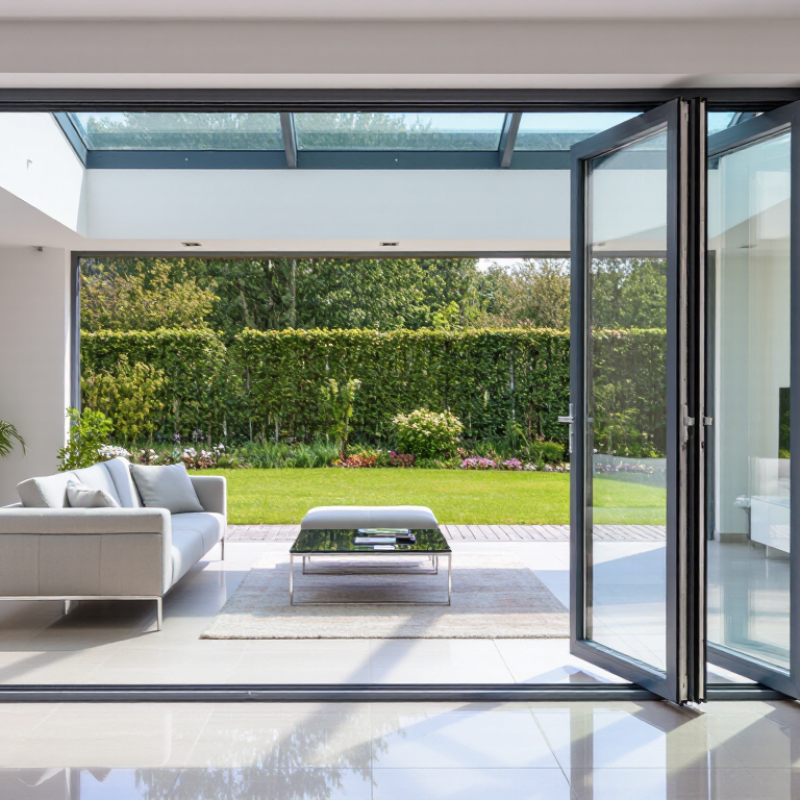
Aluminium bifold doors use hinged panels that fold and slide along a track, opening a wide passage to a patio, garden, or adjoining room. Slim aluminium frames can admit plenty of daylight while supporting large glass panes. The exact opening width, panel count, and stacking direction affect how the system feels in daily use. Small details matter.
China is a major manufacturing base for aluminium building products, with suppliers offering varied profiles, finishes, glazing options, and hardware configurations. Buyers may compare factories and request adjustments to suit a project’s dimensions or climate. This range can be useful, but a low quotation alone says little about long-term performance. Ask how the frames are tested, what seals and rollers are specified, and whether technical drawings match the finished order.
Before placing an order, confirm the clear opening size, threshold height, glass specification, drainage design, and packing method in writing. Request recent production photos or a sample corner section when practical. Check that test reports apply to the proposed door configuration, not just a similar product. Shipping distance also affects lead times and replacement-part planning. I have seen specifications become vague between quotation and production; it is worth resolving that early. A careful supplier review takes time. So does a good installation plan.
Supplier selection should begin with evidence, not a polished showroom display. A credible review examines aluminium profiles, thermal breaks, hardware, seals, and glass options. It also checks whether published specifications match the product being quoted. Small discrepancies matter.
Manufacturing capability is another useful measure. Reviewers can ask for production records, quality-control procedures, and examples of completed projects. Factory audits or live video inspections may help confirm equipment and workflow. For a bifold door, practical details include panel alignment, roller movement, drainage paths, and locking points. Ask how performance is tested, and request dated test reports where available. Clear answers are more useful than broad promises.
Reliability also depends on communication and after-sales support. Compare written lead times, packaging plans, replacement-part policies, and responses to technical questions. A supplier that explains installation limits may be more dependable than one that claims every opening is simple. No scorecard is perfect. A strong sample can still hide inconsistent production, and one delayed shipment does not prove a pattern. Selection should therefore weigh documented evidence, reference checks, and direct observations together. It is worth recording what remains uncertain, too.
Profiles of ten Chinese aluminium bifold door suppliers are most useful when they explain what each factory actually does. Compare in-house aluminium extrusion, frame fabrication, glazing, hardware sourcing, and export support. These details reveal whether a supplier controls key production steps or relies on outside partners. A product catalogue alone is not enough.
The Grand View Research report on the global doors market estimated its 2023 value at US$153.5 billion and forecast a 5.2% compound annual growth rate through 2030. That growth makes careful supplier checks more important, not less. For each profile, look for tested air leakage, water resistance, wind-load performance, thermal ratings, and clear installation instructions. Ask for reports tied to the offered configuration. A rating for one frame and glass combination may not apply to another.
The U.S. Department of Energy notes that heat gain and loss through windows account for about 25–30% of home heating and cooling energy use. Large bifold panels deserve close attention to glass and seals. Still, published specifications can be hard to compare. I would treat any supplier ranking as a starting point, not a verdict. Check sample corners, track smoothness, gasket fit, and warranty terms before ordering. A small flaw matters.
Comparing China’s top ten aluminium bifold door suppliers means looking beyond catalogue photos. Their products may differ in frame depth, thermal-break design, track layout, panel limits, and finish options. Ask for section drawings, not just attractive renders. A sample corner cut can reveal wall thickness and gasket fit. Small details matter. Check whether the quoted glass build suits your climate, opening size, and acoustic needs. Some suppliers offer slim sightlines; others prioritize larger panels or simpler maintenance. These are trade-offs, not automatic signs of quality.
Capabilities show up in the process. Request documented air, water, and wind testing for the relevant configuration, plus hardware cycle information where available. Confirm who checks machining, assembly, drainage paths, and packaging before shipment. Ask how custom colors, replacement rollers, and installation guidance are handled. Clear answers with drawings are more reassuring than quick promises. Still, a polished factory video cannot prove consistency across every order. Compare lead-time assumptions, minimum quantities, export packing, and after-sales support in writing. One detail is easy to miss: test results may describe a sample, not your exact door. Verify the specifications and configuration carefully.
Indicative specification ranges commonly seen in aluminium bifold door catalogues. These are market-level benchmarks, not audited data or a supplier-by-supplier ranking; specifications vary by system.
Ranges shown: glazing thickness 24–44 mm, panel width 600–1,200 mm, panel height 1,800–3,000 mm, and thermal-break width 14–34 mm. Confirm project limits with each supplier.
When comparing China’s top suppliers of aluminium bifold doors, look beyond catalogue photos. Ask for project-specific drawings, frame dimensions, glass specifications, and hardware details. A supplier should explain how panels fold, lock, and drain water. Request relevant test reports, and check that they match the exact door system being quoted. Small differences matter.
Review quality control before discussing price. Ask how aluminium profiles are inspected, how finishes are checked, and whether finished doors can be examined before shipment. Confirm packaging, production time, spare-parts availability, and warranty terms in writing. Speak with recent customers about delivery accuracy and after-sales support. A polished catalogue can still hide gaps. I would not treat one low quote as proof of value; missing details can become costly later.
Tips: Send the same opening dimensions and performance requirements to every supplier. Ask for a physical corner sample or finish swatch. Check seals, rollers, and locking points by hand. Keep a written record of agreed specifications. One detail gets missed sometimes, so review the final drawings carefully before approval.
A practical supplier due-diligence checklist. The points below are selection criteria, not a ranked list of companies.
| No. | What to Check | Evidence to Request | Why It Matters | A Good Sign |
|---|---|---|---|---|
| 1 | Manufacturer or trading company status | Business registration details, factory address, production-area photos or a live video tour, and an explanation of which processes are done in-house. | A supplier’s role affects production control, communication, lead times, and responsibility for quality issues. | The company clearly identifies its role and can show consistent, verifiable production information. |
| 2 | Project-specific specifications | A written quotation and technical schedule showing opening dimensions, panel configuration, frame depth, glazing, hardware, finish, and included accessories. | Bifold systems are configured for the opening and project requirements; a general brochure is not a substitute for an approved specification. | The supplier asks for drawings and confirms assumptions before pricing or production. |
| 3 | Aluminium profiles and construction | Profile cross-sections, alloy and temper information where specified, wall-thickness details, and information on thermal breaks for thermally broken systems. | Profile design and system construction affect stiffness, fit, thermal performance, and suitability for the intended opening. | Technical details are supplied for the quoted system, rather than unsupported claims about “heavy-duty” or “premium” aluminium. |
| 4 | Wind, water, and air performance | Test reports or certificates for the relevant door system, including test method, specimen configuration, dimensions, and reported results. | Performance depends on the tested configuration and installation; results for a different product or size may not represent the proposed door. | Reports can be matched to the quoted system and the performance requirements for the project’s location. |
| 5 | Glazing and safety requirements | Glass build-up, thickness, safety-glass details where required, spacer and seal information, and documentation for the destination market. | Glass selection affects safety, weight, thermal performance, and compatibility with the door system. Applicable rules vary by market and installation. | The supplier confirms the glass make-up against the project specification and applicable local requirements. |
| 6 | Hardware and operating configuration | A hardware schedule identifying hinges, rollers, tracks, locks, handles, and the opening direction, folding sequence, and traffic-door arrangement. | Hardware must suit the panel arrangement and expected use; unclear configurations can cause ordering, installation, or operation problems. | The supplier provides a clear elevation or shop drawing showing the operating layout and hardware positions. |
| 7 | Finish and colour control | Specified finish type, colour reference, sample approval process, and available documentation for the proposed coating or anodised finish. | Colour appearance and finish requirements should be agreed before production; exposure conditions and project expectations can affect finish selection. | A physical sample can be approved and the approved finish is recorded in the order documents. |
| 8 | Quality checks and traceability | Inspection process, production checkpoints, final inspection records, packaging procedure, and a sample inspection report for a comparable order. | Documented checks help identify dimensional, finish, hardware, and packaging issues before goods are shipped. | Inspection criteria are specific, recorded, and agreed before production begins. |
| 9 | Installation information and after-sales support | Installation instructions, fixing and drainage details, maintenance guidance, warranty terms, spare-parts process, and the procedure for reporting defects. | Correct installation is important to operation and weather performance, while clear support terms help resolve issues after delivery. | The supplier defines responsibilities, response channels, warranty exclusions, and how replacement parts are handled. |
| 10 | Commercial terms, lead time, and shipping | Itemised pricing, payment milestones, stated production lead time, delivery terms, packaging details, shipping documents, and responsibility for import clearance. | A complete commercial offer makes it easier to compare like-for-like costs and understand who handles transport, duties, and delivery risks. | The quotation defines inclusions, exclusions, delivery basis, timing assumptions, and any charges that could change the total cost. |
Compare frame depth, thermal-break design, track layout, panel limits, finishes, glazing, and export support. A catalogue is not enough.
Ask for air-leakage, water-resistance, and wind-load reports for the exact quoted configuration. Sample results may not match your door.
They show frame dimensions, glass build, hardware, folding direction, locking points, and drainage paths. Small details matter.
Examine a corner sample for wall thickness and gasket fit. Move the rollers by hand and check the track smoothly.
Ask how profiles, finishes, machining, assembly, and packaging are inspected. Clear records help, though they cannot guarantee every order.
Send each supplier the same opening dimensions and performance requirements. Check what the price includes before judging value.
Confirm production time, export packing, spare rollers, installation guidance, and warranty terms. Keep the agreed specifications in writing.
No. It shows only a limited view. I would still request reports, samples, and recent customer feedback. My caution may be excessive.
This article explores why Aluminium Bifold Doors are a popular choice for homes and commercial spaces, and why buyers often consider sourcing them from China. It explains how suppliers can be assessed using practical criteria such as manufacturing experience, product range, customization options, quality-control processes, production capacity, and export support. The article then presents profiles of ten Chinese suppliers, focusing on their general capabilities rather than making unsupported claims or endorsements.
A side-by-side comparison helps readers understand how suppliers may differ in door designs, materials, finishes, hardware choices, and project services. Before making a decision, buyers should clarify specifications, request relevant product documentation and samples, review lead times and packaging arrangements, and confirm communication and after-sales procedures. These steps can help buyers compare options carefully and choose a supplier that fits their project requirements, budget, and delivery expectations.