0%

Choosing an Aluminium Washroom Door involves more than matching a silver finish to ceramic tiles. The door must withstand moisture, frequent cleaning, impact, and constant public use. Its hinges, edges, locks, and ventilation gaps deserve equal attention. A beautiful door can still fail quickly when its hardware cannot handle a busy washroom.

The International Aluminium Institute reports that aluminium remains highly recyclable, while its durability supports longer product lifecycles. The World Health Organization also stresses that effective cleaning and maintenance support safer public facilities. These findings make material selection important, but they do not replace careful specification. Alloy grade, surface treatment, door thickness, frame design, and hardware quality can change performance significantly.

As washroom design consultant David Stacey puts it, “A door must survive the cleaning routine, not just the showroom photograph.” That is a useful test. The best Aluminium Washroom Door should open smoothly, resist corrosion around wet floor zones, and remain stable after repeated cleaning. However, no material is maintenance-free. Poor installation, standing water, or unsuitable fasteners can undermine even a premium system. This guide examines ten practical selection points, including privacy, accessibility, fire considerations, durability, cleaning demands, and total cost. Some choices may look minor. They are not.
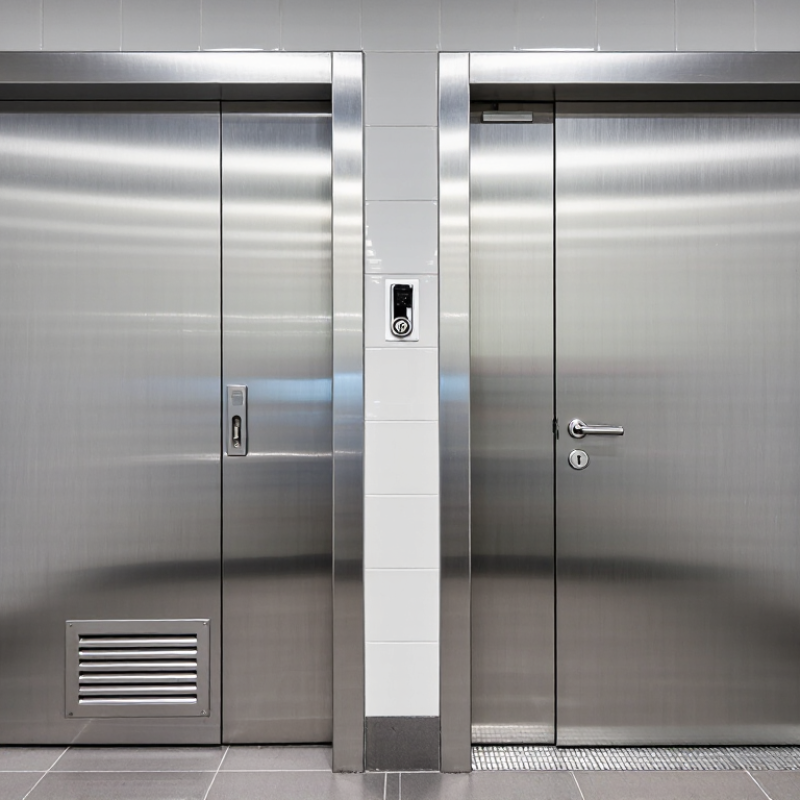
10 Tips to Choose the Best Aluminium Washroom Door?

Identify Your Washroom Requirements and Usage Conditions

Before choosing an aluminium washroom door, identify who will use it and how often. A family bathroom needs different performance from a busy public washroom. Measure the opening at the top, middle, and bottom. Walls are rarely perfectly square. Check the available space for door swing, fixtures, and wheelchair movement. A sliding door may save space, but it needs a clear wall area and reliable track protection. Privacy also matters. Consider the panel height, gaps, and lock design before appearance.

Moisture conditions deserve close attention. In a poorly ventilated washroom, water may collect around the frame, hinges, and lower panel. Choose finishes that tolerate frequent cleaning and humid air. Coastal locations may need stronger corrosion resistance because of salt exposure. Think about children, older users, and people with limited mobility. A smooth threshold, easy-grip handle, and simple emergency release can improve daily use. I have seen attractive doors fail because the latch was difficult to operate with wet hands. That detail is easy to miss. Cleaning routines should guide the material choice too. Strong chemicals, abrasive pads, and standing water can damage unsuitable surfaces. Review the installation quality, drainage, ventilation, and maintenance habits together. The best door is not always the heaviest one. It is the one that matches the room’s real conditions.

Compare Aluminium Grades, Finishes, and Corrosion Resistance

Aluminium doors suit wet rooms, but alloy and finish matter more than a polished showroom sample. Alloy 6063 is commonly used for architectural extrusions; 6061 offers greater strength, though the best choice depends on the frame design. ISO 9223:2012 classifies atmospheric corrosion for aluminium from C1 to CX. Its reported first-year rates range from no more than 0.6 micrometres in C1 to over 25 micrometres in CX. These figures describe atmospheric exposure, not a guaranteed washroom lifespan. Small detail, big consequence.

Tips: Check the alloy certificate. Compare anodised and powder-coated samples. Ask for coating thickness. Inspect cut edges. Check drainage holes. Match finish to cleaning chemicals. Avoid trapped water. Check fasteners for galvanic compatibility. Ask for salt-spray test details. Confirm the test reflects real exposure.

A coastal washroom needs a tougher corrosion strategy than a dry interior cubicle. Anodising creates a protective oxide layer; a sound coating can add another barrier, but scratches and poorly sealed edges remain vulnerable. Ask suppliers how they prepare joints and repair damaged finishes. I would not choose on colour alone. A beautiful surface can hide weak edge protection, and that is easy to miss before installation.

Evaluate Door Design, Size, Hardware, and Privacy Features

An aluminium washroom door should suit the room’s layout, not just its appearance. A slim frame can look neat, while a frosted or patterned panel softens views without making the space feel closed in. Check that the finish is easy to wipe and that edges have no sharp, exposed corners. Looks matter, but daily use matters more.

Measure the opening at the top, middle, and bottom, then check the floor clearance and frame depth. Small errors matter. A door that rubs against tile or catches on a mat quickly becomes annoying. Confirm the swing direction leaves enough room for sinks, towel rails, and people entering or exiting. Hardware needs to match the door’s weight; sturdy hinges and a firm latch help prevent sagging and rattling. In damp rooms, choose fittings with finishes suited to frequent moisture and cleaning.

Privacy depends on more than a lock. A frosted panel, a dependable privacy latch, and a close-fitting frame can reduce visibility and unwanted gaps. Check the space beneath the door, too: a large gap may help airflow but can weaken visual and sound privacy. Perfect silence is unrealistic. Consider who uses the washroom and whether ventilation is already provided before choosing tighter seals or a solid panel. A design that seems ideal on a showroom floor may feel cramped at home.

Check Waterproofing, Maintenance Needs, and Expected Durability

10 Tips to Choose the Best Aluminium Washroom Door

Tips 1–4: Check the bottom seal, perimeter gasket, and frame joints; water often enters at these points, not through the panel. Look for a raised, well-fitted threshold and clear drainage paths. Ask how the door handles repeated splashes and humid air. Inspect sample corners closely. Small gaps matter.

Tips 5–7: Choose a smooth finish that can be wiped with mild soap and water. Avoid designs with deep grooves that trap soap residue. Check whether hinges, screws, and handles resist corrosion, especially near pools or coastal areas. Ask what cleaning products could damage the coating. Maintenance claims need specifics.

Tips 8–10: Ask the supplier for written details on finish care, seal replacement, and expected service conditions. Compare these with your room’s ventilation and cleaning routine. The International Aluminium Institute reports that about 75% of all aluminium ever produced remains in use today. This reflects aluminium’s recyclability and long-term use, but it does not guarantee a washroom door’s lifespan. Installation, moisture control, and upkeep still matter. I would not judge durability by the panel alone.

10 Tips to Choose the Best Aluminium Washroom Door: Waterproofing, Maintenance and Durability

No. Selection Tip What to Check Practical Guidance
1 Check the wet-area exposure Consider whether the door will be exposed to splashes, frequent cleaning, steam, or standing water. Choose finishes, seals, and hardware intended for the actual level of moisture. A door is not automatically waterproof just because it is aluminium.
2 Inspect the frame and edge seals Look for close-fitting joints, suitable perimeter seals, and a threshold detail appropriate to the room. Good detailing helps limit water splash and drafts. Keep any required drainage path clear, and avoid creating a trip hazard with an unsuitable raised threshold.
3 Choose a suitable surface finish Ask whether the aluminium is anodized or coated, and whether the finish is suitable for humid indoor conditions. A sound, intact finish helps protect the surface and makes routine cleaning easier. Follow the supplier’s care instructions and avoid abrasive cleaners that may damage it.
4 Match the hardware to the environment Check hinges, screws, locks, handles, and other fittings for corrosion resistance and suitability for frequent use. Hardware materials and coatings vary. Ask the supplier to specify the fittings and their maintenance requirements rather than judging durability by appearance alone.
5 Review panel and frame construction Check how the panel is supported, how joints are assembled, and whether the frame is appropriate for the opening size. A well-fitted door should open and close without rubbing or excessive movement. Correct sizing and installation are important to long-term performance.
6 Confirm ventilation and privacy Consider the room’s ventilation needs, door gaps or vents, and the level of visual and acoustic privacy required. Do not block required ventilation when selecting seals or a closer. Check that any gaps or vents still provide the privacy appropriate for the washroom.
7 Check operation and accessibility Assess clear opening width, handle height, opening direction, latch operation, and any applicable accessibility requirements. Measure the finished opening and verify local building requirements before ordering. Ensure users can operate the door comfortably and safely.
8 Understand routine maintenance Ask how to clean the finish, inspect seals, tighten hardware, and address surface marks. Regular cleaning with a soft cloth and a mild, non-abrasive cleaner is generally appropriate; follow the finish manufacturer’s instructions. Check moving parts and seals periodically.
9 Evaluate expected service life realistically Review construction details, installation conditions, warranty terms, maintenance guidance, and availability of replacement parts. There is no universal lifespan for an aluminium washroom door. Service life depends on the finish, hardware, moisture exposure, installation quality, and upkeep.
10 Verify specifications before purchase Request written details for dimensions, finish, panel construction, hardware, seals, warranty coverage, and installation requirements. Compare like-for-like specifications and clarify what the warranty covers, including any exclusions for corrosion, cleaning products, or improper installation.

Verify Safety Standards, Installation Quality, and Supplier Support

Before comparing finishes, verify that the door and its hardware meet safety requirements for your building. Ask for current test reports or technical documents, and check which local fire, accessibility, and moisture rules apply. A certificate alone may not cover every component. Confirm that hinges, locks, and closers are included where relevant. Requirements vary by location.

Installation quality matters just as much as the door itself. Check that the frame sits square, anchors are secure, and the door swings without rubbing. Small gaps can affect privacy, while poor alignment may cause a latch to fail. Details matter. Ask who will measure and install the door, and whether they will inspect it after fitting. I used to focus too much on the panel finish; that misses the parts people use every day.

Supplier support becomes important after installation. Ask how to order replacement hinges or seals, how warranty claims are handled, and who answers technical questions. Get the response process in writing, including expected service times. A helpful supplier should explain maintenance in plain language, not just provide a brochure. Even careful planning can miss something, so keep installation records and raise concerns promptly.

FAQS

How should I measure the opening for an aluminium washroom door?

Measure the width and height at the top, middle, and bottom. Walls may not be square. Record the smallest measurements.

What should I check before choosing a door swing direction?

Confirm that the door will not hit sinks, towel rails, mats, or nearby fixtures. Leave enough space for movement and wheelchair access.

Is a sliding door suitable for a small washroom?

It can save floor space. However, it needs a clear wall and a protected, reliable track. Dust and water may affect poor tracks.

How can an aluminium washroom door provide better privacy?

Consider frosted panels, a dependable privacy latch, and a close-fitting frame. Check the bottom gap too. Large gaps reduce privacy.

What hardware works well in a humid washroom?

Choose sturdy hinges, a firm latch, and corrosion-resistant fittings. Handles should be easy to grip with wet hands. This detail is often missed.

How can I improve waterproofing around the door?

Inspect the bottom seal, perimeter gasket, frame joints, and threshold. Clear drainage paths matter. Water often enters through small gaps.

Which door finish is easiest to maintain?

Select a smooth surface that accepts mild soap and water. Deep grooves can trap soap residue. Abrasive pads may damage the coating.

What should I consider for coastal or poorly ventilated locations?

Choose stronger corrosion resistance for salty air. Improve ventilation where possible. Standing water around hinges and frames should not remain.

Is a heavier aluminium door always more durable?

Not necessarily. Correct installation, drainage, ventilation, and maintenance often matter more. A heavy door can still fail in damp conditions.

What maintenance information should I request before buying?

Ask for written care instructions, seal replacement details, and service conditions. Confirm which cleaners may damage the finish. Claims without specifics need reflection.

Conclusion

Choosing the right Aluminium Washroom Door starts with understanding how the space is used, including its layout, traffic, moisture levels, and privacy needs. Compare available aluminium grades and finishes, paying attention to corrosion resistance and suitability for humid conditions. Then consider the door’s style and dimensions, along with practical details such as hinges, handles, locks, ventilation, and privacy features.

Before making a decision, check how well the door is sealed against water and how much upkeep its surface will require. Consider expected durability, safe operation, and whether the door can be installed accurately in the available opening. Reliable supplier guidance and clear support can also help with product selection, installation, and future maintenance. By weighing these factors together, you can choose a washroom door that fits the space, performs well in daily use, and remains easy to care for.

Aveline

Aveline

Aveline is a dedicated marketing professional with a strong understanding of modern business communication, customer needs, and product strategy. As a valued member of our company, she combines market insight, creative thinking, and practical experience to explain how our solutions can support......