0%

Choosing Aluminium Doors And Windows is more than comparing frame colors or online prices. The right decision affects comfort, security, daylight, maintenance, and a building’s long-term appearance. A narrow balcony door may need slim sightlines, while a large living-room opening requires stronger profiles and carefully selected hardware. These differences are easy to overlook.

Practical evaluation should begin with the project’s location, climate, structure, and daily use. In coastal areas, finishes and hardware should resist salt exposure. In colder regions, thermally broken frames can help reduce heat transfer and interior condensation. Glass selection matters too. Double glazing, low-emissivity coatings, and suitable safety glass should match the room and local performance requirements. Always request tested specifications, warranty terms, and installation details from an established supplier.

Measure twice.

I have seen attractive systems perform poorly because installation was treated as an afterthought. Uneven openings, weak fixings, and incomplete sealing can undermine even high-quality aluminium products. A reliable installer should explain drainage paths, tolerances, weather seals, and maintenance access before manufacturing begins. The cheapest quotation may not represent the lowest project cost.

Still, no selection is perfect. Budget, design goals, energy performance, and availability may conflict. A thoughtful choice records these compromises instead of hiding them. By comparing verified performance data with real site conditions, project owners can select Aluminium Doors And Windows that look appropriate, operate smoothly, and remain dependable for years. Review the final decision with your architect, contractor, or qualified fabricator before placing the order.
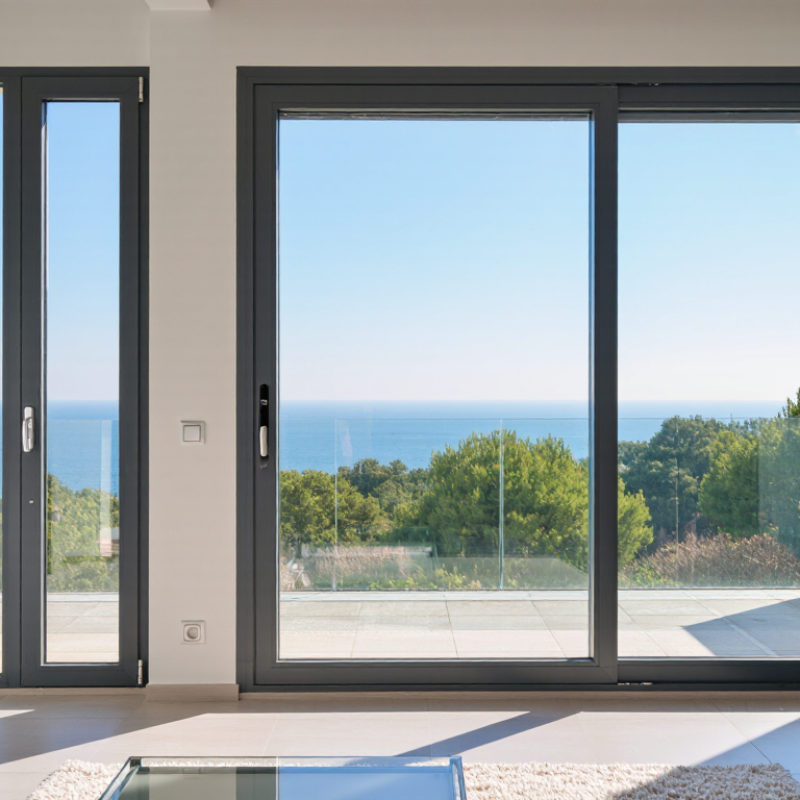
How to Choose Aluminium Doors and Windows for Your Project?

Define Project Needs: Climate, Size, Exposure, Security, and Accessibility

How to Choose Aluminium Doors and Windows for Your Project?

Start by defining the project’s climate and exposure. In hot regions, specify low-e glazing, solar-control coatings, and thermally broken aluminium frames. The U.S. Department of Energy reports that windows can cause 25–30% of residential heating and cooling energy use. That figure makes glass selection more important than frame appearance. In cold climates, prioritize lower U-values and insulated spacers. Near coasts, check salt-spray resistance and drainage design. Strong winds require tested frames, reinforced corners, and suitable anchorage. Measure twice.

Size changes performance. Large sliding doors increase daylight but also raise solar gain, deflection, and hardware loads. Ask for tested air, water, and structural performance under the project’s exposure category. Industry testing commonly follows AAMA/WDMA/CSA 101/I.S.2/A440, which evaluates complete fenestration assemblies. Do not judge a window from its profile alone. The installation joint can fail first.

Security and accessibility should be designed together. Use laminated or impact-resistant glass where forced entry or storms are concerns. Select multi-point locking, restrictors, and robust hinges without creating difficult operation. The 2010 ADA Standards generally require at least 32 inches of clear door opening and limit opening force to 5 pounds for interior hinged doors. Local rules may differ. A common mistake is choosing heavy hardware, then discovering that children, older users, or wheelchair users cannot operate it comfortably. Mock-up testing is worth the extra day.

How to Choose Aluminium Doors and Windows for Your Project?

Define project needs by reviewing climate, size, exposure, security, and accessibility before selecting the aluminium system.

The scores are an illustrative planning framework rather than company or brand data. Climate affects thermal performance and condensation risk; size influences glass weight and frame strength; exposure determines weather sealing and wind-load requirements; security guides hardware and laminated-glass choices; and accessibility requires suitable clear openings, thresholds, and operating forces. Final specifications should be verified against local building codes and project calculations.

Assess Thermal Conductivity: Aluminum Is About 205 W/m·K (EN 573-3)

Aluminum transfers heat quickly. Its reference conductivity is about 205 W/m·K at room temperature, commonly associated with high-purity aluminum. EN 573-3 defines wrought aluminum alloy compositions, but it does not guarantee one conductivity value for every alloy. Actual performance can vary with alloy, temper, thickness, and temperature. ASHRAE Handbook—Fundamentals reports aluminum conductivity near 200 W/m·K, while many construction alloys perform below that level.

This matters when selecting doors and windows. A bare aluminum frame can create a cold bridge around the glass edge. Thermal-break profiles interrupt that path with low-conductivity polyamide sections. ISO 10077-2 provides calculation methods for frame and thermal-bridge heat transfer. Request the complete U-value, not only the frame material value. It should cover the frame, glazing, spacer, and junction details.

Measure the opening carefully.

The International Energy Agency’s Energy Efficiency 2023 report states that buildings consume about 30% of global final energy. Therefore, frame selection deserves more attention than appearance alone. In a project review, compare certified U-values under the same testing method, then inspect corner joints and drainage paths. A lower conductivity frame does not automatically mean a better window. Installation gaps, metal fixings, and poor seals can undermine laboratory results. I would also question any brochure quoting 205 W/m·K without identifying alloy, test temperature, and calculation boundary.

How to Choose Aluminium Doors and Windows for Your Project? - Assess Thermal Conductivity: Aluminum Is About 205 W/m·K (EN 573-3)

Material or Design Factor Typical Thermal Conductivity at Approximately 20°C What It Means for Doors and Windows Recommended Assessment
Aluminium alloy frame Approximately 120–235 W/m·K; about 205 W/m·K is a practical reference value for many aluminium alloys Aluminium transfers heat quickly, so an uninsulated metal frame can create significant heat loss or heat gain. Confirm the alloy, profile geometry, and presence of a thermal break rather than judging performance from conductivity alone.
Non-thermally broken aluminium frame Uses the high conductivity of aluminium across much of the frame section May result in colder interior frame surfaces, higher heat flow, and increased condensation risk in cold conditions. Use mainly where thermal performance requirements are limited, such as some internal partitions or mild climates.
Thermally broken aluminium frame The polymer thermal barrier has a much lower conductivity than aluminium Interrupts the main heat-flow path and improves interior surface temperature compared with a continuous aluminium section. Check the tested frame U-value, thermal-break width, air chambers, corner details, and installation conditions.
Typical frame U-value target Thermally improved systems may commonly fall around 1.4–2.0 W/m²·K; non-broken systems can be approximately 5.0–7.0 W/m²·K A lower U-value indicates lower heat transfer through the frame under the stated test conditions. Treat these as indicative ranges only and request project-specific test or calculation results.
Comparison: steel Approximately 45–60 W/m·K for common steels Generally conducts less heat than aluminium, but a steel frame can still perform poorly without thermal design. Compare complete frame U-values, not material conductivity alone.
Comparison: glass Approximately 0.8–1.2 W/m·K for ordinary glass The glazing area usually has a major influence on the overall window thermal performance. Review glazing U-value, number of panes, cavity gas, low-emissivity coating, and spacer type.
Comparison: uPVC Approximately 0.15–0.25 W/m·K The material itself has low conductivity, although internal reinforcement and profile design affect the final result. Compare the complete tested window rather than using material values as a direct substitute for U-values.
Thermal conductivity versus U-value Conductivity is measured in W/m·K; U-value is measured in W/m²·K Conductivity describes a material, while U-value reflects thickness, geometry, layers, joints, and surface conditions. Use certified whole-product or component U-values for project selection.
Standards and documentation EN 573-3 specifies chemical composition limits for wrought aluminium alloys; it does not establish one universal thermal-conductivity value for every alloy Different alloys, tempers, temperatures, and test methods can produce different conductivity values. Request the exact alloy designation, technical datasheet, thermal calculations, and applicable product-test documentation.

Note: Thermal-conductivity figures are representative reference values. Actual door and window performance depends on the complete assembly, including frame design, thermal breaks, glazing, seals, hardware, installation, and local climate conditions.

Specify Thermal Breaks: Polyamide Isolators Commonly Measure 24–34 mm

How to Choose Aluminium Doors and Windows for Your Project?

When specifying aluminium doors and windows, thermal breaks deserve close attention. A thermal break separates the interior and exterior aluminium sections. This reduces heat transfer through the frame. Polyamide isolators commonly measure 24–34 mm in width. The correct dimension depends on climate, glazing, frame depth, and energy targets. Wider is not automatically better.

On site, I check the isolator profile before approving fabrication drawings.

It should fit tightly within the aluminium chambers. The crimping or mechanical connection must also remain secure. Small gaps can create air leakage and moisture problems. Ask for thermal transmittance data for the complete window, not only the isolator. Glass, spacers, gaskets, and frame geometry all affect performance. That detail matters.

A 24 mm isolator may suit a compact frame with moderate insulation requirements.

A 34 mm isolator can support deeper systems and stronger thermal separation.

However, it may increase frame size, weight, or cost. Confirm drainage paths and corner connections early. I have seen attractive specifications fail because the corner joint was overlooked. Measure twice. Review the installation drawings with the fabricator.

Performance on paper can change when tolerances, fasteners, and site conditions enter the project. The best specification is not the widest isolator, but the one verified against the whole assembly.

Compare Glazing: Use NFRC U-Factor and SHGC Ratings for Energy Performance

When choosing aluminium doors and windows, compare glazing performance before comparing frame finishes. The NFRC label provides two useful ratings: U-factor and SHGC. U-factor measures how quickly heat passes through the complete product. Lower values usually indicate better insulation. SHGC shows how much solar heat enters through the glass. A lower SHGC can reduce overheating in sunny rooms.

Use the ratings for the actual window or door configuration. Do not compare a fixed window with a sliding door and assume the results match. Check the frame, glass layers, spacer, and opening size.

A south-facing window may need a different SHGC than a shaded north-facing window. In a warm climate, low SHGC glass can keep a tiled room cooler at three o’clock. In a cold climate, a moderate SHGC may allow useful winter sunlight.

Ask for NFRC-certified figures, not vague claims such as “energy efficient.” Compare products under the same rating conditions. Also inspect air leakage data, because a well-insulated glass unit can still perform poorly with loose seals. Installation matters more than many buyers expect.

I have seen carefully rated units lose comfort through unsealed perimeter gaps. That detail is easy to miss. A low U-factor is not the only answer. Dark frames, large glass areas, and external shading can change the real result.

Review the numbers with the building’s orientation, local weather, and room use in mind.

Verify Durability: Apply AAMA or EN 14351-1 Air, Water, and Wind Tests

When choosing aluminium doors and windows, treat durability as measurable performance, not appearance. The U.S. Department of Energy reports that windows can represent 25%–30% of residential heating and cooling energy use. Poor air leakage may therefore increase comfort problems and operating costs. Ask suppliers for test evidence, not only attractive samples.

For projects using American specifications, AAMA or FGIA testing evaluates air leakage, water penetration, and structural wind performance. Air testing reveals gaps around seals and frames. Water testing uses controlled pressure and spray to imitate heavy rain. Wind testing checks deflection and permanent damage under pressure. In European projects, EN 14351-1 identifies product performance requirements, while EN 1026, EN 1027, and EN 12211 support air, water, and wind testing. Request the exact test pressure, product size, configuration, and pass or fail result.

Details matter. A large sliding door may perform differently from a small fixed window. Corner joints, drainage paths, glazing gaskets, and installation tolerances deserve inspection. The International Energy Agency’s buildings reports show that buildings consume roughly 30% of global final energy, so small envelope weaknesses are not trivial.

Still, test results do not guarantee perfect site performance. Installation can be the weak link. I would review samples, drawings, and local exposure conditions before approving a specification. Sometimes, the cheapest frame becomes expensive after repeated leakage repairs.

FAQS

What does a lower U-factor mean?

A lower U-factor usually means better insulation. Heat passes through the complete window or door more slowly. It is not the only answer.

What does SHGC measure?

SHGC shows how much solar heat enters through the glass. Lower values can reduce overheating in sunny rooms.

Should I compare different window and door types?

Compare the same product configuration. A fixed window may perform differently from a large sliding door. Size matters too.

How does room direction affect glass selection?

A sunny south-facing room may need lower SHGC glass. A shaded north-facing room may benefit from more daylight and winter warmth.

Why should I request certified performance figures?

Ask for measured ratings, not vague claims like “energy efficient.” Check the frame, glass layers, spacer, size, and test conditions.

Can excellent glass still perform poorly?

Yes. Loose seals or unsealed perimeter gaps can reduce comfort. Cold air may appear beside the frame on a windy evening.

What durability tests should I request?

Request air leakage, water penetration, and wind performance results. Ask for test pressure, product size, configuration, and pass or fail status.

Does installation change real-world performance?

Very much. Drainage paths, corner joints, glazing gaskets, and installation gaps need careful inspection. Test results cannot guarantee perfect site performance.

Can frame appearance predict energy performance?

No. Dark frames, large glass areas, weather exposure, and external shading can change the real result. Appearance is only part of the decision.

What should I review before approving a specification?

Review drawings, samples, ratings, orientation, local weather, and room use. I might still miss something, so site conditions deserve another check.

Conclusion

Choosing Aluminium Doors And Windows begins with a clear understanding of your project’s practical requirements. Consider the local climate, opening size, exposure to sun and wind, security expectations, and accessibility needs. These factors will influence the frame design, hardware, glazing, and overall performance. Because aluminum has a thermal conductivity of approximately 205 W/m·K under EN 573-3, thermal efficiency should receive particular attention, especially in buildings located in hot or cold climates.

Specify frames with suitable thermal breaks, where polyamide isolators commonly range from 24 to 34 mm, to reduce heat transfer. When comparing glazing options, review NFRC U-Factor and SHGC ratings to evaluate insulation and solar heat gain performance. Finally, confirm long-term durability by checking air, water, and wind resistance through recognized AAMA or EN 14351-1 testing. A balanced selection process will help ensure the doors and windows provide reliable comfort, energy performance, safety, and service life.

Seraphina

Seraphina

Seraphina is a professional marketing specialist dedicated to helping customers understand the value, quality, and practical applications of the company’s products. With a strong background in market research, content strategy, and customer communication, she combines industry insight with a clear,......