Choosing the right Aluminium Door With Window supplier requires more than comparing attractive catalog images. It involves studying materials, manufacturing experience, testing procedures, installation support, and long-term service. A reliable supplier should explain alloy grades, glass options, thermal breaks, drainage systems, and surface finishes in clear language.
This guide reviews ten respected suppliers serving different regions and project types. Some focus on residential renovations, while others manufacture large systems for hotels, offices, and commercial developments. Their product ranges may include sliding doors, hinged doors, folding systems, and custom-sized frames. We consider design flexibility, weather resistance, energy performance, hardware quality, production capacity, and delivery reliability.
Details matter.
A well-made frame should close smoothly without excessive force. Seals should sit evenly around the glass, and drainage channels should remain practical to clean. Supplier documentation also deserves attention, including test reports, warranty terms, compliance information, and maintenance instructions. These documents do not guarantee a perfect purchase, but they make comparisons more dependable.
The ranking is not absolute. Regional climate, building standards, budget, and installation conditions can change the best choice. A supplier praised for premium architectural projects may not suit a small residential order. We also recognize a limitation: public information is sometimes incomplete or unevenly updated. Buyers should confirm specifications directly before ordering. Careful questions can reveal more than polished marketing.
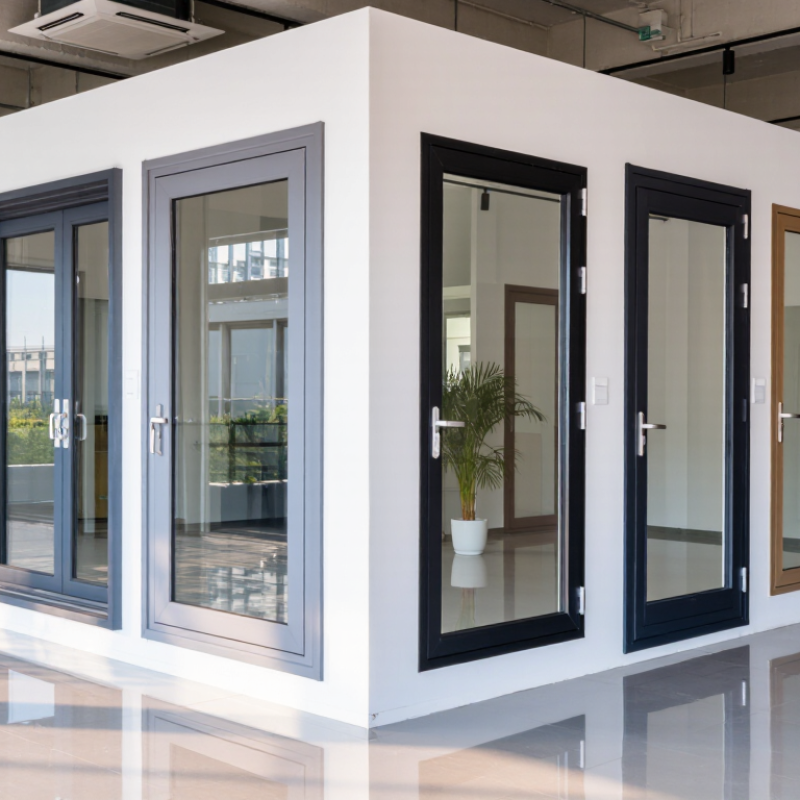
What Are Aluminium Doors With Windows?
Aluminium doors with windows combine a strong aluminium frame, glazing panels, and a functional opening system in one unit. Unlike solid doors, they allow daylight, ventilation, and outdoor views while maintaining a defined entrance boundary. The frame usually contains thermal breaks, seals, drainage channels, and reinforced corners. These details affect comfort more than the surface finish.
In practical site inspections, I check whether the door closes evenly and whether the glass sits firmly without rattling. A quality unit should resist moisture, wind pressure, and repeated daily use. Aluminium is lightweight, corrosion-resistant, and easy to maintain, but it is not maintenance-free. Poor installation can create drafts, water stains, or difficult operation. This is where supplier reliability matters. Technical drawings, glass specifications, warranty terms, and installation guidance reveal more than attractive photographs. I still think many buyers overlook the threshold, especially in rainy or high-traffic areas.
Tips: Choose glazing based on climate, noise, and safety needs. Ask for tested air, water, and wind performance. Inspect gasket joints closely. Leave room for adjustment after installation. A narrow frame looks elegant, but it may reduce strength if the opening is large. Suppliers should explain these trade-offs clearly, using measurable specifications rather than vague promises. The best choice is not always the most expensive door. It is the system that suits the building, installer, and daily habits.
10 Best Aluminium Door With Window Suppliers Worldwide - What Are Aluminium Doors With Windows?
The table below presents anonymized supplier segments and practical product benchmarks. Values are typical market ranges rather than guaranteed specifications for any individual supplier. Actual performance depends on the frame system, glazing, hardware, fabrication quality, installation, and local testing requirements.
| Rank | Anonymized Supplier Segment | Typical Market Coverage | Common Door Configurations | Typical Thermal Performance* | Typical Glazing Options | Relevant Testing or Standards | Best Use Case |
|---|---|---|---|---|---|---|---|
| 1 | European thermal-break specialist | Europe and export markets | Insulated hinged, French, tilt-and-turn, and lift-and-slide doors | Approximately 0.8–1.6 W/m²K for complete door assemblies | Double or triple low-emissivity insulating glass | EN 14351-1; CE marking requirements where applicable | Energy-efficient residential and commercial buildings |
| 2 | North American architectural-door supplier | United States, Canada, and international projects | Narrow-stile entrance, terrace, storefront, and sliding doors | Commonly about 0.30–0.60 Btu/h·ft²·°F for glazed door assemblies | Low-E insulating glass, laminated glass, and solar-control glass | AAMA/WDMA/CSA 101/I.S.2/A440; NFRC ratings where applicable | High-traffic entrances and large glazed openings |
| 3 | United Kingdom and Ireland replacement-door supplier | United Kingdom, Ireland, and nearby markets | Bi-fold, patio, French, and residential entrance doors | Approximately 1.0–1.8 W/m²K, depending on glazing and size | Double-glazed low-E units; laminated safety glass for doors | EN 14351-1; UK Building Regulations performance requirements | Home renovations and rear extensions |
| 4 | Mediterranean slim-frame supplier | Southern Europe, North Africa, and coastal regions | Slim sliding, multi-panel, folding, and balcony doors | Approximately 1.4–2.5 W/m²K for thermally improved systems | Solar-control, tinted, laminated, and double insulating glass | EN 14351-1; air, water, and wind-load testing | Warm climates, balconies, patios, and sea-view openings |
| 5 | Middle Eastern façade and entrance supplier | Gulf countries and arid urban markets | Heavy-duty entrance, curtain-wall interface, and sliding doors | Approximately 1.6–2.8 W/m²K with thermally broken frames | Low-E, solar-control, laminated, and insulated glass | ASTM or EN air, water, structural, and thermal testing | Solar exposure, dust, high temperatures, and commercial buildings |
| 6 | East Asian precision-system supplier | Japan, South Korea, and wider Asian markets | Compact sliding, hinged, balcony, and partition-style doors | Approximately 1.5–3.0 W/m²K, depending on frame depth and glass | Double glazing, laminated safety glass, and privacy glass | JIS A 4706 and region-specific building performance tests | Compact homes, apartments, and space-saving interiors |
| 7 | Australian and New Zealand weather-resistant supplier | Australia, New Zealand, and Pacific markets | Sliding, stacking, hinged, bi-fold, and security-screen doors | Approximately 1.8–3.5 W/m²K, varying by climate zone | Insulating, laminated, toughened, and solar-control glass | AS 2047; AS 1288 for glass selection and installation | High wind zones, coastal homes, and outdoor living areas |
| 8 | Latin American custom-fabrication supplier | Mexico, Central America, South America, and export projects | Custom sliding, hinged, folding, and storefront-style doors | Approximately 2.0–3.8 W/m²K for standard thermally improved products | Clear, tinted, laminated, tempered, and solar-control glass | Local building codes plus ASTM or EN test methods when specified | Project-specific dimensions, tropical climates, and renovation work |
| 9 | Sustainable recycled-aluminium supplier | Global green-building and environmentally focused projects | Thermally broken entrance, sliding, and large-panel doors | Approximately 1.0–2.2 W/m²K with high-performance glazing | Low-E insulating glass and recycled-content certified glass options | Environmental product declarations and regional thermal standards | Green-building projects and low-carbon procurement programs |
| 10 | Fire-rated and security-door specialist | Worldwide commercial, institutional, and public-sector projects | Fire-resistant glazed doors, escape doors, and secure entrances | Thermal values vary widely; fire rating takes priority over insulation | Wired, ceramic, laminated, or insulated fire-rated glazing | EN 16034, EN 1634-1, UL 10C, or local fire-test requirements | Schools, hospitals, offices, transport facilities, and protected routes |
*Lower U-values indicate better thermal insulation. Aluminium doors with windows are door assemblies made from aluminium profiles that incorporate one or more glazed panels, allowing daylight and visibility while providing access, weather protection, and—when thermally broken—improved energy efficiency.
FAQS
Request verified U-values, air leakage results, solar heat-gain data, and thermal-break details. Test reports matter. Informal claims are not enough.
Thermal breaks reduce heat transfer through the frame. They can improve indoor comfort and energy performance. Ask for measured results, not attractive promises.
Ask about alloy grades, recycled content, coating durability, and corrosion testing. Reliable suppliers should provide batch records. Traceability matters.
Examine corner joints, gaskets, drainage paths, glass edges, and coating thickness. Open and close the hardware repeatedly. Look closely.
No. Slim frames may look elegant, but weak seals can cause drafts and water stains. A narrow profile may also have poor drainage. I once trusted appearance too quickly.
Check air leakage, water penetration, wind pressure, thermal performance, and structural ratings. Request complete laboratory reports. Marketing sheets can hide gaps.
Request references from similar coastal or high-wind projects. Check salt-air resistance, corrosion protection, reinforced hardware, and drainage. Local climate changes everything.
The quotation should state glass specifications, installation tolerances, lead times, warranty limits, and maintenance instructions. It should also explain replacement-part availability. Low prices can become expensive later.
Review factory audits, sample tolerances, packaging methods, inspection photographs, and documented production schedules. Ask how damaged parts are replaced. Capacity alone proves little.
Look for clear response times, spare-part access, repair procedures, and specific warranty exclusions. A long warranty headline means little without practical coverage. This is easy to overlook.
Conclusion
Aluminium Door With Window systems combine the strength, durability, and corrosion resistance of aluminium with the natural light and visibility provided by glass. This article presents a practical guide to identifying leading suppliers worldwide, focusing on product quality, manufacturing consistency, design flexibility, energy efficiency, safety features, customization options, and after-sales support. It also explains how different suppliers may serve residential, commercial, and architectural projects through varied profiles, finishes, glazing choices, and opening configurations.
The comparison considers structural performance, weather resistance, thermal and acoustic insulation, hardware reliability, visual appeal, and compliance with relevant international standards. To choose the right worldwide supplier, buyers should clearly define project requirements, confirm technical specifications, review production capabilities, evaluate communication and delivery services, and compare warranties and long-term support. A balanced assessment of quality, design, performance, price, and supplier reliability can help customers make a confident and suitable purchasing decision.